





A Buying Spree of Historic Proportions
Forget Forty-Niners and Klondike prospectors. The real gold rush of the 21st century is being driven by men and women in suits. According to the World Gold Council, central banks have been buying gold at a pace not seen in over 50 years. The last few
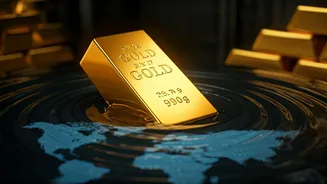
years have been particularly stunning, with purchases hitting record highs. In 2022 and 2023, official sector demand for gold was colossal, far exceeding the average of the previous decade. Who are the buyers? It’s a diverse and revealing list. The People's Bank of China has been a relentless accumulator, steadily adding to its reserves month after month. But it’s not alone. Poland, Turkey, Singapore, India, and a host of other nations in the Middle East and Asia are all significant players. These aren't speculative bets; they are strategic, long-term shifts in national treasury policy. They are moving hundreds of tons of the yellow metal into their vaults, signaling a profound change in how they view the global financial landscape.
It's Not Just About the Money
So, why the sudden obsession with an ancient metal? The answer has less to do with market speculation and everything to do with geopolitics. The primary driver is a growing movement often called “de-dollarization.” For decades, the U.S. dollar has been the world's undisputed reserve currency. Most international trade is done in dollars, and most central banks hold the bulk of their foreign reserves in U.S. Treasury bonds. This system has given the United States immense economic and political leverage. However, recent events have shown other countries the risks of this dependence. When the U.S. and its allies used financial sanctions to freeze hundreds of billions of Russia's foreign reserves after the invasion of Ukraine, it sent a shockwave through the world. Central bankers everywhere took note: their dollar-denominated assets could be seized or rendered useless at the stroke of a pen. Gold, in this context, is the ultimate escape plan. It's a physical asset held in your own vault. It has no counterparty risk and cannot be devalued or frozen by a foreign government.
The Return of a Neutral Asset
In an increasingly fractured and multipolar world, gold is re-emerging as the ultimate neutral asset. It carries no political baggage. Its value is recognized universally, from Beijing to Warsaw to Brasília. As global trust erodes and the world seemingly splits into competing economic blocs, gold serves as a reliable bridge and a universal store of value. It's a hedge not just against inflation or a declining dollar, but against geopolitical uncertainty itself. For countries trying to navigate the complex relationship between the U.S. and China, or for those simply wishing to assert their own economic sovereignty, building up gold reserves is a powerful statement. It signals a desire for a financial system that is less dependent on the whims of a single superpower. By buying gold, these central banks are voting with their wallets for a more diversified, and perhaps more stable, international monetary order.
What 'Comeback' Really Means for 2026
The headline's mention of 2026 isn't about a specific, cataclysmic event scheduled for that year. Rather, it represents a symbolic endpoint for this first wave of strategic realignment. Think of it as the culmination of a trend. The sustained, massive buying that started in the early 2020s will have had years to embed itself into the global system by then. By 2026, the world's central bank balance sheets will look fundamentally different than they did a decade prior, with gold playing a much more significant role. The “comeback” isn’t about the price of gold hitting a certain number, though that may happen. It’s about gold’s re-emergence as a core component of the international monetary system. It’s a return to its historical role as a primary reserve asset, sitting alongside—and acting as a check on—fiat currencies like the dollar and the euro. The story being written is one of status, not just price.