





The Ultimate 'You Had to Be There'
For decades, the idea of seeing the curve of the Earth was reserved for a handful of government-trained astronauts. Today, it’s becoming the ultimate bucket-list item for the global one percent. This isn’t your standard first-class flight. High-altitude
travel falls into a new category of experiential tourism that sits somewhere between a private jet journey and a full-blown orbital mission. The two main flavors on the menu are suborbital rocket flights and high-tech stratospheric balloon voyages. The first offers a few minutes of adrenaline-pumping weightlessness and a rocket-powered ascent. The second promises a serene, hours-long journey to the edge of the atmosphere, complete with cocktails and Wi-Fi to make your followers back on Earth intensely jealous in real time. Both sell the same core product: a perspective-shifting view of our planet, wrapped in an experience of profound exclusivity.
Meet the New Travel Agents
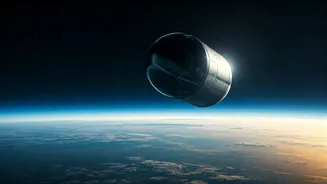
The market for this rarefied air is dominated by a few high-profile players. Jeff Bezos’s Blue Origin uses its New Shepard rocket to launch a capsule of passengers more than 62 miles high, past the Kármán line that is often considered the boundary of space. After a few minutes of floating and gazing out of giant windows, the capsule parachutes back to the Texas desert. Then there’s Richard Branson’s Virgin Galactic, which uses a mothership to carry a sleek spaceplane to altitude before it ignites its rocket, blasting passengers on a parabolic arc that delivers weightlessness and stunning vistas. But if the g-forces of a rocket launch feel a bit too intense, companies like Space Perspective are offering a gentler alternative. Their Spaceship Neptune is a pressurized capsule lifted by a massive “SpaceBalloon.” It’s a six-hour, civilized ascent to 100,000 feet and back—less astronaut, more sky-high luxury lounge.
Selling the 'Overview Effect'
What these companies are really selling isn’t just a ride; it’s a chance to experience the “overview effect.” Coined by author Frank White in 1987, the term describes the profound cognitive shift that astronauts have reported after seeing Earth from space—a sudden, overwhelming sense of awe, connection to humanity, and an understanding of the planet’s fragility. It’s an emotional and spiritual transformation, and it has become the holy grail of the luxury travel world. While a six-minute suborbital hop might not provide the same deep-seated change as a week on the International Space Station, the marketing leans heavily on this promise of a life-altering glimpse of “the big picture.” It’s a powerful driver of the current FOMO. People aren’t just afraid of missing out on a cool trip; they’re afraid of missing out on a moment of genuine transcendence that might just change how they see everything.
The Six-Figure Digital Flex
Let’s be honest: in an age of social media, an experience isn’t fully realized until it’s been posted. And there is no post more potent than a selfie with the blackness of space and the thin blue line of Earth’s atmosphere in the background. With tickets ranging from $125,000 for a balloon ride to upwards of $450,000 for a rocket seat, high-altitude travel has become the new ultimate status symbol. It’s a flex that quietly eclipses supercars, mega-yachts, and private islands. The exclusivity is baked into the price tag, ensuring that for the foreseeable future, this remains a club with very few members. The crisp, impossibly clear photos and videos emerging from these early flights act as the most effective marketing campaign imaginable, triggering a primal desire not just to see what they saw, but to be seen seeing it.