



Goa, Reimagined
Forget the postcard image of Goa, the one with bronzed bodies on white sand and cocktails at sunset. From June to September, the Indian state undergoes a dramatic transformation. The skies turn a brooding gray, the Arabian Sea churns, and a lush, near-fluorescent
green drapes itself over the landscape. This is monsoon Goa, a quieter, more introspective version of the famous tourist hub. For travelers willing to trade sunbathing for something more profound, the rainy season offers a unique reward, a spectacle of nature found deep in the state’s jungle-clad interior.
The Sea of Milk
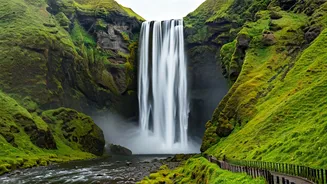
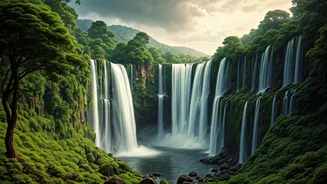
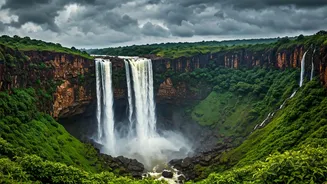
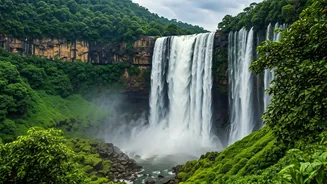
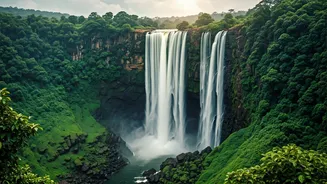
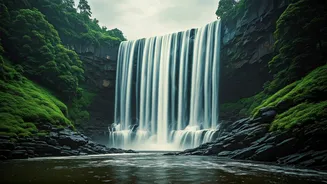
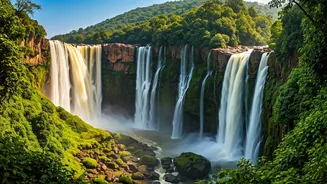
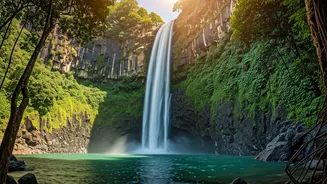
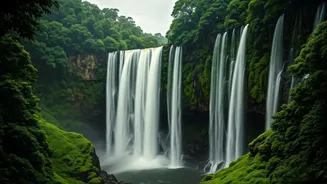
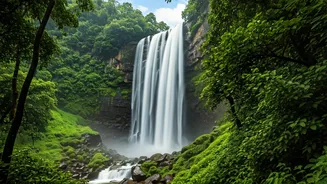
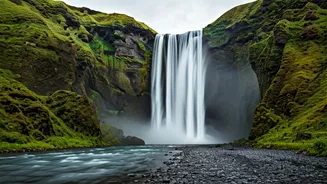
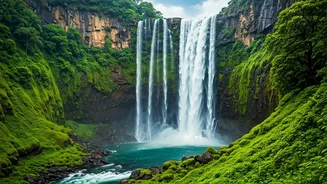
The centerpiece of this seasonal drama is Dudhsagar Falls. The name itself, translated from the local Konkani language, means “Sea of Milk,” and it’s a perfectly apt description. Plunging over 1,000 feet down a near-vertical cliff face in a series of four tiers, the falls are among the tallest in India. Located on the Mandovi River, deep within the Bhagwan Mahaveer Sanctuary and Mollem National Park, Dudhsagar is a force of nature. During the dry season, it can be a relatively placid, multi-stream cascade. But when the monsoon rains saturate the Western Ghats mountain range, the falls are reborn as a terrifyingly beautiful, singular torrent.
Monsoon’s Fury, Nature’s Glory
The monsoon doesn’t just feed the falls; it unleashes them. The sheer volume of water transforms Dudhsagar from a beautiful feature into the region's dominant sensory experience. The roar is deafening, a constant, low-frequency thunder that you feel in your chest long before you see the source. A plume of dense mist, the “milk” of its name, rises hundreds of feet into the air, shrouding the surrounding jungle and creating a microclimate of perpetual dampness. It’s this raw power that gives rainy Goa its wildest view—a spectacle of unrestrained natural energy that makes the sun-and-sand version of the state feel like a distant memory.
The Journey Through the Jungle
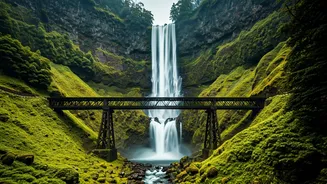
Getting to Dudhsagar is an adventure in itself, and a key part of its allure. The most iconic way to witness the falls during the monsoon is by train. The South Western Railway line cuts directly across the middle of the falls, traversing an old stone bridge that offers an impossibly cinematic view. Passengers crane their necks from open doorways and windows to catch a glimpse of the water crashing down on both sides. During peak rains, the train appears to slice through the waterfall itself, with spray lashing the carriages. While jeep tours through the national park are the standard way to reach the base of the falls in the dry season, heavy rains often make the jungle tracks impassable, rendering the train the only and most dramatic vantage point.
A View Like No Other
For those on the train, the moment is fleeting but unforgettable. The jungle parts, the roar intensifies, and suddenly, you are there. To your left, the upper tiers of the falls cascade into a churning pool. To your right, the water continues its violent descent into the valley below. The sheer scale is difficult to process. The bridge, a significant feat of engineering, is dwarfed by the immensity of the water. For a few breathtaking seconds, you are inside the painting, a temporary witness to a scene of raw, elemental power before the jungle swallows the view once more. It is not just a pretty sight; it's a visceral encounter with the wild heart of a place often defined by its tamed pleasures.