





1. It Becomes a 'Sniffari' Zone
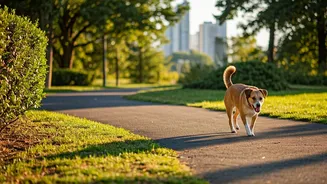
A dog’s primary sense is smell, and a garden is a symphony of scents. While you're tending to your tomatoes, your dog is on a 'sniffari,' processing a world of complex information from the damp soil, the budding plants, and the busy insects. This mental
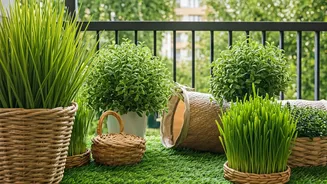
workout is incredibly enriching and far more stimulating than a walk around the same block. To enhance this, consider planting dog-safe, aromatic herbs like rosemary, basil, or mint in designated pots. The variety of smells provides constant neurological engagement, which can help reduce boredom and anxiety. Just watching a dog intently sniffing a basil plant is seeing a brain hard at work, mapping its fragrant territory.
2. It Creates a Natural Obstacle Course
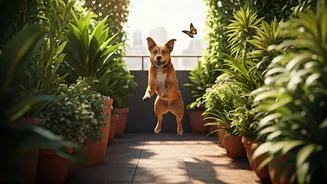
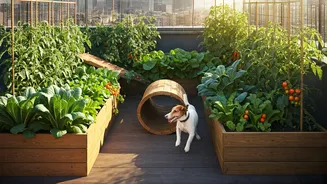
A well-designed rooftop garden isn't flat. With raised beds, large pots, and defined pathways, it becomes a low-impact agility course. Your dog learns to navigate different levels, textures, and boundaries. Weaving between planters, stepping over irrigation lines, or hopping onto a sturdy, designated platform engages their body and mind. This isn’t about encouraging them to leap into your lettuce; it's about their learning to move with intention and awareness through a varied landscape. This physical problem-solving builds confidence and coordination, turning a simple patch of green into a dynamic environment for gentle exercise.
3. It's a Perfect Place for Foraging Games
Tap into your dog’s natural instinct to forage. A rooftop garden provides the perfect setting for controlled 'treasure hunts.' Once you’ve harvested your dog-safe veggies, you can use one or two to play. Tossing a fresh baby carrot or a crunchy green bean into a patch of soft mulch and saying "Find it!" turns snack time into a stimulating game. This activity, known as nose work, is a powerful tool for building focus and providing a satisfying outlet for a dog’s innate drive to seek things out. It’s far more engaging than simply getting a treat from your hand and strengthens their problem-solving skills.
4. It Offers New Training Opportunities
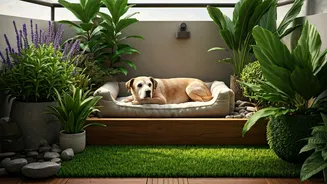
The garden is a fantastic, and slightly distracting, environment to practice impulse control. Commands like "leave it" become critically important (and meaningful) when the prize is a tempting, almost-ripe strawberry. You can also work on place training by teaching your dog to go to a specific mat or cool patch of shade while you work. The defined boundaries of the garden help with practicing "stay" and recall in an outdoor setting that feels more exciting than the living room but is still safely contained. This makes training sessions feel less like a chore and more like a shared activity in a special space.
5. It Requires Building a Safe Space First
Transforming your garden into a play zone starts with safety. Many common garden plants, including the foliage of tomato and potato plants, onions, and garlic, are toxic to dogs. Design your garden with your pet in mind from the start. Use sturdy, non-toxic materials for raised beds (untreated cedar is a great choice) and ensure all fertilizers and pest controls are pet-safe. Most importantly, ensure your rooftop is securely fenced to prevent any accidents. The goal is to create a canine-approved oasis, which means curating a list of dog-safe plants. Focus on growing things like carrots, green beans, cucumbers, and blueberries, which can be shared in moderation as a healthy, home-grown treat.