


An Oasis Above the Arid Plains
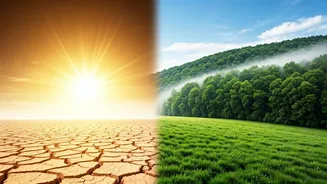
To understand the drama of a Mount Abu sunset, you first have to appreciate the stage. Rajasthan, in western India, is a state defined by its deserts—vast, sun-baked plains and golden dunes. Rising abruptly from this arid landscape is the Aravalli Range,
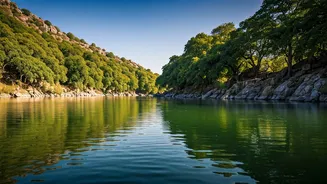
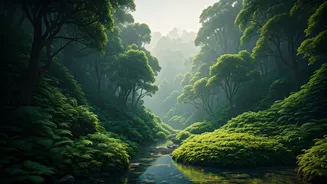
and nestled within it at 4,000 feet is Mount Abu. It’s an anomaly, a lush, green oasis of palm trees, fragrant frangipani, and the serene Nakki Lake. For centuries, it has served as a cool retreat from the scorching heat below. The journey upward is a winding ascent from dusty plains into a different world, where the air grows cooler and the vegetation more vibrant. This stark contrast is the opening scene, setting the expectation that you've arrived somewhere special, a place operating by its own set of rules, both geographically and atmospherically.
The Ritual at Sunset Point
Like any great film, the experience has its rituals. As late afternoon approaches, a gentle pilgrimage begins toward Sunset Point, one of the most famous vantages in town. It’s not a solitary experience, but a communal one. Families find their perches on the terraced steps, vendors sell roasted corn and hot chai, and a low, expectant buzz fills the air. The viewpoint itself is perfectly positioned, offering a sweeping, unobstructed panorama of the valleys and the distant plains. On a clear day, it’s beautiful. But the real story unfolds when the sky isn't clear. The crowd isn't just there to see the sun disappear; they're there for the show, and in Mount Abu, the clouds are the star performers, not just the supporting cast.
When Clouds Steal the Show
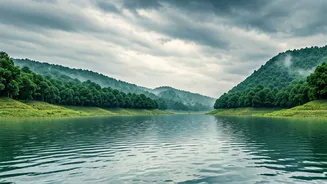
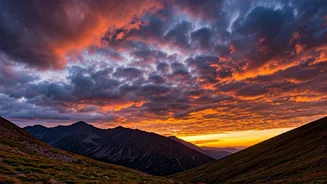
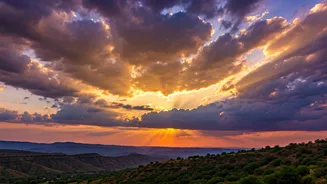
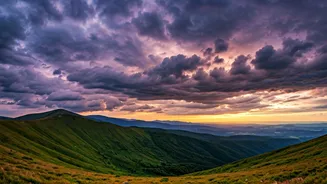
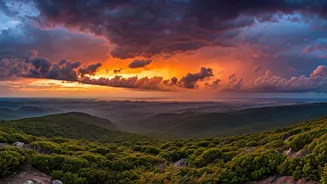
This is where the “cinematic” part truly comes to life. In many parts of the world, a cloudy evening can feel like a letdown, obscuring the main event. Here, it’s the opposite. Particularly during and after the monsoon season, layers of clouds create a dynamic, three-dimensional canvas. They don't just block the sun; they interact with it. Low-drifting mist can fill the valleys below, creating the illusion of a floating island. Higher, fluffier clouds catch the sun’s rays from below, glowing in impossible shades of orange, magenta, and gold. The light doesn’t just fade; it filters, diffuses, and projects. It’s like watching a scene lit by a master cinematographer. Sunbeams break through gaps in the cloud cover like celestial spotlights, sweeping across the green hillsides. The effect is one of depth, movement, and suspense. You’re not just watching a color change; you’re watching a story unfold across the sky.
The Final Scene: A Spectacle of Light
The grand finale is not the moment the sun vanishes, but the entire 15-minute sequence leading up to it. As the sun sinks lower, the undersides of the clouds ignite. The colors become impossibly saturated, painting the sky in broad, dramatic strokes. It’s a wide-screen spectacle. The landscape, once bathed in the golden hour’s warm glow, is now cast in silhouette against the fiery backdrop. The jagged lines of the Aravalli peaks become stark and dramatic. The final sliver of the sun might disappear behind a distant cloud bank rather than the horizon itself, its last light backlighting the clouds in a brilliant, final flash. And then, as the colors slowly fade to deep indigos and purples, a shared, satisfied silence often falls over the crowd. The film has ended, and the credits roll in the form of twinkling stars beginning to appear in the twilight sky.