



A Kingdom’s Sacred Heart
Every summer, the city of Agartala, capital of the small state of Tripura, transforms. The air fills with the sounds of drums, chants, and the energy of thousands of pilgrims. They gather for Kharchi Puja, a festival dedicated to the Chaturdasha Devata,
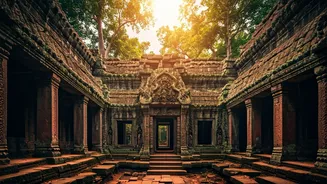
the fourteen ancestral deities of the Tripuri people. But this is no ordinary religious event. At its core, Kharchi Puja is a state ceremony with royal roots, a living link to the region’s past as a centuries-old kingdom. The festival takes place at a temple in Old Agartala, the former capital, where the fourteen divine heads—symbols of the gods—are brought out for public veneration. For seven days, they are celebrated with a unique blend of tribal animist practices and mainstream Hindu worship, a testament to the region’s complex cultural history.
The Legacy of the Manikya Dynasty
To understand Kharchi Puja, you have to understand the Manikya dynasty, which ruled the Kingdom of Tripura for over 500 years. For centuries, the festival was the exclusive domain of the royal family. It was their sacred duty to worship the dynasty’s patron deities, reinforcing their divine right to rule. The word "Kharchi" itself translates to "cleansing of sins," and the puja was historically performed to ensure the well-being of the kingdom and its people. The head priest, or Chantai, held immense power, overseeing rituals that were once conducted solely for the benefit of the monarchy. This deep-seated royal patronage is what sets the festival apart from countless others across India, where traditions are often purely community-driven or temple-based.
Where Royalty and Republic Intersect
When Tripura merged with the newly independent India in 1949, the future of its most important royal festival was uncertain. Would a secular, democratic government continue to fund and support a ritual so tied to the monarchy? The answer came in the form of a historic agreement. The Indian government agreed to continue state sponsorship of Kharchi Puja, preserving its cultural heritage. Today, the festival is a fascinating hybrid. While it is now a massive public celebration funded by the state, key rituals still acknowledge its royal past. The ceremonial procession of the deities is escorted by the Tripura Police, who offer a gun salute—a modern stand-in for the king’s royal guard. It’s a moment where the structures of a modern republic are used to uphold the protocols of a defunct kingdom.
The Rituals That Define the Festival
The week is packed with unique traditions. Before the festival begins, the fourteen deities are ceremonially bathed in the Saidra River and returned to the temple. For the next seven days, the Chantai and his assistants perform intricate pujas, or acts of worship. While the festival is inclusive, with a massive fair drawing people from all communities, its core rituals remain steeped in tradition. This includes animal sacrifice, a common practice in many indigenous and Shakta traditions in eastern India, where goats and pigeons are offered to the deities. For outsiders, it’s a powerful, and at times intense, display of faith. For the people of Tripura, it’s a vital and unbroken link to their ancestors, their land, and the divine forces they believe protect them, just as they once protected the kings.