









A Lunar Landing for the History Books
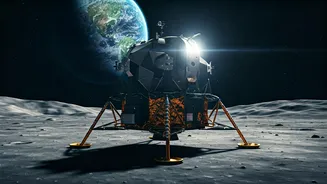
In August 2023, the world watched as India’s Chandrayaan-3 spacecraft successfully touched down near the Moon's south pole—a region no other country had ever reached. This wasn't just a technical achievement; it was a geopolitical statement. The mission
placed India in an elite club of nations to have landed on the Moon, alongside the U.S., the former Soviet Union, and China. What turned heads, however, was the price tag. The entire mission cost an estimated $75 million. To put that in perspective, it’s less than the production budget for Hollywood blockbusters like *Interstellar* or *Gravity*. This single event perfectly encapsulated the Indian model: achieving ambitious, high-stakes goals with a level of efficiency that other space-faring nations can only envy.
The Philosophy of 'Frugal Innovation'
India's cost-effective approach isn't an accident; it's a core philosophy known as “frugal innovation.” For decades, the Indian Space Research Organisation (ISRO) has mastered the art of doing more with less. Instead of developing every component from scratch, ISRO engineers are experts at adapting existing technologies for new purposes and simplifying complex systems. They rely heavily on a domestic supply chain, which keeps costs low and builds national expertise. This contrasts sharply with the traditional cost-plus contracting models often used in the West. While NASA missions push the absolute boundaries of science with bespoke, cutting-edge technology, ISRO focuses on reliable, practical, and replicable solutions. This approach has allowed India to launch satellites for other developing nations, build its own navigation system, and send probes to Mars and the Moon without breaking the bank.
Unlocking a Private Space Race
For years, ISRO was the only game in town. But recognizing the limits of a state-run monopoly, the Indian government is now aggressively courting private enterprise. The 2023 Indian Space Policy officially opened the sector to private companies, encouraging them to build rockets, own and operate satellites, and sell their data on the open market. This move is designed to create an ecosystem much like the one in the U.S., where companies like SpaceX and Rocket Lab have revolutionized the launch industry. Already, dozens of Indian space-tech startups are emerging, attracting significant venture capital. Companies like Skyroot Aerospace and Agnikul Cosmos are developing their own small-satellite launch vehicles, aiming to capture a slice of the booming global market. The goal is to transform India from a government-led space power into a global hub for commercial space services.
Why It Matters for the U.S.
India's rise in space has direct implications for the United States. On one hand, it creates a new competitor in the lucrative market for satellite launches, where American companies currently dominate. On the other, it offers a powerful new partner. As the U.S. and its allies navigate a new era of strategic competition with China, India’s independent space capabilities make it a valuable collaborator. The two nations are already partners in the Artemis Accords, a U.S.-led framework for lunar exploration. NASA and ISRO are jointly working on NISAR, a sophisticated Earth-observing satellite. For the U.S., a strong Indian space program provides a democratic counterweight to China's ambitions in orbit and beyond. It also presents a compelling alternative model for how nations can participate in space exploration, proving that massive budgets aren't the only path to the stars.