



Why No Moon Is Great News
First, let's break down what a New Moon actually is. It’s the phase of the lunar cycle when the Moon is positioned between the Earth and the Sun. From our perspective, the side of the Moon facing us is not illuminated, making it essentially invisible
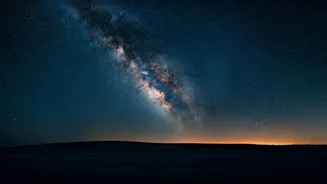
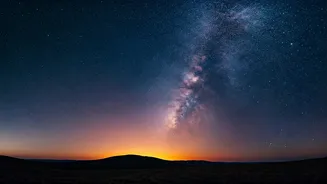
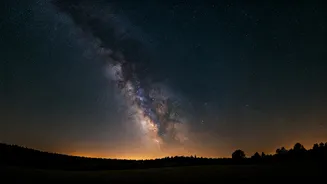
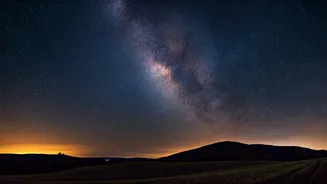
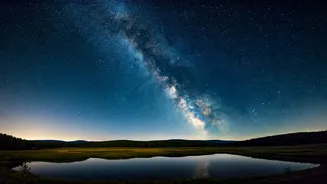
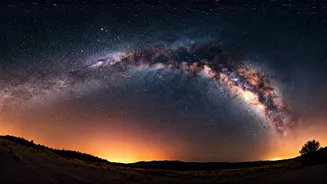
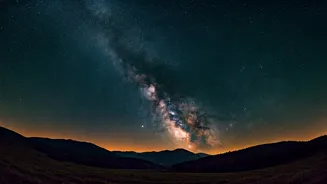
in the night sky. While a brilliant Full Moon is a spectacle in its own right, its intense light acts like natural light pollution, washing out fainter celestial objects. A New Moon, by contrast, gives us the darkest possible skies, creating a perfect canvas to spot things that are normally hidden from view. The "Taurus" part simply means the New Moon is occurring while the sun is in the astrological sign of Taurus, a regular springtime event in the Northern Hemisphere. But the lesson is universal: any New Moon, any time of year, is a stargazing gift.
An Intro to Deep-Sky Objects
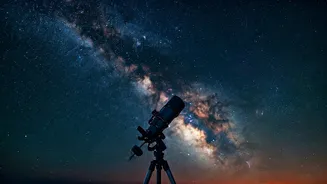
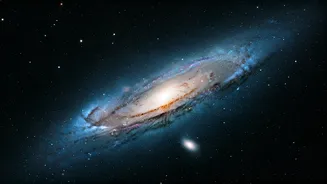
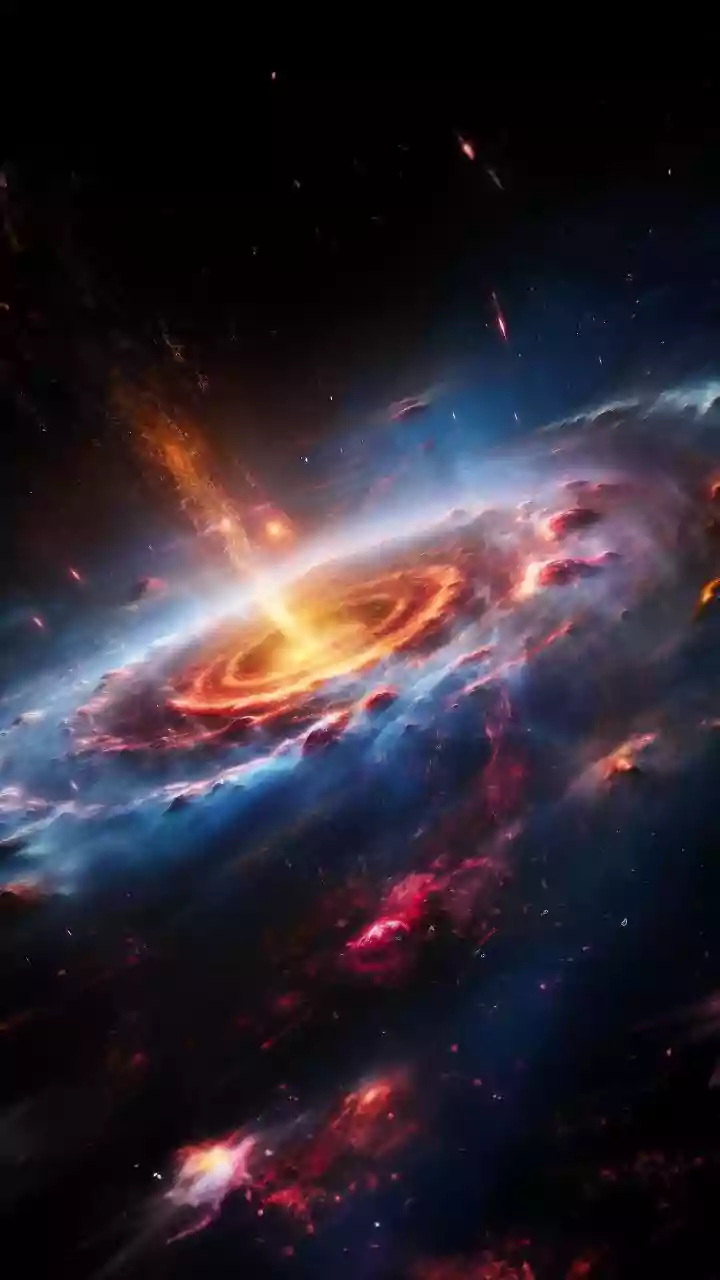
So, what should you be looking for in this inky blackness? This is your chance to hunt for “deep-sky objects,” or DSOs. This is a catch-all term for astronomical objects outside our solar system, including distant star clusters, wispy nebulae where new stars are born, and entire galaxies millions of light-years away. These aren't the familiar, sharp points of light like individual stars or planets. Instead, they often appear as faint, fuzzy patches. To the naked eye, they can look like a tiny, misplaced cloud. But with a good pair of binoculars or a small backyard telescope, these smudges resolve into breathtaking structures. Spotting a galaxy with your own eyes, even as a faint glimmer, is a profound experience—it’s a direct connection to the sheer scale of the cosmos.
A Stargazer's Spring Shortlist
With the Taurus New Moon occurring in spring, certain DSOs are particularly well-positioned for viewing in the evening. Here are a few to hunt for. First, try for the Beehive Cluster (M44) in the constellation Cancer. It's one of the nearest open star clusters to us and can sometimes be seen as a faint, blurry patch by the naked eye in very dark skies; binoculars will make its individual stars pop. For a bigger challenge, aim for the Whirlpool Galaxy (M51) near the Big Dipper. It's a classic spiral galaxy that is famously interacting with a smaller companion galaxy. You'll need a telescope to see its detail, but even in binoculars, it's a rewarding find. Another great target is the globular cluster M3 in the constellation Canes Venatici. It's a tightly packed ball of hundreds of thousands of old stars, appearing as a fuzzy star in binoculars and a spectacular celestial snowball in a telescope.
Your Viewing Game Plan
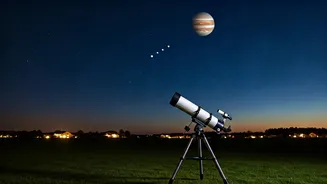
You don't need a Hubble-sized budget to enjoy the show. Your most important tool is darkness. Get as far away from city and suburban lights as you can; even a 30-minute drive to a rural park or field can make a world of difference. Second, give your eyes time to adapt. It takes about 20-30 minutes for your pupils to fully dilate and adjust to the dark. Avoid looking at your bright phone screen during this time. If you need light, use a red flashlight, as red light is less disruptive to your night vision. Finally, get some help navigating. Apps like SkyView, Stellarium, or Star Walk act as a digital map of the sky. Just point your phone up, and they’ll identify what you're looking at. While a telescope is great, don't underestimate a simple pair of 7x50 or 10x50 binoculars—they are fantastic for sweeping the Milky Way and spotting larger clusters and galaxies.