

The Siren Song of Comfort
Let’s be honest: the desire for fried food on a miserable day is primal. It’s a Pavlovian response to gloom. The rhythmic drumming of rain on the roof seems to harmonize with the sizzle of oil in a deep fryer. This is no accident. Dreary weather, with its
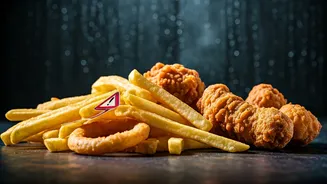
lack of sunlight, can subtly tank our serotonin levels, making us feel lethargic and low. In response, our brains send out an SOS signal for a quick fix, and nothing answers the call quite like the holy trinity of fat, salt, and carbohydrates. A basket of fries or a plate of onion rings isn't just food; it's a desperate plea for a dopamine hit. It’s a fleece blanket in edible form, promising a temporary, greasy escape from the meteorological malaise. The warning sticker, if it existed, would have to start here: 'Caution: This product’s appeal is directly proportional to your level of seasonal despair. You are not choosing this snack. The weather is choosing it for you.'
The Great Crispy Betrayal
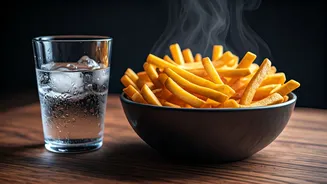
Here is the central tragedy of rainy-day snacking. The very thing that makes fried food magnificent—its glorious, shattering crispiness—is fundamentally incompatible with a humid environment. It’s a cruel joke of physics. Frying works by rapidly dehydrating the surface of a food, creating a crunchy crust that protects a tender interior. But humidity is the mortal enemy of crunch. The air itself is saturated with water molecules, all of which are on a mission to invade your perfectly crisp batter and turn it into a soft, slightly damp, and profoundly disappointing shell of its former self. Your delivery fries, which left the restaurant with the structural integrity of a cathedral, arrive at your door with the sad, pliable quality of a wet noodle. Every second they spend in the steamy cardboard box is a race against time they are destined to lose. The warning sticker’s second line must read: 'Warning: Atmospheric conditions may render this product texturally inert. The crunch you seek is already a memory.'
The Post-Snack Slump
The promise of a fried snack is a quick mood boost, a golden-brown life raft in a sea of gray. The reality is often a biological bait-and-switch. That initial rush of salty, fatty goodness is fleeting. What comes next is the inevitable physiological reckoning. Your body, flooded with simple carbs and heavy fats, experiences a rapid blood sugar spike followed by an even more dramatic crash. The brief moment of crunchy euphoria gives way to a familiar, heavy-limbed lethargy. Suddenly, the energy you hoped to gain has been spent merely digesting the thing you ate. You’re left feeling more sluggish and blanket-worthy than you were before, only now with a side of greasy regret. The couch, which once seemed like a cozy retreat, now feels like a low-grade prison. Our proposed sticker needs a third clause: 'Side effects may include a profound lack of motivation, an urgent need for a nap, and the quiet realization that you’ve just paid to feel worse.'
So Why Do We Do It?
Even knowing all this, we will order the fries. We will get the mozzarella sticks. We will ignore the science of humidity and the certainty of the post-snack energy crash. Why? Because rainy-day fried food isn’t just about the food itself. It’s about nostalgia and permission. It’s a callback to childhood sick days, when a plate of chicken nuggets was a form of maternal medicine. It’s the feeling of breaking the rules, of indulging in something purely for the sake of pleasure in a world that often demands restraint. A rainy day provides the perfect excuse. It’s a hall pass from our better selves, a temporary suspension of our usual dietary discipline. We aren’t eating for fuel; we’re eating for feeling. We’re chasing a sensation, a memory, a momentary act of defiance against the gloom outside. And in that context, a slightly limp fry doesn’t feel like a failure. It feels like a small, necessary rebellion.