





Why Waterlogged Soil Is a Silent Killer
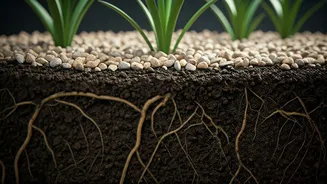
It seems counterintuitive—don't plants need water to live? Absolutely. But they also need to breathe. Plant roots require oxygen from small air pockets in the soil to survive and function. When soil becomes completely saturated with water, these air pockets disappear.
The roots, submerged and unable to respire, begin to suffocate. This oxygen deprivation is the first step toward root rot, a devastating condition where fungi and other pathogens thrive in the anaerobic environment, attacking and decaying the plant’s vital root system. The signs above ground—yellowing leaves, wilting, and stunted growth—often appear only after the damage below is severe. By the time you notice your plant looks thirsty, it may actually be drowning.
The 5-Minute Drainage Test
Before you start changing everything, figure out if you actually have a problem. The simplest way is the percolation test. It sounds technical, but it's incredibly easy. Dig a hole about one foot wide and one foot deep in your garden bed. Fill it with water and let it drain completely. Then, fill it again and time how long it takes for the water to disappear. If the water drains within a few hours, your drainage is excellent. If it takes most of the day (4-10 hours), it’s slow but potentially manageable. If the water is still standing in the hole after 12 hours, you have a serious drainage issue that needs immediate attention to save your plants from the next heavy rain.
The Best Fix: Amend Your Soil
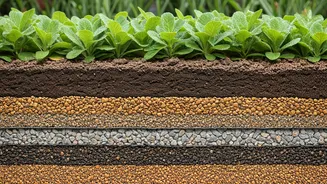
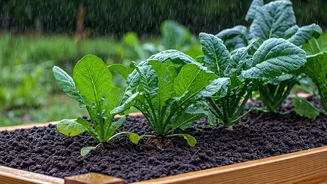
The single most effective way to improve drainage in garden beds is to amend the soil structure. The goal is to break up heavy, compacted clay and create more pathways for water to move through. The best amendment, bar none, is organic matter. Adding several inches of well-rotted compost, leaf mold, or aged manure and working it into the top 8-12 inches of your soil works wonders. These materials improve soil structure, creating the crumbly texture that allows for both water retention and air circulation. For particularly stubborn clay, you can also incorporate coarse sand (not fine play sand, which can make things worse) or perlite to further increase porosity. Avoid the old, debunked advice of adding a layer of gravel to the bottom of a planting hole. This creates a “perched water table,” essentially turning the hole into a bathtub that holds water right at the root zone.
Solutions for Containers and Raised Beds
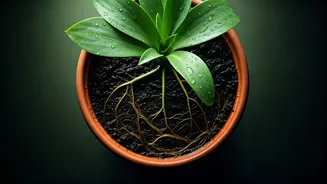
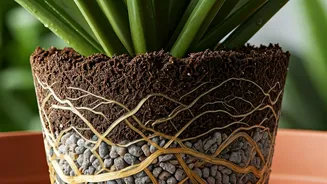
Drainage is just as critical in containers and raised beds, where roots have nowhere to escape saturated soil. First, never use garden soil in a pot. It's too dense and will compact immediately. Always use a quality potting mix, which is specifically formulated with ingredients like peat moss, coir, perlite, and vermiculite to be light and fast-draining. Next, check your drainage holes. Are there enough? Are they blocked? If your pot only has one small hole, don't hesitate to carefully drill a few more. For pots on patios or decks, elevate them with “pot feet” or small blocks. This tiny air gap underneath prevents the drainage hole from becoming sealed against the ground, ensuring water has a clear exit path. For raised beds, ensure your initial soil fill is a mix of compost and topsoil, not just heavy native soil shoveled from another part of the yard.
When the Problem Is the Landscape
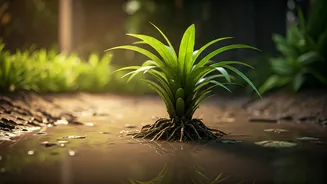
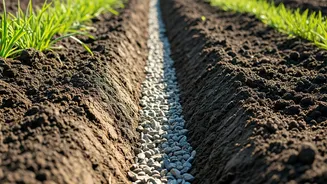
Sometimes, the issue isn't just one garden bed but a larger landscape problem, like a low spot where water naturally pools. In these cases, you can work with the water instead of against it. Consider building a rain garden—a depression filled with water-loving native plants designed to collect and slowly absorb runoff. For more severe issues across a lawn or large garden area, a French drain might be the answer. This is essentially a hidden trench filled with gravel and a perforated pipe that collects excess groundwater and directs it away from the problem area. While a more intensive project, it’s a permanent solution for chronically soggy yards.