






A Labyrinth of Living Color
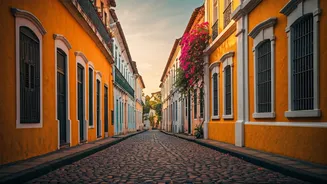
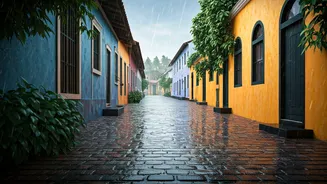
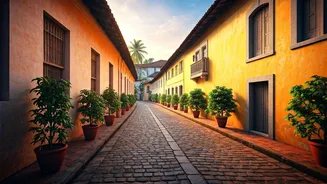
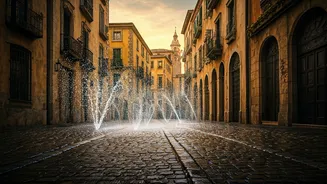
To walk through Fontainhas is to step inside a watercolor painting. The narrow, winding lanes—some barely wide enough for a single scooter—are flanked by colonial-era villas and cottages painted in a vibrant palette of ochre, mustard yellow, pastel blue,
and terracotta red. Overhead, wrought-iron balconies overflow with bougainvillea, their bright pink and purple blossoms cascading against the colorful facades. The architecture is a distinct blend of Portuguese elegance and local Goan sensibility. Red-tiled roofs slope gently over oyster-shell windows, a traditional technique that allowed light to filter in while maintaining privacy. Every corner turned reveals a new, perfectly composed vignette: a brightly painted door, a vintage-style street lamp, or a small shrine dedicated to a Catholic saint nestled into a wall. This isn't a sterile, museum-like district; it’s a living, breathing neighborhood where every building tells a story through its color and form.
Echoes of a Bygone Era
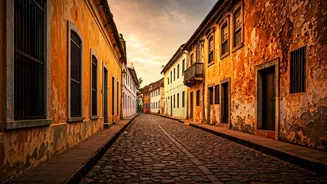
The atmosphere of Fontainhas is steeped in history. Established in the late 18th century by a wealthy Portuguese man named António João de Sequeira, the area became the home of Portuguese administrators and officials after Old Goa was abandoned due to devastating plagues. This heritage is the source of the neighborhood's distinctly Latin feel. In 1984, it was recognized as a UNESCO Heritage Zone, a designation that has helped preserve its unique character. According to an old Portuguese decree that is still honored by some residents, every house must be repainted after the annual monsoons, ensuring the district retains its fresh, vibrant look. Walking these streets, you can almost hear the echoes of the past—the murmur of Portuguese conversations, the strumming of a fado guitar, and the unhurried pace of life that defined its colonial zenith.
The Rhythm of Romantic Quiet
What truly makes Fontainhas “moody” and “romantic” is its pace. The neighborhood operates on a different clock. During the afternoon, a quiet calm descends as residents observe the traditional siesta. The lanes empty out, the sun beats down on the cobblestones, and the only sounds are the rustle of leaves and the distant chime of a church bell. This is when the atmosphere is at its most potent. It’s a time for quiet contemplation, for noticing the small details: the intricate patterns of the Portuguese tiles (azulejos) adorning a wall, the sleeping cat curled up on a windowsill, the way sunlight filters through the canopy of trees. As evening approaches, the mood shifts. The warm glow of streetlamps illuminates the streets, cozy bakeries and art galleries open their doors, and the gentle buzz of conversation returns. It's an atmosphere that encourages you to slow down, put away your phone, and simply be present.
More Than Just an Image
While Fontainhas is undeniably one of the most photogenic places in India, its soul lies beyond its aesthetic appeal. It is a community. Generations of the same families still live here, preserving a unique Luso-Indian culture. You’ll find old-world bakeries like the famous Confeitaria 31 De Janeiro serving traditional Goan sweets, and small, family-run taverns where locals gather. Art galleries showcasing the work of Goan artists are tucked into heritage homes, bridging the neighborhood’s past with its creative present. This fusion is the essence of Fontainhas. It’s a place where you can hear Konkani and English spoken in the shadow of Portuguese street names, where a Catholic cross might stand near a Hindu tulsi plant. This rich cultural tapestry is what elevates Fontainhas from a pretty tourist spot to a deeply atmospheric and unforgettable destination.