



The Science of a Dark Sky
We often think of the full moon as the star of the night sky, but for serious stargazers, its brilliance is the enemy. A bright moon acts like a giant, natural light polluter, casting a glow that washes out fainter objects. Billions of stars, distant
galaxies, and ethereal nebulae simply vanish behind its glare. The new moon is the opposite. This is the lunar phase when the moon is positioned between the Earth and the sun. From our perspective, the side facing us is not illuminated, making it effectively invisible in the sky. Without moonlight bouncing around the atmosphere, the sky becomes as dark as it can naturally get. This creates a high-contrast canvas where the true depth of the cosmos can finally shine through. It's during these precious nights each month that astronomers, both amateur and professional, plan their most ambitious observations.
Location, Location, Light Pollution
Having a new moon is only half the battle. To truly take advantage of it, you need to escape the ever-present glow of our cities and suburbs. This man-made light pollution creates a permanent twilight that obscures all but the brightest stars and planets. Your goal is to find a “dark-sky site.” Astronomers use the Bortle Scale, a nine-level system, to measure the darkness of a location. A major city center is a Class 8 or 9, where you might only see a handful of stars. A pristine, remote wilderness could be a Class 1. For most people, finding a Class 3 or 4 site—typically a 60- to 90-minute drive from a major population center—is the sweet spot. State parks, national forests, and designated dark-sky parks are excellent choices. Use online resources like a light pollution map (easily found with a web search) to scout locations before you head out. Even a short drive can make a dramatic difference.
Prepare for the Darkness
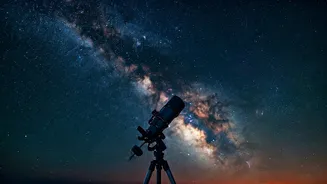
Your eyes are your most important tool, and they need about 20–30 minutes to fully adapt to the darkness. This process, called dark adaptation, can be instantly ruined by a flash of white light—like the one from your phone screen. This is why seasoned stargazers use red-light flashlights; the red wavelength doesn't trigger the same reset in your eye's photoreceptors. You don’t need expensive equipment. A simple pair of binoculars (7x50 or 10x50 are popular choices) will reveal stunning detail in the Milky Way and allow you to spot star clusters and larger nebulae. Bring a comfortable chair, blankets to stay warm (nights get cold even in summer), and snacks. The key is patience. Lie back, let your eyes adjust, and just look up.
Your New Moon Hit List
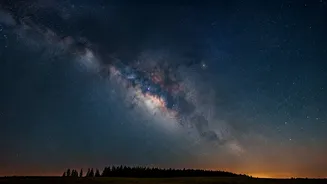
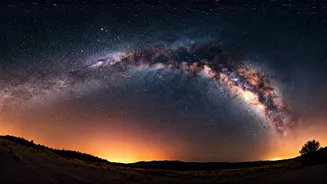
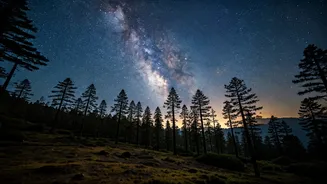
So, what should you look for? During summer months in the Northern Hemisphere, the star of the show is the Milky Way itself. On a dark, moonless night, it’s not a faint smudge but a brilliant, textured river of stars stretching from horizon to horizon, with dark dust lanes creating a stunning sense of depth. It’s a sight that has inspired awe for millennia. Next, try to find the Andromeda Galaxy (M31). This is the most distant object you can see with your naked eye, a faint, fuzzy patch of light that is actually a spiral galaxy containing a trillion stars, over 2.5 million light-years away. To find it, locate the constellation Cassiopeia (a big 'W' in the sky) and use a star chart app (in red-light mode!) to guide you. With binoculars, its elongated shape becomes clear. Finally, look for the Hercules Cluster (M13), a spectacular globular cluster of hundreds of thousands of stars. It appears as a small, fuzzy star to the naked eye but resolves into a breathtaking ball of light in binoculars or a small telescope.