







A World Apart from Mussoorie
To understand Landour, you first have to understand its more famous, boisterous neighbor, Mussoorie. Often called the "Queen of the Hills," Mussoorie is a bustling Indian tourist town, packed with hotels, crowded market streets, and vacationing families.
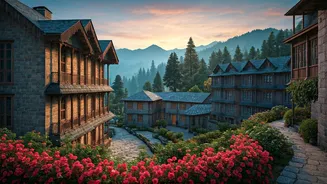
Landour, perched just a few hundred feet above it, is its quiet, introspective older sibling. A steep, winding road is all that separates them, but it feels like a journey to a different era. Once a British military cantonment, Landour retains a strict, old-world order. There is no major commercial development, no sprawling resorts, and no traffic jams. What you get instead is clean air, the scent of deodar and pine, and a profound, enveloping silence broken only by birdsong and the occasional toll of a church bell.
Echoes of the British Raj
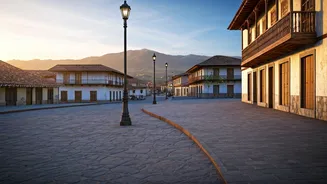
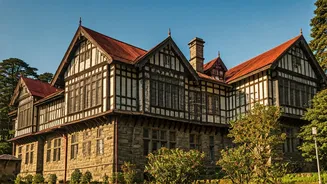
Landour was established in the 1820s as a sanatorium for British soldiers, and its colonial past isn't just a footnote; it's the town's entire architectural and spiritual framework. The buildings are a charming collection of stone cottages with names like “Sisters’ Bazaar,” “The Parsonage,” and “Ivanhoe.” Many still have their original tin roofs, painted a distinctive maroon or forest green. A walk through Landour is a walk through history. You’ll pass St. Paul’s Church, a beautiful Anglican church from 1840 where the parents of Jim Corbett (the famed naturalist) were married. You'll see Kellogg's Church, a Presbyterian gothic structure with a fascinating history of teaching Hindi to missionaries. This isn’t a theme park version of the past; it’s a living, breathing town where history feels less like a museum exhibit and more like a gentle, ever-present houseguest.
The Literary Heartbeat
If Landour has a soul, its primary custodian is the celebrated author Ruskin Bond. For decades, Bond has made this quiet corner of the world his home, and his presence has infused the town with a unique literary grace. He is to Landour what Hemingway is to Key West, a resident icon whose life and work are inextricably linked with the place. His simple, evocative stories about mountain life, ghosts, and the quiet beauty of the Himalayas perfectly capture the town’s spirit. Locals are protective of his privacy, but his influence is everywhere. Bookstores proudly display his works, and visitors often walk the same wooded paths he has described in his writing, hoping to catch a glimpse of the magic that has inspired him for so long. His choice to live here, shunning the literary hubs of Delhi and Mumbai, is perhaps the ultimate endorsement of Landour's quiet appeal.
The Simple Pleasures of Hill Life
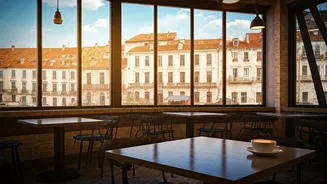
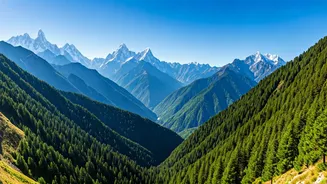
The “to-do list” in Landour is refreshingly short and revolves around simple, restorative activities. The main event is walking. The “Upper Chakkar,” a 2-mile loop road, offers stunning, panoramic views of the snow-capped Himalayan peaks on clear days. There are no shops or vendors here, just you, the mountains, and the occasional resident out for their constitutional. After a brisk walk, the destination is almost always Chaar Dukaan, which translates to “Four Shops.” This tiny cluster of old-school cafés has been serving hungry travelers for generations. Sitting on a simple bench, you can order a plate of pancakes, a comforting bowl of Maggi noodles, or a hot ginger-lemon-honey tea while watching the mist roll in. It’s here, in these simple moments, that Landour’s true character reveals itself: unhurried, unassuming, and deeply nourishing.