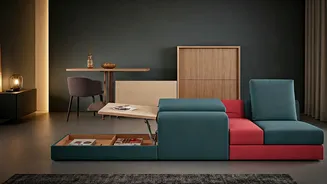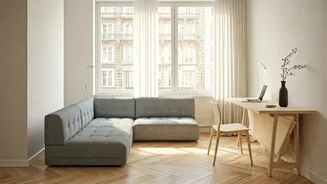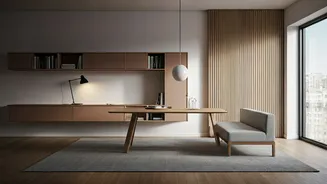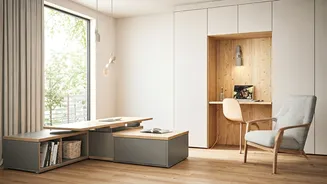


They Create 'Rooms' Without Walls
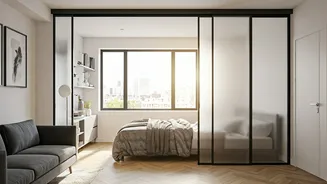
The core challenge of a studio is the lack of distinct zones. A sliding divider is the simplest, most effective way to solve this without erecting permanent, light-blocking walls. In seconds, you can separate your sleeping area from your living space,
creating a psychological boundary that makes a studio feel more like a one-bedroom apartment. This 'zoning' is crucial for work-from-home setups, allowing you to mentally 'leave' the office by closing it off at the end of the day. It also offers a much-needed sense of privacy when you have guests over, transforming an open floor plan into a multi-functional home.
They Maximize Natural Light
Unlike a traditional wall or even a bulky bookcase, many sliding dividers are designed to preserve airflow and light. Translucent options, such as frosted glass, acrylic panels, or Japanese-style shoji screens, allow sunlight to filter through the entire apartment, keeping the space bright and airy. This is a game-changer in smaller units that may only have one or two windows. By using a light-permeable divider, you get the separation you crave without sacrificing the precious natural light that makes a small space feel larger and more inviting. Even solid dividers, when retracted, leave the original light path completely unobstructed.
They Add Major Architectural Interest
Too often, studio apartments can feel like plain, characterless boxes. A sliding divider isn't just a practical tool; it's a powerful design element. A rustic barn door can introduce warmth and texture, a sleek glass panel adds a touch of modern minimalism, and a set of folding slatted screens can bring in a bohemian or mid-century vibe. Instead of just dividing a room, the right slider acts as a dynamic feature wall or a piece of movable art. It elevates the entire aesthetic of the space, turning a functional necessity into a stylish statement that reflects your personal taste.
They Offer Unmatched Flexibility
The needs of your space can change from day to day. A sliding divider offers a level of adaptability that permanent fixtures can't match. Need an open, expansive feel for a party? Slide the divider all the way open. Want a cozy, secluded nook for reading or sleeping? Slide it closed. This on-demand privacy and openness is the ultimate luxury in a compact home. This flexibility also future-proofs your space. If your living situation changes—for instance, if you stop working from home or get a new furniture layout—the divider can adapt with you, rather than becoming a permanent obstacle.
They Are Surprisingly Accessible
When you hear “architectural element,” you might think “expensive and complicated.” But the world of sliding dividers is incredibly diverse. While custom-built, ceiling-hung systems can be a significant investment, there are countless accessible alternatives. Simple curtain rod systems with heavy, high-quality drapes can achieve a similar effect on a tight budget. Freestanding folding screens require no installation at all. Even many track-based systems are designed for straightforward DIY installation. This range of options, from high-end custom builds to clever off-the-shelf hacks, means there is a sliding divider solution for nearly every budget and skill level, making this trend attainable for renters and owners alike.