






Welcome to the 'Land of Gods'
When Americans think of traveling to India, the mind often jumps to the Golden Triangle of Delhi, Agra, and Jaipur, or the sun-drenched beaches of Goa. But for those willing to look a little further, a world of profound beauty awaits in the northern state
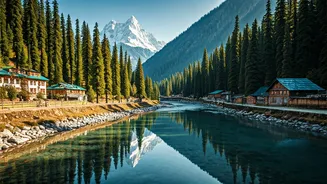
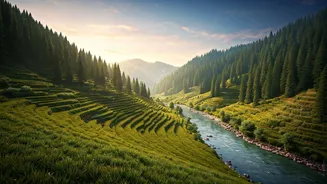
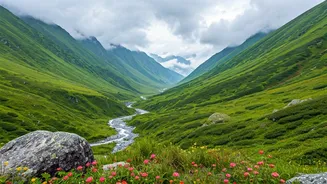
of Uttarakhand, known locally as *Devbhumi*, or the 'Land of the Gods.' The eastern half of this state is the Kumaon region, a tapestry of lush valleys, dense pine forests, and charming hill stations that sit in the shadow of some of the world's tallest mountains. Unlike the tourist-heavy circuits, Kumaon offers a slower, more immersive experience—a chance to connect with nature and a rich, enduring culture that feels worlds away from the hustle of modern life.
The Unique Magic of June
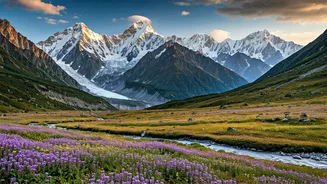
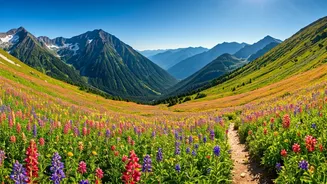
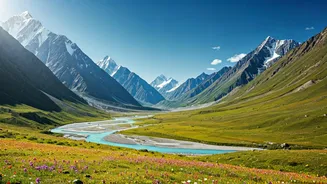
The headline isn't just a suggestion; it's a piece of insider advice. June in Kumaon is a month of sublime transition. The peak spring tourist season has wound down, but the heavy monsoon rains that define July and August have yet to arrive. What you get is a perfect sweet spot. The weather is warm and pleasant, ideal for daytime hikes without the blistering heat of the Indian plains. The landscape is a vibrant, almost impossibly lush green, fed by the early pre-monsoon showers that wash the dust from the air. This atmospheric cleansing often leads to breathtakingly clear views of the snow-capped Himalayan giants on the horizon, a sight that can be elusive at other times of the year. It’s a time of quiet anticipation, when the entire region seems to be taking a deep, fresh breath.
The Hidden Star: Mukteshwar
While Nainital is Kumaon's most famous—and often crowded—hill station, the region's true 'hidden star' is arguably the sleepy hamlet of Mukteshwar. Perched on a high ridge at an elevation of over 7,000 feet, Mukteshwar offers what many consider to be the most spectacular panoramic view in all of Kumaon. From here, you can gaze upon a 180-degree vista of Himalayan peaks, including the majestic Nanda Devi, India's second-highest mountain. The town gets its name from the 350-year-old Mukteshwar Dham temple, dedicated to the Hindu deity Shiva, which sits at the highest point. It’s a place of deep tranquility, where the loudest sounds are often the wind in the deodar trees and the distant call of a mountain hawk.
Embracing a Slower Pace
A trip to Mukteshwar isn't about a packed itinerary; it’s about decompression. The main activity is simply being present. Wake up early to watch the sunrise paint the peaks in shades of orange and pink. Take long, unhurried walks through terraced fields and fruit orchards laden with apples, plums, and apricots. For the more adventurous, the cliffs of Chauli Ki Jali offer opportunities for rock climbing and rappelling, along with a legend of its own and jaw-dropping views. You can also visit the Indian Veterinary Research Institute, a colonial-era institution where the famed conservationist Jim Corbett hunted the man-eating tigress of Mukteshwar, adding a layer of historical intrigue to the serene landscape. The real luxury here is time—time to read a book on a balcony, sip endless cups of chai, and watch the clouds drift across the valley below.
Your Journey to the Hills
Getting to this remote paradise is part of the adventure. For most American travelers, the journey begins with a flight into New Delhi (DEL). From there, the most scenic and classic route is to take an overnight train to Kathgodam, the last stop on the line. Waking up as the train climbs into the foothills is an experience in itself. From Kathgodam, it’s a picturesque, albeit winding, 2.5-hour taxi ride up to Mukteshwar. The drive itself is a gradual immersion into the Kumaoni world, as the air gets cooler, the scenery more dramatic, and the pace of life slows with every mile gained in elevation. Booking a reliable local driver in advance is highly recommended.