



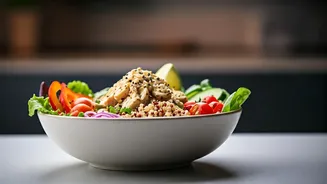

Protein: The Building Block of Fullness
If you often find yourself reaching for a snack an hour after a meal, you might not be getting enough protein. More than just a post-workout staple for gym enthusiasts, protein is the key to satiety—the feeling of being full and satisfied. When you eat
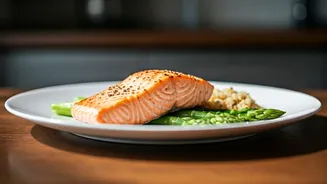
a protein-rich meal, your body releases hormones that signal to your brain that you're no longer hungry, helping to curb cravings and prevent overeating later. This is because protein is more complex to digest than simple carbohydrates, meaning it stays in your stomach longer and provides a steady release of energy, preventing the sharp blood sugar spikes and crashes that leave you feeling sluggish. Incorporating sources like chicken, fish, beans, lentils, tofu, eggs, and Greek yogurt into each meal doesn't just support muscle repair and growth; it provides the very foundation for a stable appetite and consistent energy throughout the day.
Fibre: The Unsung Gut Hero
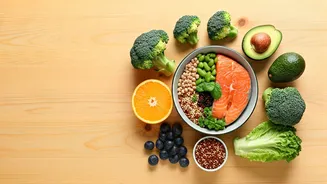
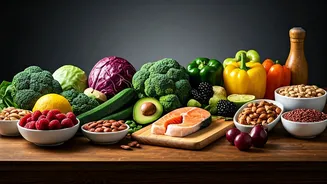
Fibre is the humble workhorse of a healthy diet, and it’s often the most overlooked component in modern, processed-food-heavy lifestyles. There are two types—soluble and insoluble—and both play crucial roles. Soluble fibre, found in oats, apples, beans, and carrots, dissolves into a gel-like substance in your gut. This process slows digestion, which helps stabilize blood sugar levels and can contribute to lowering cholesterol. Insoluble fibre, found in whole grains, nuts, and vegetables like cauliflower and green beans, adds bulk to your stool. This promotes regularity and keeps your entire digestive system running smoothly. A high-fibre diet is a cornerstone of gut health, feeding the beneficial bacteria that reside in your microbiome. A happy gut is linked to everything from a stronger immune system to improved mood. The easiest way to boost your intake? Aim to add more whole plant foods to your plate at every opportunity.
Portion Control: The Mindful Framework
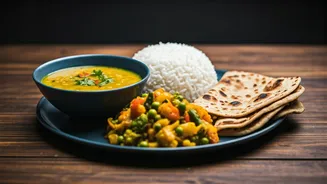
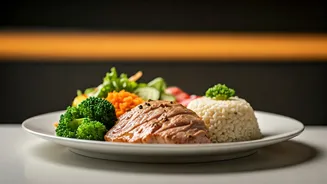
The concept of portion control has been given a bad rap, often associated with tiny, unsatisfying meals and constant hunger. It's time to reframe it. True portion control isn’t about deprivation; it’s about mindfulness and balance. It's the practice of understanding what an appropriate serving size looks like so you can fuel your body effectively without consistently over- or under-eating. In a culture of super-sized everything, our perception of a “normal” portion has become distorted. A simple way to recalibrate is by using visual cues. For many meals, a serving of protein should be about the size of your palm, a serving of carbs the size of your cupped hand, and a serving of fats about the size of your thumb. Fill the rest of your plate—ideally, half of it—with non-starchy vegetables. This approach allows you to enjoy all foods without rigid rules or calorie counting, empowering you to build a balanced plate that honors your body's actual needs.