
From Ceremony to Center Stage
For centuries, matcha has been the centerpiece of traditional Japanese tea ceremonies—a respected, powdered green tea whisked into a frothy, meditative beverage. But in the U.S., its journey has been a bit more… caffeinated. First, it became the wellness
world’s alternative to coffee. Then, it conquered cafes as the go-to latte for anyone seeking an earthy pick-me-up. Now, chefs are tapping into matcha’s potential as a full-fledged culinary ingredient. They’re realizing that the finely ground tea leaves offer more than just a health halo and a caffeine buzz; they provide a complex flavor profile and, just as importantly, a striking natural color that transforms a dish from simple fare to a visual statement.
The Instagram-Ready Ingredient
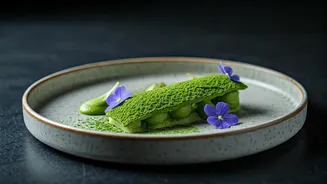
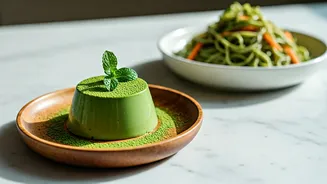
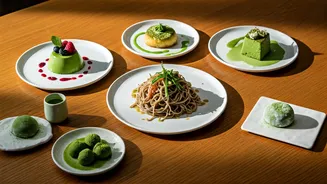
Let’s be honest: in 2024, we eat with our eyes first. A dish that photographs well is a dish that travels, digitally speaking. Matcha’s brilliant, jewel-toned green is a natural fit for our visually driven dining culture. It’s an organic, vibrant pigment that requires no artificial coloring. A dusting of matcha powder over a creamy panna cotta, a swirl in a cheesecake, or a vibrant sauce drizzled over seared scallops creates an immediate focal point. That pop of green against a neutral plate is irresistibly photogenic. Chefs know that a beautiful plate is more likely to be shared online, serving as free marketing that draws curious diners through the door. In this sense, matcha isn't just an ingredient; it's a savvy aesthetic choice.
But How Does It Taste?
While the color gets you to post it, the flavor is what makes matcha a truly compelling ingredient. High-quality matcha delivers a complex profile: it starts with a grassy, vegetal brightness, moves into a deep, savory umami note, and finishes with a subtle, pleasant bitterness. This complexity is its secret weapon. In desserts, matcha’s earthy bitterness is the perfect counterpoint to sugar. It cuts through the richness of white chocolate, cream, and butter, preventing sweets like tiramisu, macarons, or lava cakes from becoming one-dimensionally cloying. It adds a sophisticated, adult flavor to what could otherwise be a simple treat, turning a dessert into a conversation piece.
The Savory Surprise
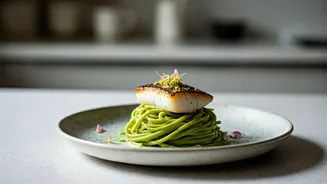
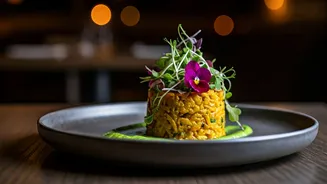
Perhaps the most exciting frontier for matcha is in savory cooking. Here, its umami notes are dialed up, pairing beautifully with seafood, chicken, and even pasta. Imagine handmade noodles dusted with matcha, giving them a subtle earthiness that complements a light cream or butter sauce. Or think of seared scallops served on a bed of risotto faintly greened and flavored by the tea. Some chefs are using it as a rub for grilled chicken or fish, where its slight bitterness creates a delicious crust when it chars. In these dishes, matcha isn’t a gimmick; it’s a seasoning that adds a layer of depth you might not be able to place immediately, but one that makes the entire dish more interesting and memorable. It functions much like a fine herb or a rare spice, signaling a chef who isn't afraid to play with expectations.