



The Allure of the Unseen Story
A showroom is designed to be a blank canvas, a space scrubbed clean of personality so you can project your own onto it. But a home with history is a library. Every creak in the floorboards is a footnote, every worn spot on the banister a paragraph in a decades-long
story. You can’t see the arguments that happened in the dining room in 1952, or the child who measured their height against a doorframe in the ‘70s, but you can feel the echoes of a life lived. This intangible narrative layer is what separates a dwelling from a home. It’s the sense that you are not the first, and you won’t be the last. You’re a custodian, a temporary character in a long-running play, and that sense of connection to a timeline greater than your own is a profoundly grounding feeling that no amount of granite-and-stainless-steel perfection can replicate.
Craftsmanship Before Code
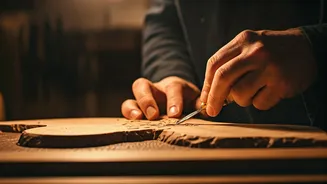
Walk through a house built before the 1950s and pay attention to the details. You’ll find things that simply don’t exist in modern mass-market construction. Notice the weight of a solid wood door, the intricate joinery in a staircase, or the slight, beautiful imperfections in wavy, old-growth glass. These elements weren’t manufactured; they were crafted. An artisan spent a day, not an hour, on that mantelpiece. A carpenter chose that specific piece of wood for its grain. This was a time when building was as much an art as it was a trade. A showroom boasts efficiency and modern convenience—and there’s a place for that—but it can’t offer the soul that comes from a human hand. The richness of a historic home is tied to this tangible sense of artistry and care, a quiet testament to a time when things were built to last, not just to sell.
The Beauty of Wabi-Sabi
Modern design culture often worships at the altar of flawlessness. We want clean lines, perfect surfaces, and unblemished finishes. A historic home offers a gentle rebellion against this tyranny of perfection. The Japanese have a term for it: *wabi-sabi*, the appreciation of beauty in imperfection and impermanence. The slight sag in a ceiling, the patina on brass fixtures, the discolored patch on a hardwood floor where a rug sat for fifty years—these aren't defects to be fixed. They are marks of authenticity. They prove the home has lived a life, weathered storms, and sheltered generations. A showroom’s perfection is fragile; the first scratch on the floor is a tragedy. In a home with history, a new scratch is just another mark of life, another sentence in an ongoing story. This acceptance of the beautifully imperfect is a more relaxed, more forgiving way to live.
A Dialogue with Place
A new housing development can feel placeless, an interchangeable collection of boxes that could exist anywhere. An older home, by contrast, is intrinsically linked to its location and its era. A brick rowhouse in Philadelphia tells a different story than a Craftsman bungalow in Pasadena or a Queen Anne Victorian in Chicago. The materials were often local, the styles were a reaction to the climate and the culture of the time. Living in one is to engage in a dialogue with your neighborhood’s past. You become part of a physical and cultural context. You might find old newspapers in the walls during a renovation or discover the original color of the house under layers of paint. This isn’t just homeownership; it’s a form of amateur archaeology, a constant, rewarding conversation with the ghosts of place.