



A Treasure from the Ice
Antarctica is, for all intents and purposes, a giant, frozen treasure chest for scientists. The continent’s vast, sterile ice sheets are the perfect place to find meteorites. Unlike rocks found in a forest or a field, a stone sitting atop a million square
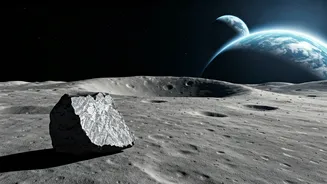
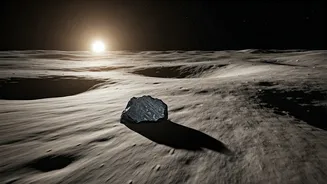
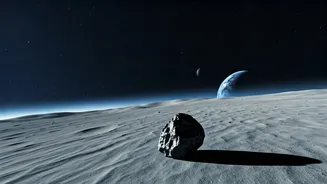
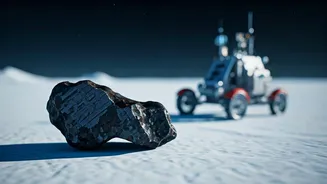
miles of ice is almost certainly from space. The dark rocks stand out against the white landscape, and the cold, dry conditions preserve them for thousands of years, free from the weathering and contamination common elsewhere on Earth. This is where our story begins. An international team of scientists on an expedition found a particularly interesting 1.7-pound (7.6 kg) rock. Designated Asuka-12241, it didn't look like a typical meteorite from the asteroid belt. Its chemical makeup was different. After careful analysis, researchers confirmed what they suspected: this wasn't just any space rock. It was a lunar meteorite, a genuine piece of the Moon, blasted into space by an ancient asteroid impact and sent on a cosmic journey that ended in Antarctica.
The Chandrayaan Connection
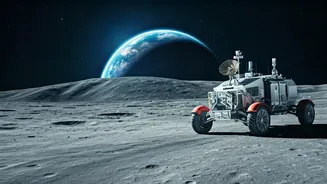
This is where the story goes from interesting to extraordinary. In August 2023, India's Chandrayaan-3 mission successfully landed its Vikram lander and Pragyan rover near the Moon's south pole—a historic first. As the rover explored the alien terrain, it used its onboard instruments to analyze the composition of the lunar soil, or regolith. It was sending back a chemical fingerprint of this mysterious and highly sought-after region. Meanwhile, back on Earth, scientists at India's Physical Research Laboratory (PRL) were studying Asuka-12241. They noticed something uncanny. The meteorite's mineralogy and chemical signatures—specifically the types and compositions of minerals like olivine and pyroxene—were a remarkably close match to the data streaming back from the Pragyan rover. It was like finding a suspect's DNA at a crime scene thousands of miles away. The evidence strongly suggested that the meteorite originated from the same geological province as the Chandrayaan-3 landing site.
A 'Free' Sample of a New Frontier
So, what does this link really mean? It doesn't mean the rock was kicked up by the Chandrayaan-3 lander. The impact that ejected it from the Moon happened long ago. What it does mean is that scientists now have a physical piece of the Moon's south pole region right here on Earth, available for study in state-of-the-art labs. This is hugely significant. Think of it as getting a free sample of a place we’re desperate to explore. The lunar south pole is the focus of the new space race, including for NASA's Artemis program. It's believed to be rich in water ice, a critical resource that could be used for drinking water, breathable air, and even rocket fuel for future missions to Mars. Having a tangible piece of this region allows scientists to study its properties in ways a rover simply can't. They can slice it, blast it with lasers, and run countless tests to understand its resource potential, its geological history, and the challenges it might pose to future human explorers and their equipment.
The Power of Connecting the Dots
This discovery is a masterclass in modern scientific synergy. It connects three distinct fields of exploration: Antarctic research, robotic space missions, and laboratory analysis. The Antarctic expedition found the rock. The Chandrayaan-3 mission provided the crucial context—the 'ground truth' from the Moon itself. And the lab work connected the two, turning an anonymous rock into a priceless scientific artifact. This kind of interplanetary detective work highlights how interconnected our exploration efforts are. Data from one mission can unlock the secrets of a discovery made years earlier on a different continent. It validates the work of the rover and gives researchers a head start on preparing for the next giant leap: sending astronauts back to the Moon, this time to its promising but challenging south pole. Thanks to a rock that took a long trip from the Moon to Antarctica, we know just a little bit more about what we’ll find when we get there.