





The Science of Our Obsession
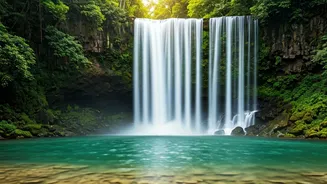
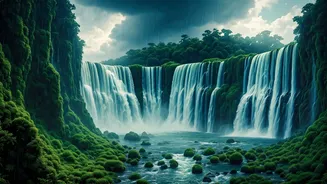
Why do we feel so good standing near a waterfall? The answer lies in a mix of psychology and physics. Scientists speak of “blue space”—the positive mental health effects of being near water. The constant motion of a waterfall can be meditative, capturing
our attention and pushing out anxious thoughts. Then there's the sound. The white noise of crashing water, a mix of all audible frequencies, can drown out distractions and promote a sense of calm. Some theories even point to negative ions. As water molecules crash, they release negatively charged ions into the air. When we breathe them in, they're thought to boost serotonin levels, improving our mood and energy. Whether it’s the visual hypnotism, the soothing soundscape, or the invisible chemistry, the pull is undeniable.
Yosemite Falls, California
A true titan of the Sierra Nevada, Yosemite Falls is not one but three separate falls, dropping a staggering 2,425 feet in total. It’s one of the tallest waterfalls in the world and the crown jewel of Yosemite National Park. Its power is most profound in late spring, when snowmelt feeds its thunderous torrent. The easy, one-mile loop trail to the base of Lower Yosemite Fall is accessible to almost everyone, offering a misty, awe-inspiring payoff. For the more adventurous, a strenuous, full-day hike to the top of the falls provides one of the most rewarding views in all of America’s parklands.
Havasu Falls, Arizona
Getting to Havasu Falls is a quest, but that’s part of its magic. Tucked away in a remote canyon on the Havasupai Reservation near Grand Canyon National Park, this waterfall is famous for its otherworldly turquoise water. The vibrant blue-green pool at its base, created by high concentrations of calcium carbonate, contrasts spectacularly with the red rock walls of the canyon. Access requires a coveted and hard-to-get permit and a challenging 10-mile hike each way, making the sight of its 100-foot cascade feel like discovering a hidden paradise. It’s not just a view; it’s an accomplishment.
Multnomah Falls, Oregon
The Pacific Northwest is a waterfall paradise, and Multnomah is its elegant, postcard-perfect icon. Located in the Columbia River Gorge just a 30-minute drive from Portland, this 620-foot, two-tiered cascade is as accessible as it is beautiful. The Benson Bridge, arching gracefully between the upper and lower drops, offers a storybook vantage point that makes you feel like you’re part of the falls themselves. A paved path leads to the bridge, and a series of switchbacks continues to the top for a different perspective. It’s a year-round spectacle, freezing into a magnificent ice sculpture in the dead of winter.
Ruby Falls, Tennessee
Not all waterfalls are found in sun-drenched forests. Deep inside Lookout Mountain, near Chattanooga, lies Ruby Falls, the nation's tallest and deepest underground waterfall open to the public. After descending 260 feet in a glass-front elevator, visitors are led through a cavern path filled with fascinating geological formations. The journey culminates in a dramatic chamber where the 145-foot waterfall, illuminated by a colorful light show, plunges into a pool below. The experience is surreal, combining the wonder of a cave tour with the power of a hidden cascade.
Shoshone Falls, Idaho
Often called the “Niagara of the West,” Shoshone Falls on the Snake River is actually taller than its more famous eastern counterpart. At 212 feet high and nearly 1,000 feet wide, this massive block-style waterfall is a spectacle of raw power, especially during the spring and early summer when water flows are at their peak. Located just outside Twin Falls, Idaho, the falls are easily accessible within a city park. Viewing platforms provide panoramic vistas of the churning water carving its way through a basalt canyon, a reminder of the monumental forces that have shaped the American West.