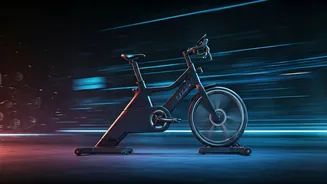












Welcome to the 'Pain Cave'
Forget the clunky stationary bike of your parents’ basement. The modern indoor cycling setup, affectionately dubbed the “pain cave,” is a high-tech portal to a virtual world. At its heart is the smart trainer, a sophisticated device that replaces the bike's
rear wheel. It communicates wirelessly with platforms like Zwift, Wahoo RGT, and MyWhoosh, translating a rider's effort into forward momentum for their digital avatar. When the virtual road points uphill, the trainer automatically increases resistance, simulating the grueling physics of a real climb. When you tuck in behind another rider's avatar, it eases up, mimicking the energy-saving benefits of drafting. This isn’t just pedaling in place; it's an immersive simulation that demands real, quantifiable power. The sweat is very real, even if the scenery is rendered in pixels.
The Power of the Digital Peloton
The real magic, and the reason these sessions have transcended simple solo training, is the “group” aspect. These platforms are massively multiplayer online games for athletes. On any given day, thousands of riders from around the globe populate these digital worlds. Organized group rides are scheduled around the clock, led by designated pace-setters who keep the pack together. Riders communicate via in-app messaging or, more commonly, through third-party audio apps like Discord, filling the air with encouragement, friendly banter, and shared groans on tough sections. This digital peloton creates a powerful sense of accountability and camaraderie. It’s much harder to quit a 4-hour ride when you’ve got a dozen new friends from four different continents expecting you to pull your weight. This social fabric turns a solitary, monotonous slog into a shared journey.
From an Hour Spin to an Epic Quest
The term “marathon” is no exaggeration. While many use these platforms for short, intense workouts, the real cultural phenomenon is the rise of the virtual endurance event. We’re talking about organized 100-mile “century” rides that can take four, five, or even six hours to complete. There are multi-day “stage races” that mimic the Tour de France, requiring riders to show up day after day. There are even ultra-endurance challenges like “vEveresting,” where a rider repeats the same virtual climb until they have ascended the 29,029-foot height of Mount Everest—a feat that can take over 12 hours of non-stop riding. These events require the same dedication, nutrition planning, and mental fortitude as their real-world counterparts. They are brutal tests of will, made possible only by the gamified structure and communal support system of the virtual environment.
Is It ‘Real’ Cycling?
Naturally, a fierce debate simmers within the cycling world: Does any of this count as “real” cycling? Purists argue that it misses the point entirely—the fresh air, the bike-handling skills honed on tricky descents, the serendipity of discovering a new road. They have a point; no simulation can replicate the feeling of sun on your back or the smell of a forest after a rain. However, the advocates for virtual cycling see it differently. For them, it’s not a replacement but a powerful supplement. It offers a safe, controlled environment to build fitness, free from traffic, stoplights, and dangerous drivers. It allows parents of young children and time-crunched professionals to connect with a global community and train effectively. For racers, it provides a perfect environment for structured, data-driven workouts. The screen doesn't offer a replacement for the real world, but a powerful, parallel universe for the sport.