


Moving Beyond the Familiar Menu
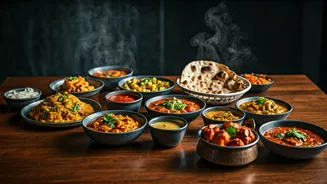
Let’s be honest: for many Americans, the experience of dining at an Indian restaurant has been remarkably consistent for the past 30 years. The menus, often a greatest-hits compilation of Punjabi and other North Indian dishes, felt designed to be as approachable
and inoffensive as possible. Dishes like saag paneer, butter chicken, and samosas became delicious but predictable staples. While this culinary diplomacy did wonders for introducing Indian flavors to the mainstream, it also created a monolith, flattening a cuisine as diverse and complex as the subcontinent itself. The rich, fiery seafood curries of the Konkan coast, the delicate lentil preparations of Bengal, and the sour, spicy flavors of the South were often left behind in favor of a handful of crowd-pleasers. This wasn't a failure, but a foundation. Now, that foundation is being used as a launchpad for something thrillingly new.
The New Guard of Chefs
The change is being driven by a wave of chefs who are no longer content to simply replicate the established formula. Many are second-generation Indian Americans or recent immigrants who are cooking with a newfound confidence and a different mission. Instead of asking, “What will Americans eat?” they’re asking, “What food do I want to share?” This shift is personified by figures like Chintan Pandya, the chef behind New York’s wildly acclaimed restaurants Dhamaka, Semma, and Adda. His philosophy is to present “the other 99%” of Indian food—unapologetically bold, regional, and specific. At Semma, he earned a Michelin star for showcasing the rustic, fiery cooking of his native South India, a region whose cuisine is vastly underrepresented in the U.S. These chefs are storytellers, using their menus to transport diners to a specific time and place, often drawing on the exact recipes their mothers and grandmothers cooked at home.
Regional Roots, Modern Plates
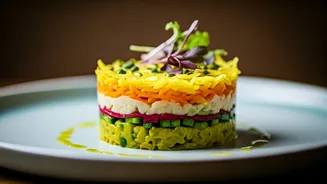
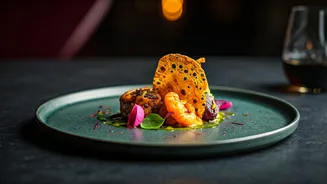
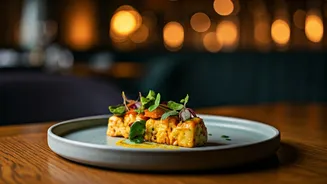
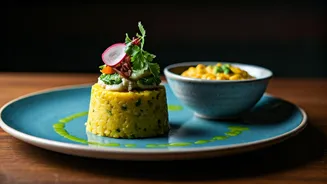
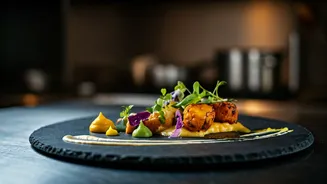
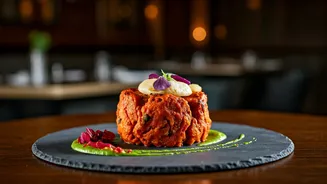
So what does this “new” Indian food actually look like on the plate? It’s about both hyper-regionality and creative reinterpretation. At Ghee in Miami, chef Niven Patel serves dishes using ingredients grown on his own farm, offering a true taste of Florida terroir through a Gujarati lens. You might find a familiar dish like pani puri, but executed with an unexpected filling or a surprising twist. At Washington D.C.’s Rania, the opulent successor to the beloved Punjab Grill, you can find a lamb shank slow-cooked for eight hours, falling off the bone into a rich, complex gravy—a world away from a standard curry. It’s also about technique. Chefs are using modern culinary tools and a deep understanding of flavor chemistry to deconstruct and reconstruct classics. Imagine a samosa, but with the filling and pastry separated into distinct, elegant components, or a yogurt-marinated fried chicken that delivers all the smoky flavor of a tandoor but with a shatteringly crisp crust. It honors the soul of the original while presenting it in a form that feels completely fresh.
It's About More Than 'Authenticity'
Perhaps the most significant part of this movement is that it transcends the tired debate over “authenticity.” These chefs aren’t just trying to be authentic; they are being personal. The food is authentic to their own stories, their heritage, and their creative vision. It reflects a growing confidence not only in the chefs themselves but also in the American diner. Audiences are more curious, more adventurous, and more willing to embrace flavors that are sharp, pungent, and unfamiliar. They're ready for the funk of fermented spices and the heat of ghost peppers. This evolution signals that Indian cuisine has truly arrived in the U.S. It’s no longer just “ethnic food” confined to a specific lane. It’s a dynamic, essential part of the broader American culinary conversation, capable of the same innovation, artistry, and prestige as French, Italian, or Japanese cuisines.