








The Science of the Streak
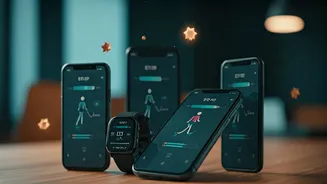
That little jolt of satisfaction you get from hitting a streak is no accident; it’s a carefully engineered feature rooted in behavioral psychology. App designers call it 'gamification'—the process of applying game-like elements such as points, badges,
and leaderboards to non-game activities. The step streak is a perfect example. It taps into a powerful psychological framework known as the habit loop: a cue (the daily goal), a routine (walking), and a reward (the satisfaction of closing your rings or hitting your number). Every time you successfully complete the loop, your brain releases a small amount of dopamine, the 'feel-good' neurotransmitter associated with pleasure and reward. This creates a craving to repeat the behavior. The streak amplifies this by adding another layer: loss aversion. We are psychologically wired to feel the pain of losing something more intensely than the pleasure of gaining something equivalent. The thought of 'breaking the chain' can be a more powerful motivator than the reward of extending it, compelling you to walk those extra steps, even when you’re tired or busy.
The Power of Small Wins
For millions of Americans, this digital nudge is exactly what they need. In a world of all-or-nothing fitness goals, the streak celebrates consistency over intensity. It reframes exercise not as a grueling, hour-long gym session but as a simple, achievable daily task. This approach can be transformative for someone starting a fitness journey from a sedentary lifestyle. The goal isn't to run a marathon tomorrow; it's just to walk a little more than yesterday and to do it again the day after. This accumulation of small, consistent wins builds momentum and self-efficacy—the belief in your own ability to succeed. When you see a 30-day streak, you’re not just looking at a number; you’re looking at a month of promises you kept to yourself. It’s tangible proof that you are capable of change. For many, this simple digital tool has been the catalyst for building healthier, more active lives, one step at a time. The app isn't just counting steps; it's validating effort.
When the Game Turns Against You
But there's a flip side to this digital motivation. For some, the game can become a source of anxiety and compulsion rather than encouragement. The pressure to maintain a perfect streak can turn a healthy habit into a rigid obsession. Users report walking in circles in their living rooms late at night, jogging in place while brushing their teeth, or feeling intense guilt and failure over a missed day due to illness, travel, or simply needing a rest. The app, which doesn’t understand context, treats a rest day and a lazy day as the same failure to meet a goal. This can foster an unhealthy relationship with exercise, where the focus shifts from listening to your body to satisfying the algorithm. The number on the screen becomes more important than how you actually feel. This is the dark side of gamification: when the metric becomes the mission, the original purpose—health and well-being—can get lost in the chase for digital validation.
Reclaiming Your Fitness Journey
So, how do you use these tools without letting them use you? The key is to treat the streak as data, not a directive. It’s a helpful guide, not an unforgiving boss. Many apps now allow for 'rest days' or focus more on weekly and monthly averages, which is a healthier way to track progress. If your app doesn’t, you can mentally reframe it yourself. Look at your activity over a month, not just day by day. A broken streak isn’t a failure; it’s just a data point. Perhaps you were sick, or you were on a long-haul flight, or you did a different kind of workout the app doesn't track as well, like swimming or weightlifting. The goal is to build a sustainable, enjoyable active lifestyle, not to become a slave to a digital counter. Use the app for what it’s good at—reminders, tracking, and celebrating momentum—but always remember that you are the one in charge of your health, not the code in your phone.