





An Oar Stroke of Starlight
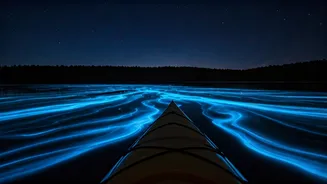
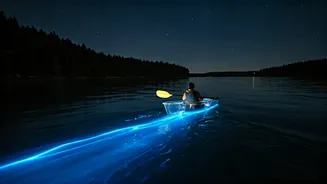
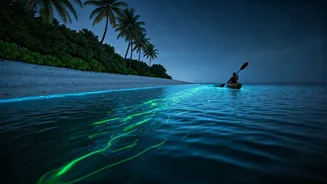
On a moonless night, far from the glow of city lights, the world feels hushed and vast. You’re in a kayak, floating on calm, dark water. Then, you dip your paddle in. A swirl of ghostly blue light erupts, tracing the oar’s movement like a paintbrush stroke
of liquid neon. A fish darts beneath your boat, leaving a glowing torpedo trail in its wake. Your hand, skimming the surface, creates a shimmering glove of light. This is the surreal and deeply moving experience of bioluminescent kayaking. It’s more than just a paddle trip; it’s an immersion into a hidden, living light show. The silence of the night, combined with the silent, sparkling response of the water, creates a profound sense of connection to the natural world. It feels primal, ancient, and utterly magical—like paddling through a starfield that has fallen to Earth.
The Science Behind the Sparkle
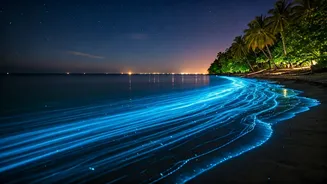
The otherworldly glow isn’t magic, but it’s certainly marvelous science. The light is created by bioluminescence, a chemical reaction within living organisms. In the world’s glowing bays and lagoons, the primary light source is a type of single-celled plankton called dinoflagellates. When the water they live in is disturbed—by a paddle, a kayak's hull, or a swimming fish—these microscopic creatures emit a flash of blue-green light as a defense mechanism, startling potential predators. The effect is millions of tiny alarms going off at once, creating a visible, shimmering spectacle. The chemical process involves a light-producing molecule called luciferin and an enzyme, luciferase. While it happens in countless marine species, from jellyfish to anglerfish, it's the sheer density of dinoflagellates in certain warm, protected waters that creates the famous glowing effect for kayakers.
Where to Find the Glowing Waters
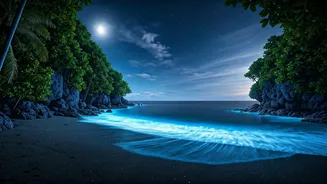
While the headline evokes “island nights,” this spectacular phenomenon can be found in a few special coastal areas in and around the United States. The undisputed champion is Puerto Rico, which is home to three of the world’s most brilliant bioluminescent bays. Mosquito Bay on the island of Vieques is certified by Guinness World Records as the brightest on Earth, offering a truly breathtaking experience. Laguna Grande in Fajardo and La Parguera in the southwest of the main island also offer fantastic guided tours. Stateside, Florida's “Space Coast” is another hotspot. The Indian River Lagoon and Banana River near Titusville come alive during the warmer months (typically May through October) with glowing dinoflagellates and bioluminescent comb jellies. On the West Coast, Tomales Bay, just north of San Francisco, and parts of the San Juan Islands in Washington offer their own, more subtle versions of the phenomenon, often appearing as a sparkling wake behind your boat.
Tips for the Perfect Glowing Paddle
To maximize your chances of a brilliant light show, timing is everything. The most important factor is the moon. You want to go on a night with a new moon, or as close to it as possible. A bright moon acts like a giant flashlight, washing out the subtle glow of the plankton. The darker the sky, the more vibrant the bioluminescence will appear. The season also matters; the water-borne organisms are most active and numerous in warmer months. Always book a trip with a reputable local guide. They know the best spots, understand the tides and weather, and provide the necessary equipment and safety instructions. Most tours are suitable for beginners and don't require previous kayaking experience. Wear clothes you don’t mind getting damp, bring bug spray (especially in Florida and the Caribbean), and leave your phone in a waterproof bag. The best way to capture this memory is not with a camera, which struggles in the low light, but with your own eyes.