




The Myth of More
Somewhere along the line, we were sold a lie. The lie is that complexity equals quality, that a truly great meal must be born from a day of painstaking labor, a mountain of dirty pans, and at least one ingredient you had to order online. This culinary
perfectionism, fueled by glossy food magazines and hyper-stylized cooking shows, has turned the simple joy of making dinner into a competitive sport. But what if the goal isn't to replicate a Michelin-star dish on a Tuesday night? What if the goal is simply to eat something deeply satisfying that doesn't leave you exhausted? This is where the tyranny of the overcomplicated recipe falls apart. A three-hour braise has its place on a lazy Sunday, but for the 6 p.m. scramble, it’s a recipe for burnout, not bliss. The pressure to perform culinary acrobatics ignores the reality of modern life and, more importantly, overlooks the profound flavor you can achieve with a handful of smart ingredients.
The Genius of the Curry Formula
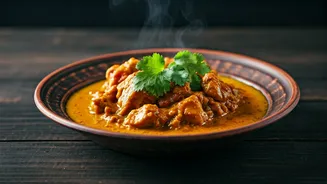
A quick curry is not a compromise; it's a culinary cheat code. Its brilliance lies in its formula, a simple equation that delivers exponential flavor. It starts with a high-quality curry paste. Whether it’s a fiery Thai red, a fragrant green, or a warming Indian-style paste, these jars are concentrated bombs of flavor, packed with aromatics like lemongrass, galangal, chiles, and spices that would take hours to prep from scratch. Next, you introduce a creamy, luscious element, most often coconut milk, which tempers the heat and creates an instant, velvety sauce. From there, it's a choose-your-own-adventure. Toss in quick-cooking protein like shrimp or thinly sliced chicken. Add whatever vegetables are wilting in your crisper drawer—bell peppers, broccoli, spinach, sweet potatoes. Let it simmer for 10-15 minutes while your rice cooks. That’s it. You've built a complex, layered, and deeply comforting meal in less time than it takes to watch an episode of your favorite show. No special equipment, no obscure techniques—just pure, unadulterated efficiency.
Reclaiming Your Weeknights
The true victory of the quick curry isn't just about taste; it's about reclaiming your time and sanity. An overcomplicated recipe demands your full, undivided attention. It has precise timings and multiple components that need to be managed simultaneously. It’s a stressful, high-stakes operation. A quick curry, on the other hand, is forgiving. It invites improvisation and works around you. Did you forget to add the green beans until the last minute? No problem, they’ll just be a bit crunchier. Only have half a can of coconut milk? Thin it out with some broth. This flexibility removes the anxiety from cooking. It transforms dinner from a chore you have to conquer into a creative, relaxing ritual. The reward is not just a delicious meal, but the gift of an evening free from the stress of a demanding recipe and the subsequent hour of cleanup. It’s the kind of cooking that supports your life, rather than dominates it.
The Law of Diminishing Returns
Let’s be honest about that aspirational recipe for duck confit with a cherry-port reduction and saffron-infused parsnip purée. It sounds incredible, but the return on investment is often brutal. You spend $50 on niche ingredients you’ll never use again, dirty every pot and pan you own, and four hours later, you produce a dish that, while good, doesn't taste four hours better than a 20-minute curry. This is the law of diminishing returns in action. Quick curries exist in the sweet spot of maximum flavor for minimum effort. They prove that you don't need a sous vide machine or a pantry full of dehydrated powders to create something wonderful. They rely on the synergy of a few powerful ingredients working in harmony. While complex cooking can be a rewarding hobby, it’s a terrible blueprint for daily sustenance. For the 99% of meals we cook at home, simplicity, speed, and satisfaction will always win.