





An Escape from the Expected
For years, the American vegetarian plate has been defined by what it lacks. But a culinary shift is underway, driven by a desire not just for meat-free meals, but for food that is unapologetically bold, complex, and joyful. Enter Caribbean cuisine. With
its masterful use of spices, hearty ground provisions, and tropical abundance, it offers a natural, deeply satisfying answer to the question, “What’s for dinner?” It’s a culinary tradition where plants were never an afterthought. From Jamaican rice and peas simmered in coconut milk to Trinidadian doubles built on fragrant chickpeas, the blueprint for stunning plant-based food has been there all along. Now, American chefs and home cooks are finally catching on, realizing that the key to exciting vegetarian cooking isn’t about finding the perfect meat substitute, but about embracing cuisines that have always centered the power of the plant.
The Pantry of the Sun
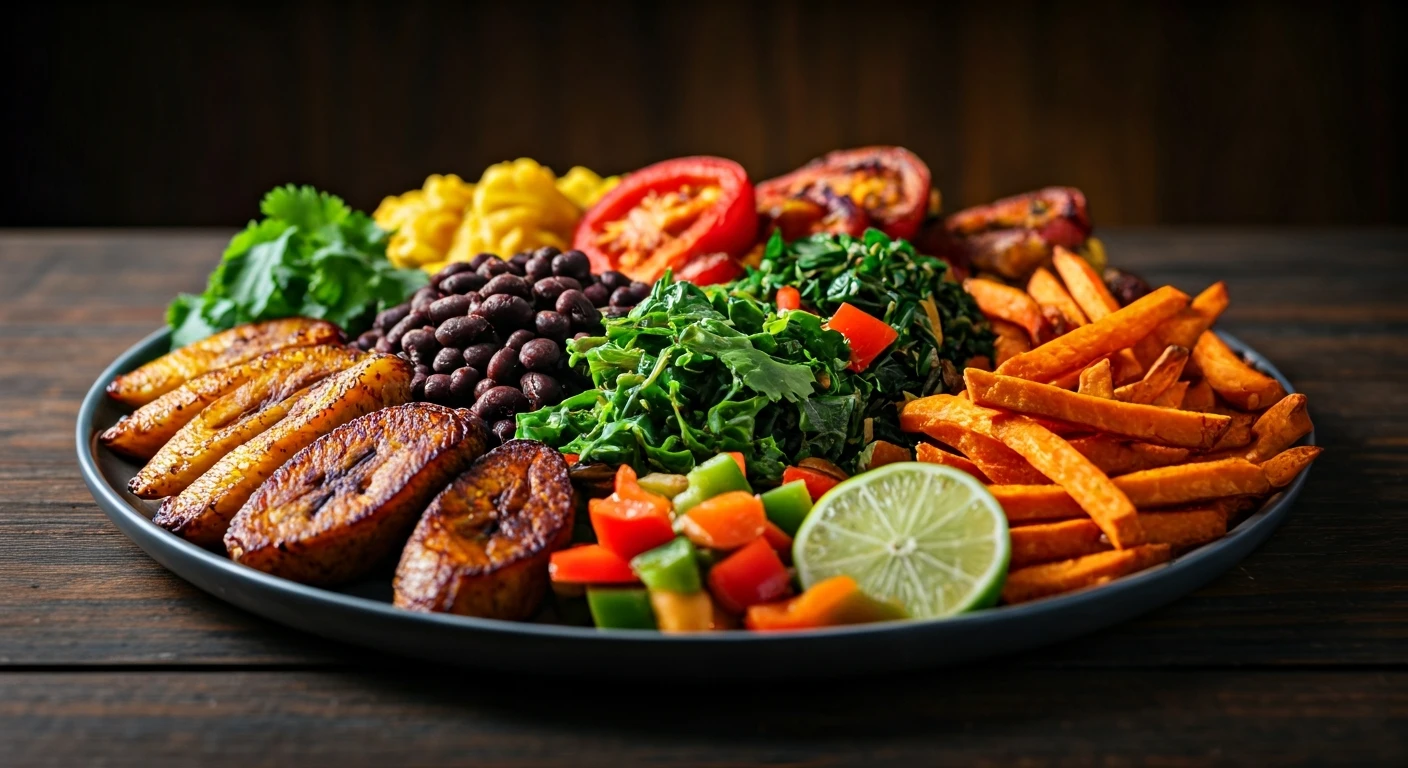
The magic of Caribbean vegetarian cooking starts with its pantry. It’s a treasure chest of flavor that builds layers of complexity. The foundational “green seasoning”—a blend of scallions, thyme, garlic, and herbs—provides an earthy base for everything from stews to marinades. The signature warmth comes from spices like allspice, nutmeg, and ginger, while the legendary scotch bonnet pepper lends a fruity, fiery kick that can be tailored from a mild hum to a five-alarm blaze. But it’s the textures that truly set it apart. Hearty starches like yams, sweet potatoes, and plantains (both sweet and savory) provide a satisfying weight. Creamy coconut milk forms the luscious base of countless curries and stews, lending richness without dairy. Add in earthy callaloo greens, meaty breadfruit, and versatile cassava, and you have a full spectrum of ingredients that make meat feel entirely beside the point.
From Ital Roots to Modern Tables
This modern trend has deep, spiritual roots. For Rastafarians, “Ital” cooking is a core tenet of their faith. The term, derived from “vital,” refers to a natural, pure, and often vegan diet intended to enhance life energy or “livity.” Ital food avoids processed ingredients, salt, and artificial additives, focusing instead on the unadulterated goodness of the earth. An Ital stew might feature a medley of root vegetables, beans, and greens simmered slowly in coconut milk and seasoned with fresh herbs and pimento (allspice). This long-standing tradition of mindful, plant-based eating provides a rich cultural foundation for today’s movement. Chefs aren't just borrowing flavors; they’re tapping into a philosophy that has celebrated plant-based vitality for decades. This authenticity is a powerful antidote to the hyper-processed world of some modern vegan products.
The New American Plate
So what does this look like on the American plate? It’s appearing everywhere, from food trucks to fine-dining establishments. You might find a curried jackfruit that’s been slow-cooked until it’s perfectly tender, served with coconut rice and fried sweet plantains. Or perhaps a hearty bowl of pumpkin soup, laced with ginger and scotch bonnet, that warms you from the inside out. We're seeing crispy breadfruit “fries” served with a spicy dipping sauce, hearty lentil patties seasoned with Jamaican jerk spices on a brioche bun, and reimagined Ackee and “no-saltfish” made with hearts of palm. This fusion is creating a new vocabulary for vegetarian food in the U.S., one that is vibrant, globally-inspired, and incredibly delicious. It’s proof that when you start with a cuisine built on flavor, the possibilities are endless.