

The End of the Sledgehammer Era?
For years, the ultimate home fantasy involved a sledgehammer. Inspired by a decade of reality TV, the dream was to tear down walls, gut kitchens, and rebuild from the studs up. But a quieter, more artistic rebellion is underway. Homeowners are getting
tired—of the expense, the mess, and the sheer disruption of large-scale renovation. Instead of chasing the open-concept dream, they’re chasing a feeling. The new shortcut to a total room transformation isn’t a construction crew; it’s a single piece of oversized art. This shift reflects a deeper change in how we view our homes. After years spent indoors, we’re less interested in generic, flippable perfection and more drawn to spaces that feel personal, curated, and emotionally resonant. Big art delivers that character in an afternoon, no permits required.
The Power of a Single Statement
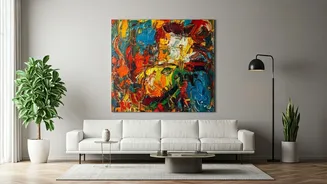
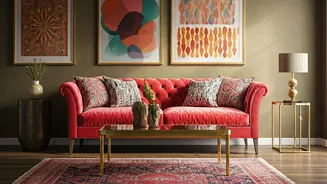
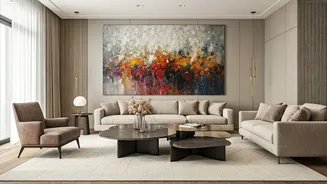
So, what exactly is 'big art'? It’s less about a specific size and more about intention and scale relative to the space. It’s any piece that’s large enough to command a wall and become the undeniable focal point of a room. Think a six-foot abstract canvas over a sofa, a floor-to-ceiling photograph in an entryway, or a massive textile hanging that adds texture and warmth. The magic of a single large piece is its ability to do the work of a dozen smaller decor decisions. It can introduce a full color palette, establish a mood (serene, energetic, moody), and create an architectural anchor where none existed. In a small apartment, a large piece of art can trick the eye, making the space feel grander and more deliberate. In a large, open room, it can carve out a cozy, defined zone, like the living area or dining space, giving the vastness a human scale.
Finding Your Perfect Piece (Without a Trust Fund)
The words 'big art' can conjure images of gallery auctions and intimidating price tags, but the trend is surprisingly democratic. The key is to think beyond the traditional fine art market. Websites like Etsy, Society6, and Artfully Walls offer oversized prints from emerging artists at accessible prices. You can have a favorite personal photograph blown up and professionally framed for a deeply personal statement. Another growing trend is using large-scale textiles—like vintage rugs, quilts, or modern tapestries—as wall hangings. They cover a lot of visual real estate while also absorbing sound and adding a layer of softness that paintings can't. And don't underestimate the power of a DIY project. A giant, primed canvas and a few quarts of paint can become a minimalist color-field painting or a bold, graphic design that’s entirely your own.
How to Make It Work in Your Space
Placing a large art piece isn't as simple as just hanging a picture. It requires a bit more thought. The most classic placement is centered over the largest piece of furniture in the room, like your sofa or headboard. The rule of thumb is that the art should be about two-thirds the width of the furniture below it to feel balanced. Hang it low enough to feel connected to the furniture, typically with the bottom edge 6-10 inches above the sofa back. If you’re hanging it on a blank wall, like in a hallway or dining room, the center of the piece should be at average eye level, around 57-60 inches from the floor. And before you fall in love with a piece, measure everything: the wall, the art, and, most importantly, your doorways, stairwells, and hallways. The most heartbreaking design mistake is buying a masterpiece you can’t get into the room.