


First, What Are Recycled Temple Blooms?
In Hindu temples across the world, fresh flowers are presented daily as offerings to deities. These beautiful, symbolic gestures generate tons of floral waste, as the blossoms are typically discarded after a day. A growing movement toward sustainability
has inspired a beautiful solution: upcycling. These 'temple flowers' are collected, sorted, and sometimes dried by social enterprises or local communities. By using them for rangoli, you’re participating in a circular economy—giving a second life to sacred offerings, reducing landfill waste, and creating something new and meaningful. You can source them from local temples (with permission), community groups, or simply save and dry flowers from your own home.
1. The Classic Sunburst Mandala
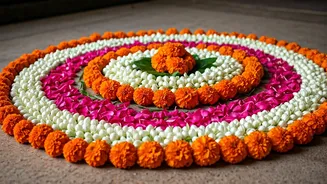
The mandala is the quintessential rangoli design, representing the universe and wholeness. A sunburst pattern is a perfect way to start. Begin with a small circle in the center using a bright color like yellow or orange marigold petals. Create concentric rings around it, alternating colors and textures. For example, a ring of bright yellow marigolds could be followed by a band of deep red rose petals, then a delicate circle of white jasmine. The key is symmetry. Use a plate or string to trace light guidelines on your floor or a large board. This design is visually stunning and deeply meditative to create, allowing you to focus on pattern and color.
2. The Minimalist Crescent Moon
You don't need a massive, intricate design to make an impact. For a modern, elegant take, try a minimalist crescent moon. This design works wonderfully in smaller spaces, like an entryway or on a side table. Use primarily one type of flower, such as delicate white jasmine or tuberose petals, to form a simple, clean crescent shape. To add a touch of subtle contrast, you can outline the curve with a thin line of darker petals or even green leaves. This understated approach celebrates the beauty of simplicity and is perfect for those who want to incorporate the tradition without overwhelming their decor. It’s quick, chic, and incredibly fragrant.
3. The Floating Water Rangoli
A floating rangoli, or 'pookalam,' is a fantastic option if you don’t want to decorate your floor. Find a large, shallow vessel—a traditional urli (a wide brass or clay bowl), a glass dish, or even a birdbath will do. Fill it with a few inches of water. Gently release the petals onto the water's surface. They will float, creating a vibrant, reflective design. You can create patterns just as you would on the floor, or simply allow the colors to mix in a beautiful, abstract way. The water keeps the flowers fresh and fragrant for longer, and the play of light on the surface adds an extra dimension of beauty. For a magical evening look, add a few floating tea lights.
4. The Monochromatic Gradient
Who says rangoli has to be a riot of different colors? A monochromatic design can be incredibly sophisticated and powerful. Choose one color family and gather petals in various shades. For example, you could use everything from pale pink rose petals to deep crimson carnations. Arrange them in a gradient, moving from the lightest shade on the outside to the darkest at the center, or vice versa. This technique creates a stunning ombré effect that feels both traditional and contemporary. It’s a true celebration of a single hue, drawing attention to the subtle differences in texture and tone between the different flowers.
5. The Free-Form Abstract River
Let go of perfect symmetry and embrace artistic freedom. Instead of a circle or square, create a flowing, river-like pattern that meanders across a space. This abstract approach is less about precision and more about movement and intuition. Start at one point and let the design 'grow' organically as you lay down handfuls of petals. Blend colors together like a watercolor painting—let fiery oranges flow into sunny yellows and cool purples. This is a wonderfully liberating activity, especially for kids, as there are no rules to follow. The final result is a unique, one-of-a-kind piece of ephemeral art that reflects your personal creative energy.