

A Soft Rejection of Hard Minimalism
For the better part of two decades, a specific brand of stark, rigid minimalism reigned supreme. Think sharp-edged marble islands, boxy furniture, and a Mondrian-like grid dictating every layout. While clean and uncluttered, this aesthetic could often
feel cold, impersonal, and even a bit sterile. The current obsession with curves is a direct, and very intentional, backlash against that era. Designers and homeowners are seeking an aesthetic that feels more human, more forgiving, and less severe. Where minimalism drew hard lines, curves blur them. They introduce a sense of gentleness and fluidity into a room, replacing a rigid, look-but-don’t-touch vibe with an invitation to come in, relax, and stay awhile. It’s a pendulum swing from architectural severity toward decorative softness, prioritizing feeling over pure form.
The Psychology of Comfort and Safety
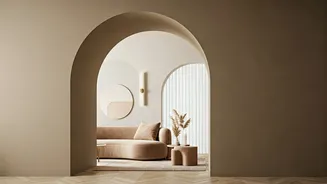
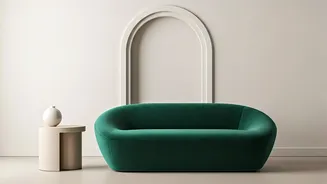
There’s a deep, almost primal reason we’re drawn to curves. Psychologically, rounded shapes are perceived as safer, friendlier, and more approachable than sharp, angular ones. Our brains associate sharp points with danger—thorns, teeth, weapons—triggering a subtle, subconscious sense of alert. Curves, on the other hand, evoke natural, organic forms: rolling hills, smooth stones, and the human body itself. In a world of digital overload and lingering post-pandemic anxiety, the home has been recast as a true sanctuary. Designers are leaning into this by creating spaces that feel like a warm embrace. A curved sofa cradles you, a rounded armchair invites you to curl up, and an arched doorway feels like a less abrupt, more graceful transition between rooms. This is the core of biophilic design—mimicking the patterns of the natural world to create environments that are inherently calming and restorative.
Echoes of Art Deco and the 70s
Like all great trends, this one has deep roots in design history. The current wave of curves pulls inspiration from two particularly glamorous and groovy periods. The first is the Art Deco movement of the 1920s and 30s. The grand, sweeping arches and scalloped patterns seen in modern design are a direct nod to the opulent cinemas and grand hotels of that era, lending a touch of sophisticated, old-world glamour to contemporary spaces. The second key influence is the 1970s. This decade was all about relaxed, social living, defined by sunken conversation pits, kidney-shaped tables, and plush, low-slung modular sofas. Today’s designers are reinterpreting that laid-back vibe for a modern audience, creating furniture that encourages connection and comfort. By borrowing from these beloved eras, the curve trend feels both nostalgic and refreshingly new, grounded in a rich design lineage.
More Than Just Furniture
While a statement sofa is often the entry point, the real commitment to the trend lies in structural curves. Designers are increasingly incorporating them into the very bones of a house. Arched doorways and interior windows have become signature features, replacing standard rectangular openings. These architectural elements do more than just soften a room; they create a sense of procession and flow, elegantly guiding the eye from one space to the next. Curved walls, whether in a shower or along a hallway, eliminate dead-end corners and foster a continuous, dynamic energy. Built-in nooks with arched ceilings provide cozy, cocoon-like retreats for reading or relaxing. By making curves a structural element rather than a mere decorative one, designers are crafting homes that have an inherent sense of grace, movement, and visual poetry built right in.