







The Great Uncoupling of Work and Workouts
For decades, the American fitness routine was dictated by the tyranny of the 9-to-5 schedule. For most office workers, exercise was something you crammed in before sunrise or, more commonly, tacked onto the end of a long day. This created a predictable,
if stressful, rhythm. Gyms were ghost towns at 11 a.m. but battlegrounds at 6 p.m. Your fitness options were defined not by your energy levels or personal preference, but by the rigid structure of corporate life. The widespread adoption of remote and hybrid work has shattered that model. When you remove the commute and the requirement to be physically present in one location for eight consecutive hours, you give employees back a crucial resource: autonomy over their own time. The link between the end of the workday and the start of a workout has been broken. Instead of a single, crowded peak, fitness is being spread throughout the day, integrated into life rather than being an appendage to it.
Enter the 'Workout Snack'
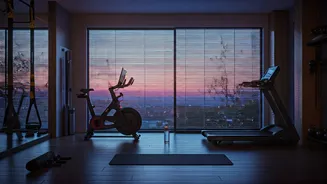
The new normal is less about grueling, hour-long sessions and more about what some are calling “workout snacks.” This is the 2 p.m. neighborhood jog to break up a string of Zoom calls. It’s the 15-minute yoga flow on your living room floor to reset your posture after an hour of typing. It’s a quick session with dumbbells you now own because your home has also become your gym.
This shift is visible in the data. Fitness trackers and apps report a flattening of the daily activity curve. The sharp spike in activity after 5 p.m. has been replaced by more consistent, rolling waves of movement from mid-morning through the afternoon. People are exercising when they feel they need it most—to combat a midday slump, to clear their head before a big project, or simply because the sun is out. It’s a more intuitive, sustainable approach to physical activity, driven by personal energy cycles rather than an external clock.
A Remixed Fitness Industry
This decentralization has sent shockwaves through the multi-billion-dollar fitness industry. Traditional gyms, once the undisputed hubs of exercise, have had to adapt or risk becoming obsolete. Many are now seeing higher traffic during previously dead hours, prompting them to add more midday classes and offer flexible, off-peak memberships. They are no longer just competing with the gym down the street; they’re competing with Peloton in the guest room, Apple Fitness+ on the iPad, and a run in the local park.
The digital fitness world, of course, was perfectly positioned for this moment. On-demand classes and connected equipment cater directly to the desire for flexibility. You can take a world-class cycling class at 10:47 a.m. if you wish. This new landscape favors a hybrid model, where consumers might use a gym for its heavy weights and sense of community but rely on digital options for daily convenience.
More Than Just Convenience
The normalization of flexible fitness is about more than just dodging the crowds. It represents a fundamental shift in how we view the relationship between work, life, and wellness. By empowering employees to integrate movement into their day, companies are inadvertently fostering a healthier, more productive workforce. A quick workout can be a powerful tool for managing stress, boosting creativity, and fighting burnout.
Breaking up the day with physical activity has been shown to improve focus and cognitive function. Instead of returning to their desks drained from a post-work gym session, many employees find that a midday workout re-energizes them for the remainder of their tasks. It transforms exercise from a chore to be completed into a tool to be used, making the workday itself more manageable and less monolithic. This newfound control is a powerful, if subtle, perk of modern flexible employment.