



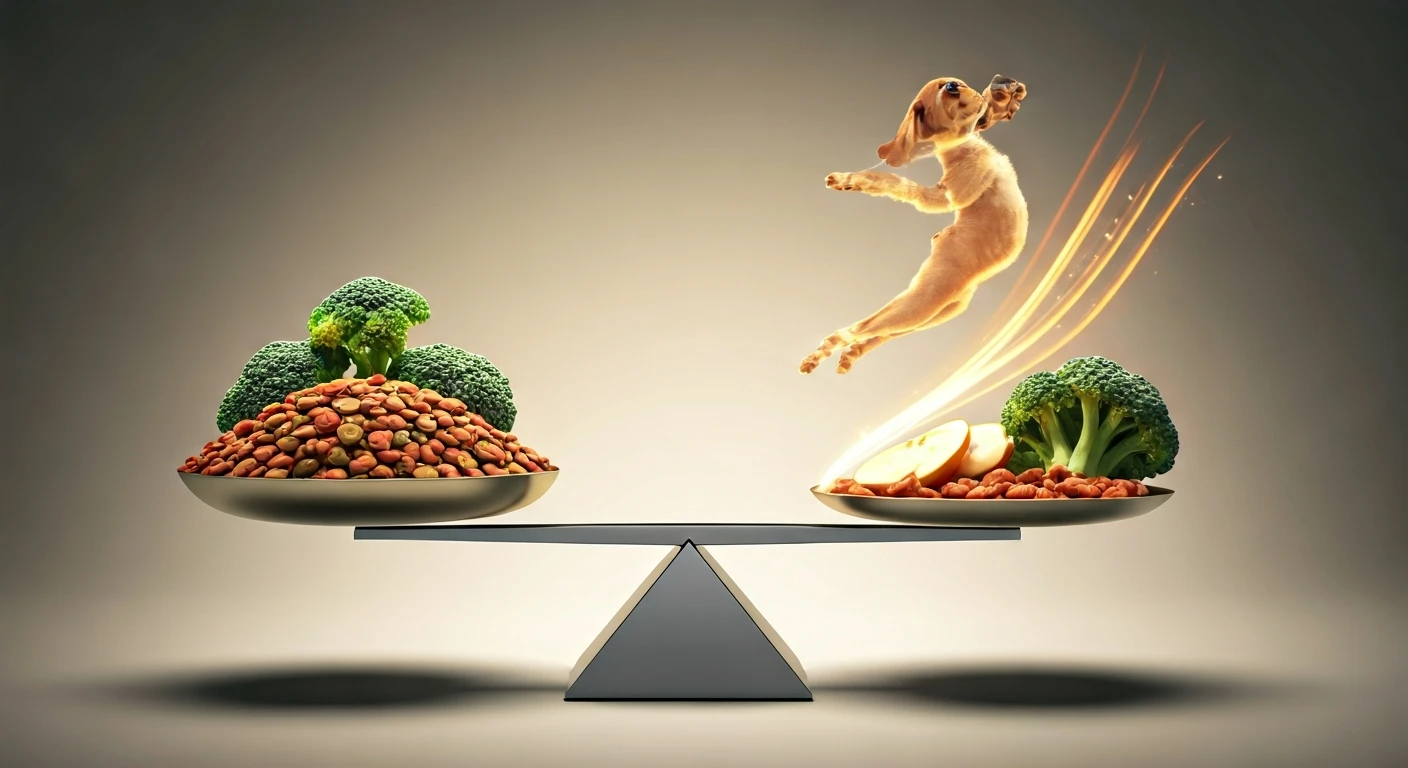
The Simple Math of Pet Weight
It’s a familiar concept for humans, and it’s just as true for our pets: weight management is a matter of 'calories in, calories out.' When your dog was enjoying long daily walks or vigorous games of fetch, they were burning a significant number of calories.
That energy expenditure justified a certain amount of food. However, when activity levels drop—maybe due to a change in your work-from-home status, an injury, or simply the shorter, darker days of winter—their energy needs decrease accordingly. If their food intake remains the same, the body will store that excess energy as fat. Even a small daily surplus of calories can lead to noticeable weight gain over weeks and months. According to the Association for Pet Obesity Prevention, over half of U.S. dogs and cats are overweight or obese, a condition linked to arthritis, diabetes, and a shortened lifespan. Recognizing the connection between exercise and diet is the first step in preventing your pet from becoming part of that statistic.
How to Right-Size Their Rations
Resist the urge to simply guess how much to cut back. Eyeballing it or using the same scoop you’ve always used is a recipe for error. Instead, start with the feeding guidelines on your pet’s food bag. These charts provide recommendations based on your pet’s ideal weight, not their current weight. Find the target weight for your pet’s breed and size, and use that as your starting point. Remember, these are just guidelines. A highly active dog might need more than the bag suggests, while a couch-potato pup will need less. To be more precise, you can calculate your pet’s Resting Energy Requirement (RER) and adjust for their activity level, but the best and safest approach is to consult your veterinarian. They can assess your pet’s body condition score, determine their ideal weight, and give you a specific daily calorie target. Once you have that number, use a kitchen scale or a dedicated measuring cup to ensure every meal is consistent.
Look Beyond the Food Bowl
A pet's main meals are only part of their total caloric intake. Treats, dental chews, table scraps, and the peanut butter in their favorite puzzle toy all count. These 'hidden' calories can quickly sabotage your efforts to manage their weight. A common rule of thumb from veterinarians is that treats should make up no more than 10% of your pet’s total daily calories. This means if your vet recommends 500 calories a day for your dog, only 50 should come from treats. Read the labels on treat packages; you might be surprised to find that a single large biscuit or dental stick contains a significant number of calories. Consider swapping high-calorie commercial treats for healthier alternatives like baby carrots, green beans, or small pieces of apple (with seeds and core removed). For training, use tiny pieces of a low-calorie treat or even just a portion of their regular kibble.
Consider a Diet Change
Simply reducing the portion of your pet’s regular food might not be the best solution, especially if you have to cut back significantly. Doing so can risk depriving them of essential vitamins and nutrients. This is where weight management or 'light' pet foods can be beneficial. These diets are specially formulated to be less calorically dense while still providing a complete and balanced nutritional profile. They often contain higher levels of fiber, which helps your pet feel fuller and more satisfied with a smaller portion. Before making any switch, discuss the options with your veterinarian. They can recommend a high-quality food that suits your pet’s specific needs, age, and any underlying health conditions. A gradual transition over 7-10 days—mixing a little of the new food in with the old and slowly increasing the ratio—is essential to avoid digestive upset.
Feed Their Brain, Not Just Their Belly
Sometimes, a pet that seems hungry is actually just bored. With fewer walks and less outdoor stimulation, your dog or cat may start begging for food as a way to get attention or find something to do. Instead of reaching for a treat, engage their mind. Puzzle feeders and snuffle mats make them work for their regular kibble, turning mealtime into a stimulating game that takes longer to finish. Short, fun training sessions to practice old commands or learn new tricks provide excellent mental exercise. Even a simple game of 'hide-and-seek' with a favorite toy can burn energy and relieve boredom without adding extra calories. Providing this kind of enrichment satisfies their needs in a healthier way, strengthening your bond in the process.