



The Deities on Vacation
At the heart of the festival, known locally as Ratha Yatra or the 'Chariot Journey,' are three of Hinduism’s most unique deities: Lord Jagannath, his elder brother Balabhadra, and their sister Subhadra. Unlike the intricately carved idols seen elsewhere
in India, the figures of Jagannath and his siblings are distinct for their large, round eyes and limbless, blocky forms. Housed for most of the year in the city’s revered 12th-century Jagannath Temple, the festival marks their annual vacation. For nine days, they leave the inner sanctum of their temple to travel to the Gundicha Temple, said to be their aunt's home, allowing devotees of all backgrounds a chance for 'darshan,' or auspicious viewing. This public journey is a radical act of accessibility, bringing the divine out from behind stone walls and into the streets for everyone to see.
Temples Built to Move
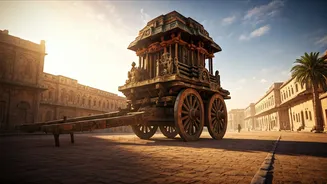
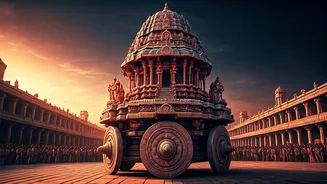
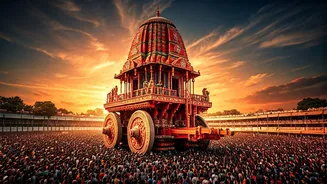
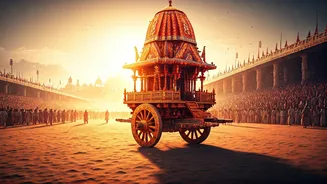
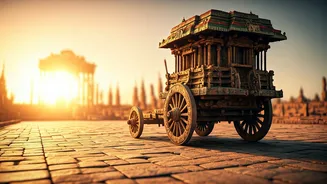
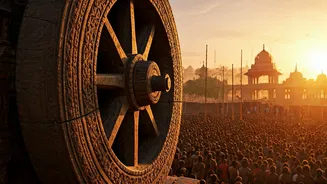
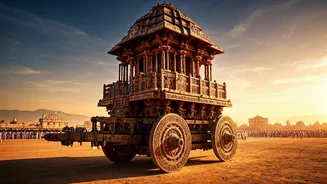
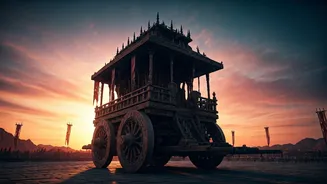
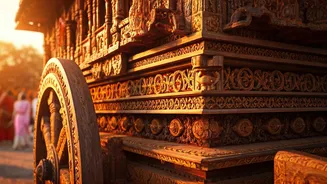
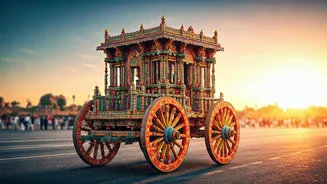
The vehicles for this divine journey are the festival’s most iconic feature: three colossal chariots, newly constructed by hand every single year. These are not mere parade floats. Standing over 40 feet tall, each chariot is a moving temple built according to strict, ancient specifications passed down through generations of artisan families. Carpenters use prescribed types of wood, like phassi and dhausa, and assemble the structures without a single nail or modern power tool. Each chariot has its own name, color scheme, and specific details. Lord Jagannath’s chariot, Nandighosha, is the largest, with 16 wheels and a red and yellow canopy. This annual act of creation and eventual dismantling is a powerful cycle, underscoring the Hindu concept of cosmic creation and dissolution. The sheer engineering feat, accomplished through inherited knowledge and manual labor, is a spectacle in itself.
A Journey of Millions
The procession covers a relatively short distance of about two miles, but the journey can take hours, even days. The energy is overwhelming. The air thickens with the sound of gongs, cymbals, and the rhythmic chanting of millions. Devotees surge forward, believing that pulling the chariots' thick coconut fiber ropes is an act of immense devotion that can cleanse sins. The crowd becomes a single, pulsing organism, a sea of humanity moving with a shared purpose. It’s a moment of profound community and spiritual ecstasy that transcends social barriers. Kings and commoners have historically participated, and the festival’s egalitarian spirit remains one of its defining features. This is not a performance for tourists; it’s a deeply personal and collective act of faith, raw and unfiltered.
What Makes It 'Living Heritage'?
The term 'living heritage' perfectly captures the essence of the Ratha Yatra. This is not a historical reenactment or a relic preserved under glass. It is an unbroken tradition where every element—from the carpentry and painting of the chariots to the specific rituals performed by priests and the devotional songs sung by the crowd—is a skill and belief system passed down through active practice. The festival is a dynamic cultural ecosystem. It supports communities of artisans, priests, and performers whose identities and livelihoods are intrinsically linked to its continuation. In an era of rapid modernization, the Ratha Yatra stands as a powerful testament to how ancient traditions can remain vibrant, relevant, and central to the identity of a place and its people. It's heritage not as a memory, but as a lived, breathing, and thundering reality.