







An Escape, Not a Conquest
When we think of youth and the great outdoors, the image that often comes to mind is one of conquest: scaling a mountain, navigating treacherous rapids, or pushing physical limits. But for many Millennials and Gen Z, the primary appeal of the forest is not
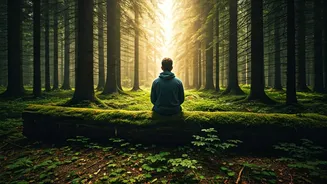
about adventure, but about atmosphere. They are seeking something much simpler and, arguably, more profound: peace.This isn't a rejection of nature's challenges, but a re-prioritization. The goal isn't to dominate the landscape, but to be absorbed by it. This is a generation that has grown up with unprecedented levels of anxiety and the constant, low-grade hum of digital notifications. For them, a 'successful' trip to the woods might not be measured in miles hiked or peaks bagged, but in hours spent without checking a phone, in moments of quiet observation, and in the feeling of a mental reset.
The Ultimate Digital Detox
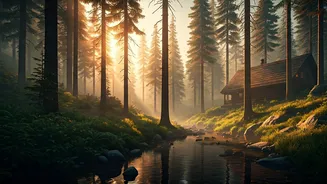
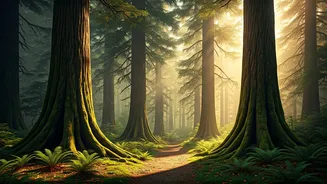
It's no coincidence that the generation most native to the internet is also the one most desperate to escape it. Young adults today navigate a world where work, social life, and entertainment are all mediated through screens. The forest represents one of the few remaining spaces where being 'offline' is the natural state. Poor cell service, once a frustrating inconvenience, is now often seen as a key feature.This desire for a digital detox is driving a different kind of outdoor recreation. Activities like 'forest bathing' (inspired by the Japanese practice of Shinrin-yoku), casual birdwatching, and simply sitting quietly in a natural setting are gaining popularity. These low-impact, contemplative activities stand in stark contrast to the high-octane, gear-heavy pursuits that once defined outdoor culture. The focus is on sensory experience—the sound of wind in the trees, the smell of damp earth, the sight of sunlight filtering through the canopy—as an antidote to the disembodied experience of online life.
A New Kind of Environmentalism
This shift also signals an evolution in environmental consciousness. While the protest-led activism of previous generations remains vital, many young people are also embracing a more personal, intimate form of environmentalism. By seeking out forests for their restorative qualities, they are forming a deep, personal connection to these spaces. This bond fosters a powerful sense of stewardship.It’s a simple equation: you protect what you love. For someone whose primary experience with a forest is one of healing and tranquility, the threat of deforestation or pollution isn't an abstract political issue; it's a personal affront. This emotionally-rooted environmentalism is less about policy papers and more about preserving a place of sanctuary. It suggests that the future of conservation may be built not just on arguments about biodiversity and carbon capture, but on the universal human need for peace and quiet.
Nature as Mental Healthcare
Perhaps the most significant driver of this trend is the destigmatization of mental health. Gen Z and Millennials are acutely aware of concepts like burnout, anxiety, and depression, and they are proactive about seeking solutions. A growing body of scientific research supports what they are discovering intuitively: spending time in nature has measurable benefits for mental well-being. Studies have shown that exposure to green spaces can reduce levels of the stress hormone cortisol, lower blood pressure, and improve mood and focus.For a generation that values authenticity and well-being, turning to the forest is a logical and accessible form of self-care. It’s free, it’s effective, and it offers a sense of connection to something larger than oneself. The desire for a 'peaceful forest' is, in essence, a prescription that young adults are writing for themselves.