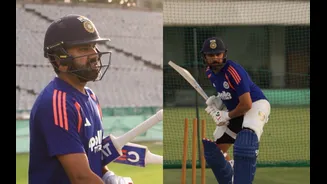



He's a Human Calculator
Imagine a quarterback in a two-minute drill, but the drill lasts for three hours. That's a run chase in one-day cricket. The batting team knows the exact score they need to win (the 'target'), but they have a limited number of opportunities ('overs')
and only ten 'wickets' (think 'outs' in baseball) to do it. Lesser players get overwhelmed by the big number. Kohli, however, treats it like a math problem. He breaks the target down into smaller, manageable goals. Instead of seeing '350 runs to win,' he sees a series of achievable mini-targets: score at a certain pace for the next 10 overs, keep wickets in hand, and plan which opposing bowlers to attack. This methodical approach removes the emotional panic from the equation, turning a high-stakes gamble into a calculated execution.
Unmatched Fitness and Intensity
To a casual American viewer, cricket might seem static. But the space between the two 'wickets'—a 22-yard strip—is where games are won and lost. Kohli is arguably the fittest cricketer of his generation, and he weaponizes his stamina. While other batters rely on hitting boundaries (fours and sixes), Kohli sprints relentlessly. He turns easy singles into twos, and twos into threes, putting immense physical and mental pressure on the fielding team. This constant running doesn't just add runs to the scoreboard; it disrupts the opponent's rhythm, creates fielding errors, and keeps the required 'run rate' (the runs needed per over) in check without taking massive risks. His ability to maintain this intensity for hours on end wears opponents down, forcing them into mistakes when the game is on the line.
He Thrives on Pressure
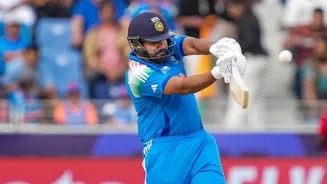
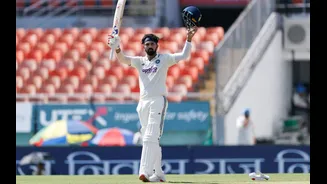
Some athletes are great. Some athletes are clutch. Kohli is in the latter, rarer category. For many batters, the scoreboard is a source of anxiety. For Kohli, it’s a source of information and motivation. He has an almost pathological desire to be the man in the arena, the one responsible for carrying his team over the line. His body language tells the story: where others might look tense, he looks focused and often visibly enjoys the challenge. He uses the crowd's energy and the gravity of the moment as fuel. This isn't just a tough-guy facade; his statistics back it up. In successful one-day international (ODI) run chases, his batting average is an astronomical 90+. For context, a career average of 50 is considered world-class. His numbers when the stakes are highest are simply on another planet.
Master of Pacing an Innings
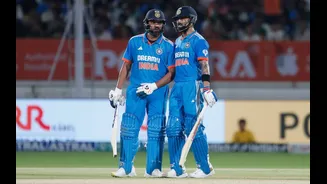
A run chase is a marathon, not a sprint, and Kohli is its finest marathon runner. He understands the art of pacing better than anyone. Early in his innings, when the risk of getting out is high, he is often conservative. He'll take his time, absorb pressure, and let his partners take the lead. He focuses on rotating the strike—getting off-strike to allow his partner to face the bowler—and ensuring the scoreboard keeps ticking over. But as the innings progresses and he becomes more comfortable, a switch flips. He has an almost supernatural ability to find the boundary at will, accelerating his scoring rate precisely when the team needs it most. This controlled aggression means he rarely panics; he builds his innings like an architect, laying a solid foundation before constructing a breathtaking finish.
A Traditional Technique for Modern Demands
In an era of explosive, sometimes unorthodox power-hitting, Kohli’s game is built on a classically pure and simple technique. He doesn't rely on trick shots or high-risk gambles. Instead, he plays 'proper' cricket shots that minimize risk while maximizing value. His wristwork allows him to place the ball into gaps in the field with surgical precision, and his balance is impeccable. This reliable, repeatable technique means his game doesn't fall apart under pressure. While other players might fail when their high-risk-high-reward style backfires, Kohli’s method is built to last. It’s the perfect foundation for the mental and physical demands of a chase, giving him a dependable toolset when his team needs it most.