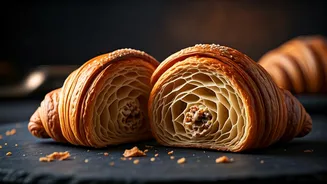




The New Status Pastry
In a city known for its bustling street food culture and legendary tiffin services, a new culinary obsession has taken hold. At specialty bakeries and high-end coffee shops across Mumbai, a peculiar scene unfolds daily: scores of eager foodies wait, sometimes
for over an hour, not for a concert or a celebrity sighting, but for a pastry. The object of their affection is the croissant, but not just any crescent-shaped, buttery delight. This is the croissant reimagined as a status symbol, an edible event worth documenting and sharing. Bakeries like Subko Coffee Roasters, The Notting Hill Bakery, and Blue Tokai Coffee have become ground zero for this frenzy. Their limited-batch, inventive croissants often sell out within hours of opening, creating a sense of scarcity and urgency that only fuels the hype. The 'chaos' isn't one of disorder, but of overwhelming demand—a delicious, butter-scented stampede driven by a collective desire to taste the city’s hottest commodity.
Beyond the Crescent
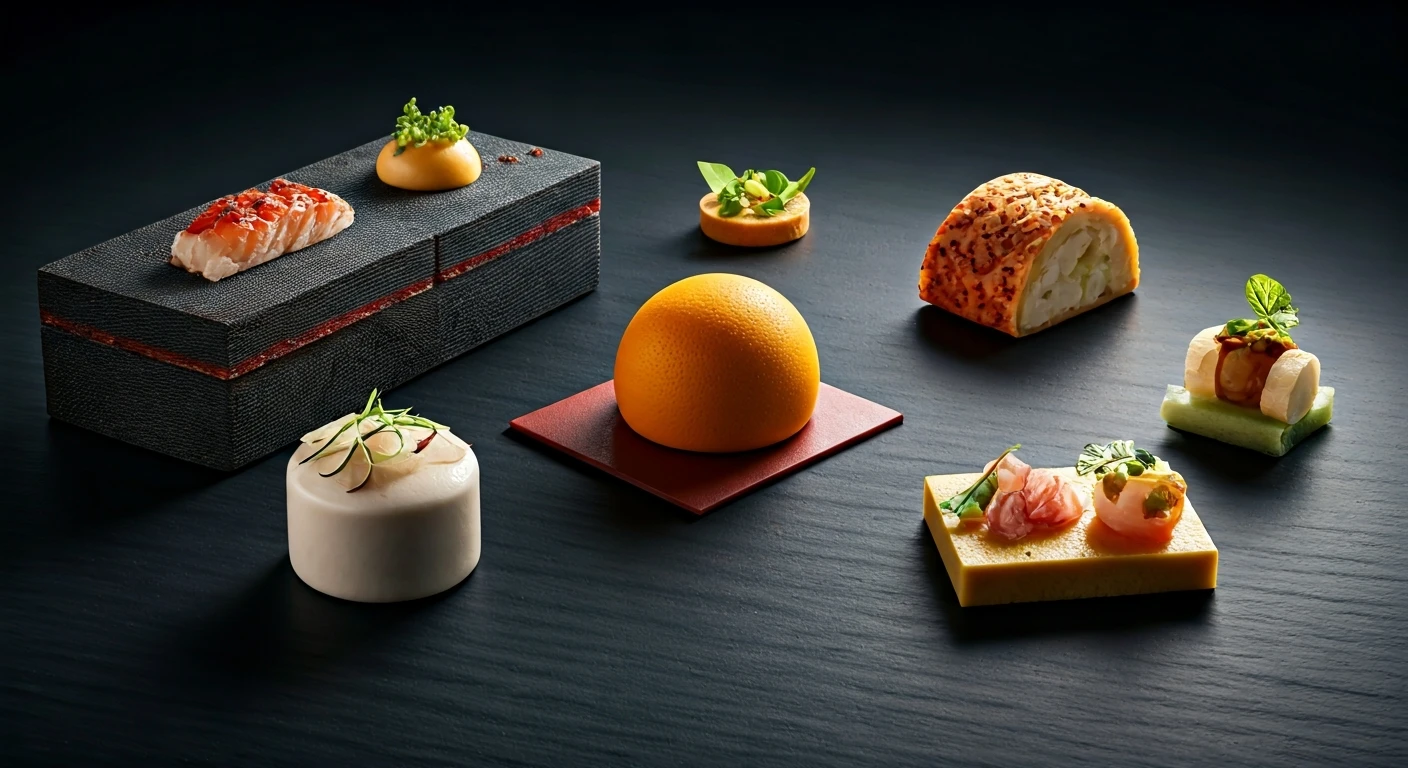
So, what makes these croissants worth the wait? It’s their sheer ingenuity. Mumbai's bakers aren't just perfecting a French classic; they're deconstructing and rebuilding it into something entirely new. The most viral examples are architectural marvels. There's the cube croissant, a perfectly geometric block of laminated dough with a creamy filling piped inside. Then there’s the circular 'Suprême' or 'New York Roll,' a spiral of croissant dough baked in a ring mold, filled with pastry cream, and extravagantly decorated. These aren't just pastries; they're edible sculptures designed for the Instagram age. The flavors are equally bold. While you can still find a classic pain au chocolat, the real draw are the hyper-local and globally inspired fillings: pistachio and rose, salted caramel, passionfruit, Biscoff, and even savory versions with Indian spices. Each bite is a departure from tradition, offering a novel experience that justifies the long queue and premium price tag.
Fueled by the 'Gram
This croissant craze is inextricably linked to social media. A plain croissant is delicious, but a perfectly symmetrical cube oozing pistachio cream is content. Food bloggers and Instagram influencers were quick to spot the trend, and their posts showcasing the visually stunning pastries sent demand into overdrive. A single well-shot video of a baker cracking open a circular croissant can garner millions of views, turning a neighborhood bakery into an overnight sensation. For many customers, the experience isn't complete until they've captured their own photo or reel. The pastry is both the meal and the prop. This dynamic creates a self-perpetuating cycle of hype: the more photogenic the croissant, the more it gets shared, and the longer the lines become. It’s a perfect case study in how modern food trends are born not just in kitchens, but on screens.
A Global Treat, A Local Twist
The rise of the croissant in Mumbai is more than just a fleeting trend; it’s a reflection of a larger cultural shift. The croissant has long been a symbol of global culinary sophistication, a taste of European luxury. As Mumbai's food scene becomes more cosmopolitan, its embrace of the croissant signals a city with global tastes and aspirations. Yet, this isn't a simple case of culinary colonization. Instead, Mumbai’s chefs are adopting the form and infusing it with their own identity. By filling these French pastries with flavors like cardamom, saffron, and mango, they are creating a delicious hybrid—a 'glocal' product that is both internationally recognizable and distinctly Indian. It represents a confidence in blending traditions, taking a technique perfected in Paris and making it feel completely at home in the heart of Maharashtra.