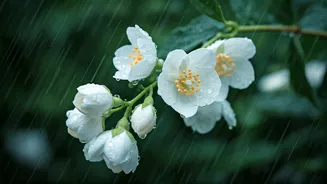







The Scent of Relief
You know the feeling. The sky darkens, the air cools, and the world seems to hold its breath. Then, the first fat drops of rain begin to fall, kicking up dust and releasing that distinct, earthy smell of a summer storm. But if you’re lucky enough to live
near a jasmine vine, something else happens. A wave of fragrance, complex and heady, washes over everything. It’s a scent that feels like both a homecoming and a revelation. This isn’t just the smell of a flower; it’s the smell of relief, of a thirsty world finally getting a drink. The floral sweetness mingles with the mineral-rich scent of the wet earth, creating an aromatic experience so potent it can stop you in your tracks. It’s this specific combination that transforms jasmine from a simple garden plant into what the headline perfectly captures: a 'mood plant.' It has the power to instantly shift your emotional state, pulling you out of your head and into the present sensory moment.
Nature's Aromatic Science
This phenomenon isn’t just poetic; it’s a beautiful marriage of botany and atmospheric science. The earthy smell that accompanies the first rain has a name: petrichor. It’s created when airborne oils secreted by plants during dry periods are released from soil and rock surfaces. When raindrops hit, they trap tiny air bubbles that then shoot upwards, carrying these aromatic compounds—along with a chemical called geosmin, produced by soil bacteria—into the air like a natural atomizer. Jasmine, for its part, is constantly producing volatile organic compounds (VOCs) to attract pollinators. These compounds are what we perceive as its scent. On a hot, dry day, they might be present but less noticeable. The rain, however, acts as a catalyst. The increased humidity in the air allows scent molecules to travel more effectively, and the physical impact of the droplets on the delicate petals can cause a more intense release of the flower’s essential oils. In essence, the rain doesn't create the scent, but it provides the perfect delivery system, amplifying and blending it with the petrichor to create a richer, more complex bouquet.
The Chemical Power of Calm
So, what is it about jasmine’s specific aroma that feels so good? The answer lies in its chemical makeup. The signature scent of jasmine is a cocktail of potent molecules, most notably linalool and benzyl acetate. In the world of aromatherapy, these compounds are superstars. Linalool, also found in lavender and basil, is widely studied for its calming, anti-anxiety effects. It’s believed to interact with neurotransmitters in the brain that regulate mood and stress. Benzyl acetate provides the sweet, fruity notes and is often associated with feelings of optimism and romance. When you inhale the scent of rain-soaked jasmine, you're not just experiencing a pleasant smell; you're taking in a natural, airborne dose of mood-influencing chemicals. This scientific underpinning validates the 'mood plant' moniker. The feeling of tranquility or quiet joy that washes over you is a genuine physiological response to the plant’s unique chemistry, made more potent by the rain.
A Global Symbol of Serenity
Our modern appreciation for jasmine is part of a long and storied global history. This isn’t a newly discovered phenomenon; cultures around the world have revered the jasmine plant for centuries, associating it with everything from love and purity to spirituality and peace. In India and Southeast Asia, garlands of *Jasminum sambac* (often called Mogra or Pikake) are used in religious ceremonies and worn as personal adornment, their fragrance a constant, calming presence. In China, jasmine blossoms have been used for over a thousand years to scent green tea, a process that infuses the leaves with the flower's soothing aroma. And in the perfume capital of Grasse, France, jasmine is a cornerstone of the industry, prized for its deep, complex, and luxurious scent profile. This enduring, worldwide reverence speaks to the plant's universal appeal. It's a scent that transcends cultural boundaries, consistently symbolizing beauty, tranquility, and a connection to something pure and natural.