

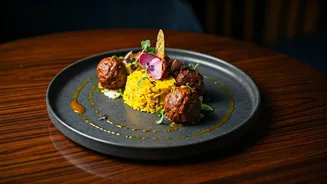

From Humble Roots to High-End Plates
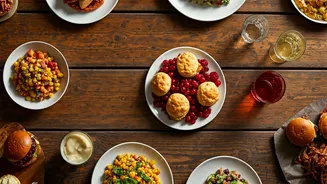
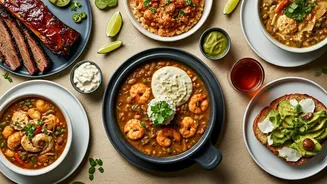
Think about shrimp and grits. For generations, it was a humble, hearty breakfast in the Lowcountry of South Carolina and Georgia—a simple, satisfying dish born of necessity. For a long time in the broader American consciousness, it was just that: simple.
Delicious, yes, but not 'fancy.' Now, walk into a celebrated restaurant from Charleston to Chicago, and you might find it on the menu for $35, made with heirloom grits milled to order, wild-caught shrimp, and a sauce built with the complexity of a French classic. This isn't just inflation; it's a re-evaluation. Across the country, chefs are taking the foundational dishes of America’s diverse regions—soul food, Appalachian cooking, Tex-Mex, Gullah Geechee cuisine—and treating them with the reverence and technique once reserved for foreign imports. They’re not just making old food expensive; they’re unlocking the inherent value that was there all along.
The Search for Authentic Identity
So, what’s driving this shift? Part of it is a culinary identity crisis. For decades, ambitious American chefs looked to Europe, particularly France, for the definition of 'good food.' Success meant mastering the mother sauces and the brigade system. But a new generation is looking inward, asking what it means to cook 'American' food. For many, the answer lies in their own heritage. Chefs like Mashama Bailey at The Grey in Savannah, Georgia, have earned national acclaim by exploring the nuances of Gullah Geechee and Southern food, telling the complex story of the region through her cooking. It’s a move away from a monolithic idea of fine dining and toward a more personal, story-driven approach. The 'premium' experience isn't just about the taste; it's about connecting with a place, a history, and a culture that feels uniquely American.
It’s All About the Ingredients
This elevation isn't just a matter of plating collard greens with tweezers. The real magic is happening at the source. Visionary chefs like Sean Brock, famous for his work at Husk and his deep dive into Appalachian foodways, have become part-historian, part-agriculturalist. They are reviving heirloom ingredients that were nearly lost to industrial agriculture—things like Jimmy Red corn, the Sea Island red pea, and dozens of other forgotten vegetables and grains. These ingredients have a depth of flavor that their mass-market cousins simply can’t match. When a chef uses Carolina Gold rice, a grain that was the basis of an entire coastal economy before it nearly vanished, they are serving you a tangible piece of history. The 'premium' price tag reflects the cost of preserving this biodiversity and supporting the small farmers who are its stewards. It’s a direct investment in the flavors of the past to create the food of the future.
Redefining “American” Cuisine
While the movement has deep roots in the South, its influence is spreading. In Texas, chefs are deconstructing and elevating Tex-Mex, moving beyond combo platters to explore the cuisine's deep, cross-border history with high-quality ingredients. In the Midwest, chefs are celebrating the bounty of the Great Lakes and the traditions of supper clubs, but with a modern, refined touch. It’s a nationwide movement to reclaim and celebrate what’s ours. By refusing to accept that 'regional' means 'lesser than,' these chefs are fundamentally rewriting the rules of American dining. They are proving that a perfectly fried piece of chicken, made with a heritage bird and seasoned with generations of knowledge, can be just as transcendent an experience as any tasting menu in Paris or Tokyo. This isn't about gentrifying comfort food; it's about giving it the respect, and the platform, it has always deserved.