






It’s Not Just for Vegans Anymore
Let’s get one thing straight: the explosion of plant-based eating isn’t being driven solely by vegans or vegetarians. The real engine of this change is the “flexitarian”—someone who still eats meat but is actively looking to reduce their consumption for
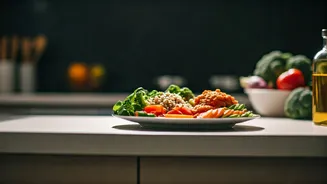
a variety of reasons. For some, it’s health. Studies linking plant-forward diets to better heart health and lower risks of certain diseases are compelling. For others, it’s the environment, as the carbon footprint of plant-based proteins is often significantly smaller than that of traditional livestock. And for a growing number, it’s simply curiosity. Food companies have invested billions in making plant-based foods that don’t just mimic meat but are genuinely delicious in their own right. The new goal isn’t to convert everyone to veganism; it’s to offer a tasty, convenient alternative on Tuesday night, just because.
The Fast-Food Revolution
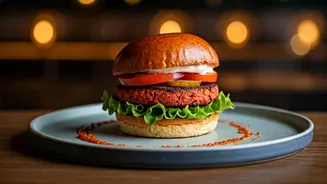
Nowhere is this shift more visible than at the drive-thru. For decades, fast food was the final frontier for non-meat-eaters, a desolate landscape of sad side salads and French fries. Today, it’s a battleground for plant-based innovation. Burger King’s Impossible Whopper wasn’t just a new menu item; it was a cultural moment, proving that a mainstream audience would embrace a plant-based burger that “bleeds.” Not to be outdone, McDonald’s has rolled out its McPlant patty in various markets, and even chicken-centric chains are getting in on the action. Taco Bell has long been a haven for vegetarians with its bean-based options, but it continues to experiment with proprietary plant-based proteins. This isn’t a token gesture. Fast-food chains operate on razor-thin margins and massive volume; their adoption of plant-based meat is the ultimate proof of concept that a huge, hungry market exists.
Your Grocery Cart Has Changed
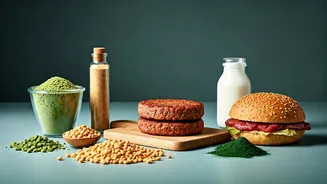
The transformation continues in the aisles of your local supermarket. What used to be a small, dusty section labeled “Health Foods” has exploded into a dominant category. The dairy aisle is a perfect example. A decade ago, soy milk was the lonely outlier. Now, you can choose between oat, almond, cashew, coconut, macadamia, and even pea-based milks, each with its own cult following. The same goes for yogurt, cheese, and ice cream. The plant-based cheese category, once mocked for its rubbery texture and inability to melt, has seen dramatic improvements from brands like Miyoko's Kitchen and Daiya. In the meat section, brands like Beyond Meat and Impossible Foods are no longer tucked away in a sad corner. Their burgers, sausages, and ground “beef” are often placed right next to their animal-based counterparts, competing directly for the attention of the everyday shopper.
From Street Tacos to Fine Dining
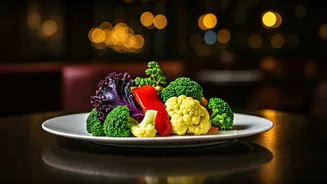
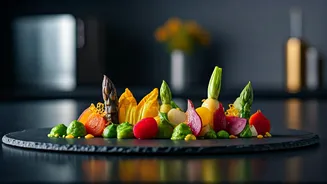
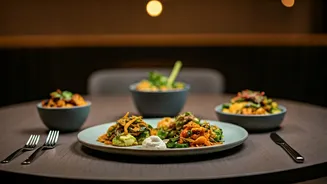
This isn’t just a phenomenon of processed meat alternatives. Chefs at all levels are embracing the power of vegetables. At the highest end of the culinary world, the conversation has shifted dramatically. In a move that shocked the food world, Chef Daniel Humm turned his three-Michelin-starred New York institution, Eleven Madison Park, completely vegan. He argued that the future of luxury dining had to be sustainable. While not every fine-dining establishment has gone that far, menus across the country are increasingly “plant-forward,” where vegetables are the star of the dish and meat is a supporting actor, if it appears at all. This creative energy trickles down. You see it in neighborhood bistros with stunning roasted carrot entrees and food trucks serving mind-blowing mushroom-based tacos. The focus is on flavor and technique, proving that a meal doesn’t need meat to feel satisfying or special.