



The Science of Seeing Forever
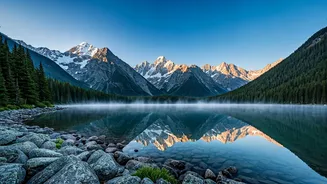
Why does the world look so much sharper from a mountain peak or a high desert plateau? It’s not just your imagination. The magic is in the atmosphere—or rather, the lack of it. At sea level, you’re looking through a thick, soupy blanket of air molecules,
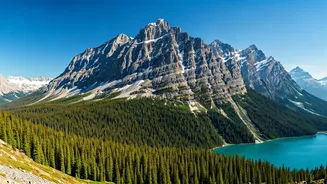
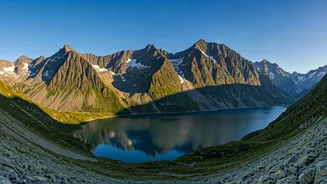
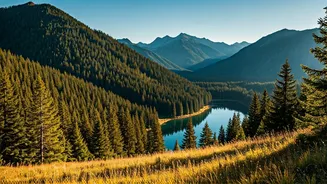
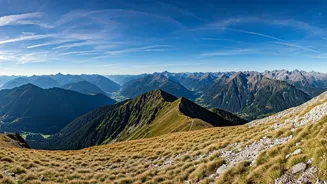
water vapor, dust, and pollutants. This mixture scatters sunlight, creating the familiar haze that softens distant landscapes and washes out the sky’s color. As you ascend, the column of air above you thins out dramatically. With fewer particles to interfere with light, the world snaps into focus. Colors become more saturated, shadows grow crisper, and distant objects appear closer and more detailed. The sky itself transforms from a pale, hazy blue to a deep, intense cobalt. This isn't just a prettier view; it's a fundamentally different, more direct visual connection to the world around you.
The Psychology of a Big Sky
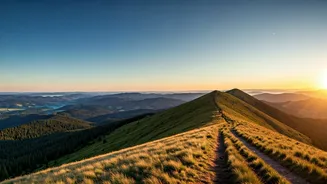
Standing at 10,000 feet under a dome of pure, uninterrupted blue does something to the human psyche. Researchers in environmental psychology talk about the concept of “awe”—the feeling we get in the presence of something vast that challenges our understanding of the world. A massive, clear sky is a powerful trigger for this emotion. It can quiet the mental chatter of daily life, shift our perspective, and make our own concerns feel manageably small. This isn't just about relaxation; it's about a cognitive reset. The sheer scale of the landscape, made visible by the pristine air, forces a sense of perspective that’s hard to find at lower elevations. It’s a feeling of being simultaneously insignificant in the face of nature’s grandeur and profoundly connected to it.
A Front-Row Seat to the Cosmos
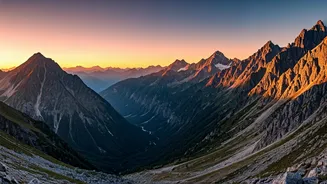
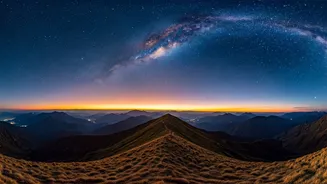
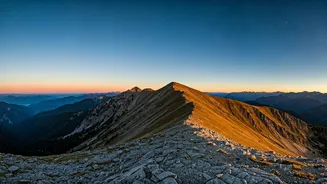
When the sun goes down at high altitude, the real show begins. The same atmospheric clarity that makes daytime views spectacular turns the night sky into a breathtaking spectacle. Away from the light pollution of cities and with less air to distort starlight, the heavens come alive. The Milky Way ceases to be a faint, hazy band and becomes a brilliant, textured river of light, dense with stars and nebulae. Constellations are no longer just a few bright points but are embedded in a field of countless fainter stars. You can see satellites tracing silent arcs across the sky and watch meteors streak through the upper atmosphere with startling clarity. This is why the world’s most powerful observatories are built on high-altitude mountains, like Mauna Kea in Hawaii or in Chile’s Atacama Desert. For travelers, it means access to a view of the universe that most of humanity has lost—a profound, humbling reminder of our place in the cosmos.
Where to Find the Horizon
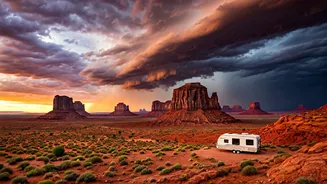
This experience isn't limited to expert mountaineers scaling Everest. High-altitude clarity is more accessible than you might think. The American West is rich with opportunities. Driving the high passes of Colorado’s Rocky Mountain National Park, hiking above the treeline in California’s Sierra Nevada, or exploring the vast plateaus of Utah and Arizona can all provide this unique visual feast. Internationally, destinations like the Altiplano in Bolivia and Peru, the dramatic landscapes of the Tibetan Plateau, or even the volcanic parks of Tenerife offer travelers a chance to get above the haze. The key isn't necessarily extreme elevation, but rather getting high enough to escape the dense, humid air of the lowlands. Whether it’s a strenuous trek or a scenic drive, the goal is the same: to reach a place where nothing stands between you and the deep, clear sky.