






Decoding the 'AI Sandbox'
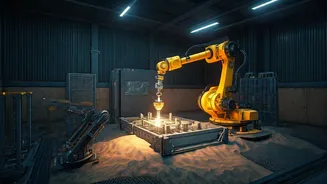
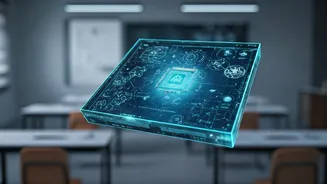
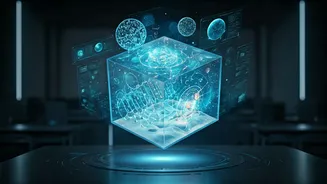
First, let’s get the buzzwords out of the way. An “AI Sandbox” isn’t a playground filled with smart sand. It’s a sophisticated, three-dimensional simulation environment—think of a hyper-realistic video game, but instead of completing missions, you’re
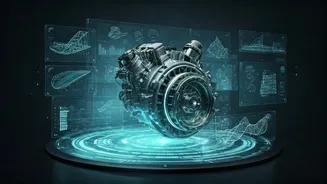
designing a jet engine, stress-testing a bridge, or building a robotic arm. The “AI” part is the game-changer. It’s not just a static virtual lab; it’s an intelligent tutor. The system observes a student's actions, identifies weaknesses, and dynamically generates new challenges to foster mastery. If you struggle with fluid dynamics, the AI might subtly introduce new simulations focused on liquid flow and pressure until you get it right. It’s a world away from a professor looking over 30 shoulders at once.
The 'Hyper-Personalized' Promise
The true innovation here is the shift from one-size-fits-all education to a “hyper-personalized” learning path. In a traditional engineering program, every student in a class might work on the same standardized project. In an AI sandbox, the experience is unique to each user. The AI can track a student’s progress, learning speed, and common errors. Based on this data, it customizes the curriculum in real time. For a student who excels at structural analysis but struggles with material science, the sandbox can automatically adjust, presenting more complex material challenges while reinforcing their structural strengths. This allows advanced students to sprint ahead and test the absolute limits of their designs, while those who need more support receive it instantly and privately, without the stigma of asking for help.
Building the Impossible, Safely
These virtual environments give students the freedom to fail—spectacularly and safely. An aspiring aerospace engineer can design a new wing and push it to Mach 5 until it disintegrates, then analyze the physics of the failure, iterate, and try again in minutes. A civil engineering student can subject their virtual bridge to a 1,000-year flood, an earthquake, and extreme wind shear, all within the same afternoon. These are scenarios that are not only financially prohibitive but often physically impossible to replicate in a university lab. By removing the constraints of cost, safety, and physical laws, these sandboxes encourage the kind of ambitious, boundary-pushing experimentation that leads to genuine breakthroughs. Students aren't just learning from a textbook; they are building intuition by seeing cause and effect play out in a high-fidelity digital twin of the real world.
Why This Is Happening Now
This educational revolution is the result of a perfect storm of technological maturity. First, the widespread availability of powerful graphics processing units (GPUs) provides the raw horsepower needed to render these complex, physics-based 3D worlds. Second, advances in artificial intelligence allow for the creation of sophisticated models that can genuinely guide and assess student performance. Finally, the rise of cloud computing means universities don’t need to equip every student with a supercomputer; they can stream these complex simulations to a standard laptop, just like streaming a movie on Netflix. Companies like NVIDIA with its Omniverse platform, Siemens, and Ansys are partnering with leading universities to build these digital ecosystems, recognizing that the future of industry relies on engineers trained in this new paradigm.
Closing the Gap with Industry
Perhaps the most significant impact of these AI sandboxes is how they bridge the notorious gap between academia and the professional world. The very concept of a “digital twin”—a virtual replica of a physical object or system—is already central to modern manufacturing, aerospace, and automotive design. Companies like Boeing and BMW build and test their products virtually for years before a single piece of metal is cut. By training in these sandboxes, students aren't just learning theoretical engineering principles; they are gaining hands-on experience with the exact tools and workflows they will use on day one of their careers. They graduate not just with a degree, but with a portfolio of complex, virtually-prototyped projects, making them far more valuable to employers.