
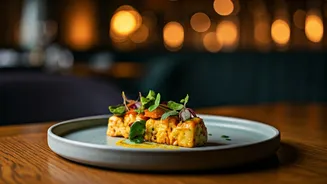
Moving Beyond the Buffet
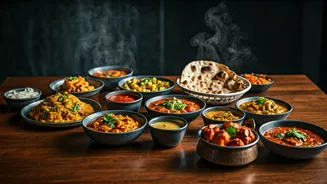
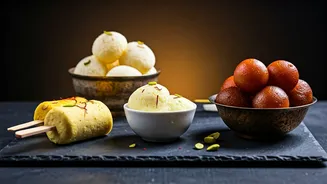
For years, the American experience with Indian desserts was often limited to a few beloved but predictable staples. You knew what to expect at the end of a meal: a warm, dense gulab jamun swimming in sugar syrup, a bright orange spiral of jalebi, or a creamy
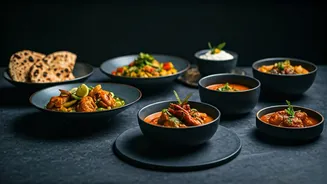
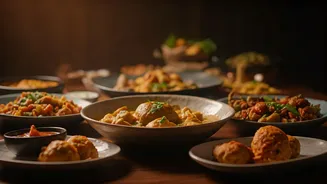
block of pistachio kulfi. While delicious, these dishes represented a tiny, often overly sweet, fraction of India’s vast dessert landscape. They became synonymous with a casual, all-you-can-eat format, rarely given the spotlight or nuance afforded to their savory counterparts. Now, a culinary revolution is underway. Across the country, in the kitchens of acclaimed and Michelin-starred restaurants, Indian-American chefs are refusing to let dessert be an afterthought. They are dismantling the buffet stereotype one plate at a time, applying fine-dining techniques, modern aesthetics, and personal storytelling to transform the sweets of their heritage into show-stopping final courses.
The New Guard of Pastry
This movement isn't about abandoning tradition; it's about interrogating it. Chefs like Surbhi Sahni of New York's Tagmo and the masterminds behind restaurants like Dhamaka and Semma, Chintan Pandya and Roni Mazumdar, are leading the charge. They are digging deep into regional specialties and family recipes, asking not just *what* a dessert is, but *why* it is. What is the essential flavor of ras malai? Is it the spongy cheese, the creamy milk, or the hint of cardamom and saffron? Once you understand the soul of the dish, you can present it in a new body. This approach gives them the freedom to play with texture, temperature, and form. The goal is no longer just sweetness, but balance. They’re introducing savory elements like black salt and toasted spices, using local American produce to add seasonal flair, and dialing back the sugar to let the core ingredients—high-quality milk, fragrant spices, rich nuts—truly shine.
Deconstruction on the Plate
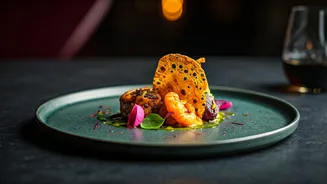
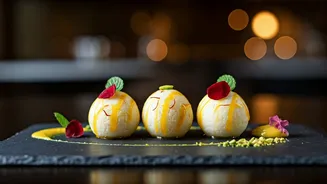
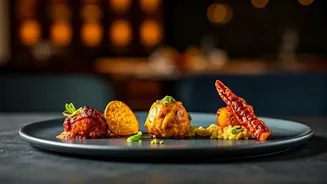
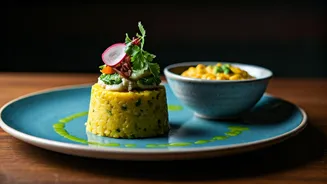
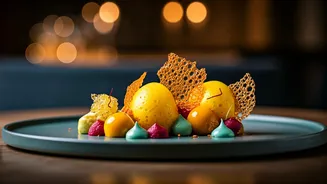
So what does a fine-dining Indian dessert actually look like? It might be a deconstructed 'mithai' box, where the elements of several traditional sweets are presented as separate but complementary components: a saffron foam, a cardamom-scented crumble, a pistachio tuile, and a rose-water gel. Imagine a 'kulfi' that isn't a dense popsicle but a light, airy mousse served with a tart berry compote and crunchy almond brittle. Jalebi, the crispy fried funnel-cake, might be reimagined as delicate, caviar-like pearls that burst with tangy yogurt and saffron syrup. One of the most common transformations is for gulab jamun. Instead of a heavy, syrup-soaked ball, a chef might present it as a light, brioche-like doughnut hole, served with a side of elegantly spiced rose-syrup reduction and a scoop of house-made vanilla bean ice cream. The flavors are familiar, evoking a deep sense of nostalgia, but the experience is entirely new—lighter, more complex, and designed to be savored.
A Declaration of Cultural Confidence
This trend is more than just a culinary exercise; it’s a powerful statement of cultural confidence. For decades, many immigrant cuisines in the U.S. have had to simplify or sweeten their offerings to appeal to a mainstream American palate. Indian food was often relegated to a category of cheap, hearty, and homogenous fare. By elevating desserts—often the most traditional and beloved part of a food culture—these chefs are declaring that their heritage is worthy of the same respect, creativity, and price point as French or Japanese cuisine. They are challenging diners to move beyond their comfort zones and appreciate the complexity and diversity that has always existed within Indian cooking. It's a signal that the cuisine has fully arrived, standing on its own terms without apology or compromise. The success of these restaurants proves that American diners are not just ready for this evolution—they are hungry for it.