





Why Central Asia Over Europe?
Let's be clear: this isn't about hating Paris or Rome. It's about value. In much of Western Europe, a fifty-dollar bill gets you a decent dinner. In Central Asia, it can cover your entire day—lodging, food, and transport included. But the real draw is the feeling
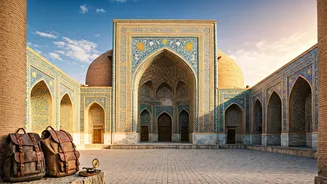
of discovery. This is a region where ancient history isn't roped off in a museum; it’s the city you're sleeping in. You're trading crowded plazas for sprawling, turquoise-domed madrassas and swapping familiar languages for the thrill of navigating a new world. It’s a trip for travelers, not just tourists, offering a level of authenticity that's increasingly hard to find.
Samarkand, Uzbekistan: The Silk Road Jewel
If you have one image of the Silk Road in your mind, it’s probably Samarkand’s Registan. This public square, framed by three of the world’s most breathtaking madrassas (Islamic schools), is a jaw-dropping monument to Islamic architecture and Timurid-era ambition. Unlike a sterile museum piece, it’s a living space where locals gather and travelers stare in awe. Spend your days getting lost in the kaleidoscopic tilework, then head to the Siyob Bazaar to haggle for spices and fresh bread. A high-speed train connects Samarkand to other Uzbek cities, making it an easy and essential first stop.
Bukhara, Uzbekistan: A Living Museum City
While Samarkand is about overwhelming scale, Bukhara is about intimate charm. Its historic center is a UNESCO World Heritage site so well-preserved it feels like a movie set. The city’s heart is the Lyabi-Hauz, a plaza built around a stone pool where old men play chess and families cool off in the evenings. You can spend days wandering its sandy, labyrinthine alleys, discovering ancient mosques, covered bazaars, and the imposing Kalon Minaret, which once guided caravans and famously impressed Genghis Khan so much that he spared it. Bukhara feels less like a collection of monuments and more like one cohesive, ancient organism.
Bishkek & Issyk-Kul, Kyrgyzstan: Alpine Lakes and Nomad Soul
Just when you think Central Asia is all desert history, Kyrgyzstan hits you with Switzerland-level landscapes at a fraction of the cost. The capital, Bishkek, is a leafy, Soviet-planned city that serves as the perfect jumping-off point. From there, it's a few hours to Issyk-Kul, the world's second-largest alpine lake. This is the heart of the region's semi-nomadic culture. Forget hostels—stay in a yurt camp on the shores of the lake. Go horseback riding through the 'Jeti-Oguz' (Seven Bulls) red rock canyons. This is where the 'adventure' part of the trip kicks in, trading architectural marvels for raw, natural grandeur.
Almaty, Kazakhstan: The Modern Metropolis
After the ancient wonders of Uzbekistan and the rustic beauty of Kyrgyzstan, Almaty offers a dose of modernity. As Kazakhstan's former capital and largest city, it’s a hub of cafe culture, wide boulevards, and a youthful, cosmopolitan energy, all set against the stunning backdrop of the snow-capped Tian Shan mountains. Ride the cable car up to Kök-Töbe for panoramic city views, explore the vibrant Green Bazaar, or take a day trip to the ethereal, turquoise waters of Big Almaty Lake. It's a fantastic place to start or end your Central Asian journey, offering creature comforts and a glimpse into the region's forward-looking future.
The Budget and Logistics
The claim of affordability isn't an exaggeration. A backpacker can comfortably get by on $30-50 per day. Hostel beds are often under $10, a hearty meal of plov (rice pilaf) or shashlik (kebabs) costs a few dollars, and shared taxis or trains between cities are incredibly cheap. Getting around is part of the adventure. Visas have also become much easier; many Western nationalities, including U.S. citizens, can now enter Uzbekistan, Kazakhstan, and Kyrgyzstan visa-free for varying periods. Always double-check the latest entry requirements with the respective embassies before booking, as policies can change.