








Beyond the Buzzwords: What Is Immersive Media?
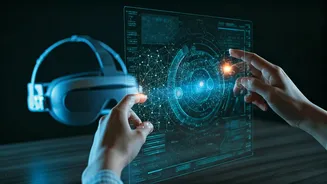
First, let’s cut through the jargon. “Immersive media,” often filed under the umbrella term XR (Extended Reality), refers to technologies that blend the physical and digital worlds. This isn't just about bulky headsets for video games. It’s a spectrum.
On one end is Augmented Reality (AR), which overlays digital information onto the real world, like the Pokémon GO creatures that appeared in your park or the IKEA app that lets you place virtual furniture in your living room. On the other end is Virtual Reality (VR), which creates a completely digital environment that replaces your real-world surroundings, accessed through a headset like the Meta Quest or Apple Vision Pro. In the middle lies Mixed Reality (MR), which allows digital objects to interact with your physical space in real time. These technologies are no longer sci-fi novelties; they are foundational elements of a rapidly growing industry.
The Native Skill Set of Gen Z
So, why is this a Gen Z story? Because the core skills required to succeed in immersive media are second nature to them. While older generations had to learn digital logic, Gen Z was born into it. Years spent building complex worlds in Minecraft have cultivated an intuitive understanding of 3D design and spatial logic. Creating viral TikTok videos has taught them the fundamentals of short-form narrative, user engagement, and rapid prototyping. Managing communities on Discord and collaborating in multiplayer games like Fortnite has ingrained skills in remote teamwork and digital social architecture. These aren't just hobbies; they are an informal apprenticeship in user experience (UX) design, world-building, and community management. For employers in the XR space, this innate fluency is invaluable. It’s the difference between someone who has to learn the language of digital interaction and someone who already thinks in it.
The Jobs of Tomorrow, Available Today
The career paths in immersive media are more diverse than many realize. They extend far beyond coding and engineering. An AR Experience Designer, for example, might work for a retail brand to create interactive virtual try-on filters for social media. A VR World Builder could be hired by an architect to construct a virtual model of a building that clients can walk through before construction even begins. Other emerging roles include 3D Artists who create the assets that populate these digital worlds, Unity or Unreal Engine Developers who write the code that brings them to life, and Metaverse Community Managers who foster engagement and safety in virtual social spaces. There's also a growing need for UX researchers who specialize in studying how people behave in virtual environments and Sound Designers who create the audio landscapes that make these worlds feel real.
More Than Just Entertainment
While gaming and social media are the most visible applications of immersive tech, the biggest growth is happening elsewhere. These tools are revolutionizing industries. In healthcare, surgeons are using VR to practice complex procedures in a risk-free environment. In education, students can take virtual field trips to ancient Rome or explore the human circulatory system from the inside. In manufacturing and engineering, companies use “digital twins”—exact virtual replicas of physical machinery—to test for flaws and train workers without shutting down a production line. For Gen Z job seekers, this means their skills are not confined to a niche entertainment sector. The ability to think and create in three dimensions is becoming a critical competency across manufacturing, healthcare, education, and enterprise training, opening up stable, high-impact career opportunities.