




A City Built on Faith
On the coast of the Bay of Bengal in eastern India lies Puri, a city that for most of the year is a relatively calm pilgrimage hub and beach town. But for a few weeks every summer, it becomes the epicenter of one of the most spectacular religious gatherings
on Earth. The event is the Rath Yatra, or “Chariot Festival,” a Hindu tradition so old its origins are woven into ancient scriptures. The festival honors Lord Jagannath, a revered form of the god Vishnu, and is the one time of year when the deities leave the confines of their temple, allowing everyone, regardless of caste or creed, to see them. This concept, known as ‘darshan’ (sacred viewing), is central to the devotion on display. As the festival approaches, the entire city shifts its focus. Hotels are booked solid, security is heightened, and a palpable energy builds as millions of pilgrims begin to arrive from across India and the world.
The Chariots Fit for Deities
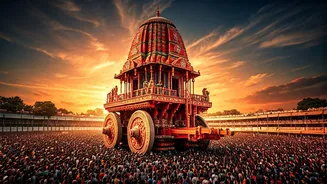
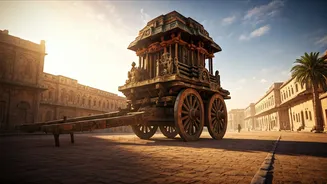
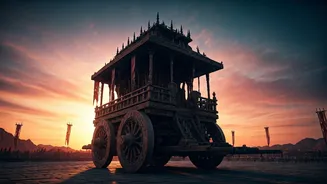
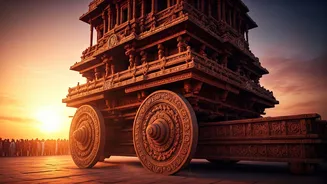
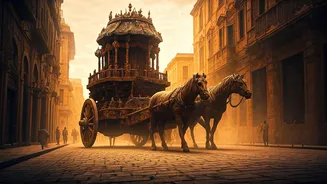
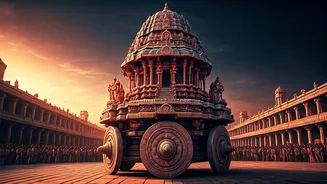
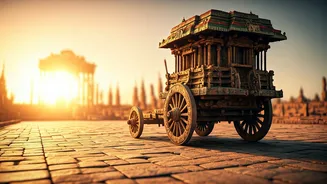
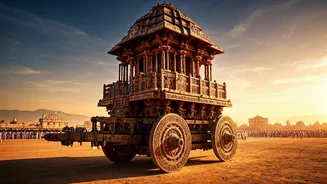
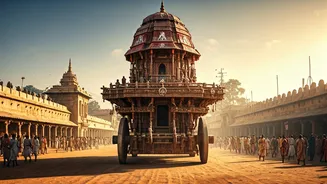
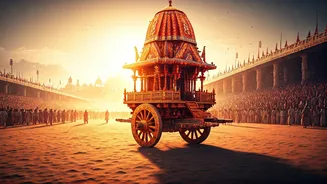
The stars of the festival are, without question, the three colossal chariots. These are not floats in the American parade sense; they are temporary mobile temples, built from scratch every single year by a dedicated community of carpenters and artisans who have inherited the craft through generations. Each chariot is for one of the three main deities: Lord Jagannath’s chariot, Nandighosha, stands roughly 45 feet tall and is draped in red and yellow cloth. His brother Balabhadra’s chariot, Taladhwaja, is covered in red and green, while their sister Subhadra’s, Darpadalana, is cloaked in red and black. The construction process itself is a sacred ritual, beginning months in advance with the selection of specific trees from a designated forest. No nails or metal fasteners are used in the core structure—only traditional joinery. When completed, these vibrant, towering structures are masterpieces of sacred engineering, ready for their divine passengers.
The Sacred Journey Begins
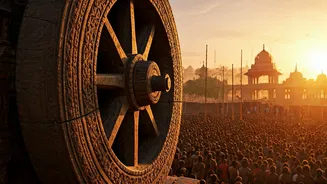
The main event of Rath Yatra is the procession. The idols of Jagannath, Balabhadra, and Subhadra, which are themselves unique, stylized wooden figures, are ceremoniously brought out from the 12th-century Jagannath Temple in a ritual known as Pahandi. The sight of the massive, wide-eyed deities swaying above the crowd is a deeply emotional moment for devotees. Once placed in their respective chariots, the King of Puri performs a symbolic ritual of sweeping the chariots’ platforms with a golden-handled broom, demonstrating that in the eyes of the divine, everyone is a humble servant. Then, the journey begins. Thick, heavy ropes are attached to the chariots, and tens of thousands of devotees grab hold to pull them. The procession moves slowly, covering the roughly two-mile route from the main temple to the Gundicha Temple, said to be the home of Jagannath’s aunt. The air fills with the sounds of gongs, conch shells, and rhythmic chanting as the sea of people pulls the immense structures through the city’s main thoroughfare.
A Global Spectacle of Devotion
The journey to the Gundicha Temple is not a one-day affair. The deities remain there for nine days before making the return trip, a leg of the festival known as Bahuda Yatra. For Americans, the scale can be hard to comprehend—it’s like the population of Dallas and San Jose combined converging on a single street to pull a rolling building. But Rath Yatra is more than just a spectacle. It is a profound expression of communal faith and cultural continuity. The festival’s core principle—that the divine comes out to meet the people—is a powerful statement of inclusivity. In a world of digital detachment, Rath Yatra is a raw, tangible, and overwhelming display of human connection to something ancient and larger than oneself. It’s a testament to how tradition, craftsmanship, and devotion can mobilize millions in a shared, awe-inspiring purpose.