


The End of 'Sad' Health Food
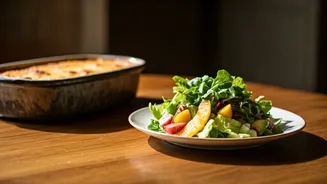
Remember the wellness playbook of the 90s and 2000s? It was a world of steamed broccoli, poached chicken breasts, and salads heavy on iceberg lettuce. Flavor was often an afterthought, and texture, especially a satisfying crunch, was practically forbidden.
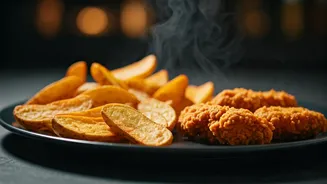
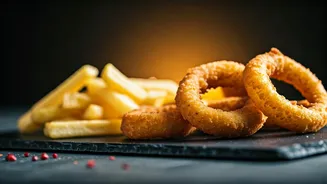
Healthy food was seen as a punishment, a joyless path to virtue paved with mushy vegetables and bland proteins. The dominant belief was that to be healthy, you had to sacrifice pleasure. But a quiet revolution has been simmering, and now it has reached a boiling, or rather, a crisping point. The new philosophy is simple: wellness shouldn't require deprivation. We want food that nourishes our bodies but also delights our senses. This has given rise to a new category of home cooking where golden-brown, audibly crunchy results are the goal, but the deep fryer is nowhere in sight.
Enter the Air Fryer
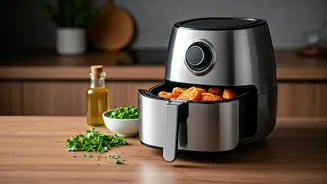
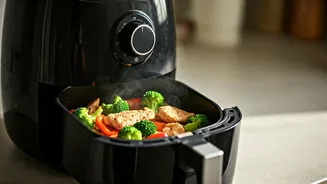
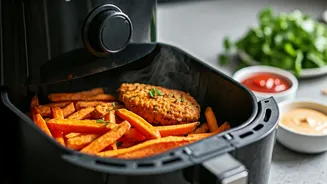
You can’t talk about the crispy wellness trend without paying respects to its primary engine: the air fryer. Once a niche gadget, this countertop convection oven became a full-blown cultural phenomenon. By circulating extremely hot air at high speed, an air fryer mimics the results of deep-frying with a tiny fraction of the oil. It’s the key that unlocked the ability for the average home cook to achieve shatteringly crisp textures on everything from Brussels sprouts to salmon fillets. Suddenly, vegetables weren't just a side dish to be tolerated; they could be the star of the plate. Broccoli florets turn into savory, crunchy bites. Chickpeas become a poppable, salty snack. Even tofu, notoriously soft, can achieve a golden, toothsome crust. The air fryer didn't just change how we cook; it changed what we believed was possible for healthy food.
Beyond the Appliance
While the air fryer gets most of the credit, the crispy wellness movement is bigger than a single appliance. It’s about technique. Home cooks are re-discovering the power of a screaming hot oven for roasting vegetables. The secrets aren't complicated, but they are game-changers. First, give your ingredients space; overcrowding a sheet pan or air fryer basket leads to steaming, the mortal enemy of crispiness. Second, make sure your food is dry. Patting vegetables or proteins with a paper towel before cooking removes surface moisture, allowing the exterior to dehydrate and brown effectively. Finally, use the right amount of fat. You don't need a lot, but a light coating of a high-smoke-point oil like avocado or grapeseed oil is essential for conducting heat and achieving that coveted golden-brown finish. These principles apply whether you're using a top-of-the-line oven or a basic sheet pan.
The Irresistible Psychology of Crunch
Our obsession with crispiness isn't just a preference; it’s deeply rooted in our psychology. The sound of a crunch—a phenomenon food scientists call "the music of mastication"—sends a powerful signal to our brains. We associate crunchiness with freshness (think a crisp apple vs. a mealy one) and quality. In a processed world, a crunchy texture feels more natural and less manipulated. There’s also the simple, satisfying sensory feedback. The combination of sound, the feeling of the food breaking apart, and the resulting flavor creates a multi-sensory experience that is inherently more engaging and pleasurable than eating something soft. By making wellness food crispy, we’re not just making it taste better; we’re making it more fundamentally satisfying to our primal brains.