



Not Your Average Rideshare
Let’s get one thing straight: you can’t actually open the Uber app in Tokyo and order a tire-smoking session on demand. “Uber Drift” was a brilliant, limited-time marketing campaign by Uber Eats Japan, not a new feature for its rideshare service. In a masterful
stroke of experiential advertising, the company partnered with the legendary Team TOYO TIRES DRIFT to offer a handful of lucky individuals an experience money can't typically buy: a passenger seat next to a professional drift champion. The event, held in a controlled area in Tokyo’s Odaiba district, wasn’t about getting from point A to point B. It was about creating a viral moment built on pure, unadulterated adrenaline, all while cleverly promoting food delivery.
A Symphony of Screeching Tires
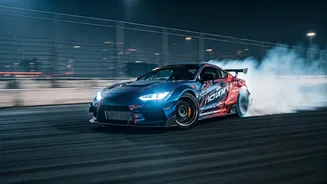
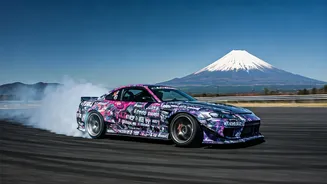
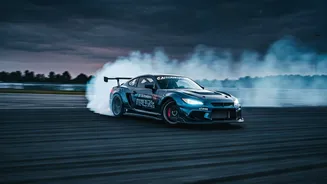
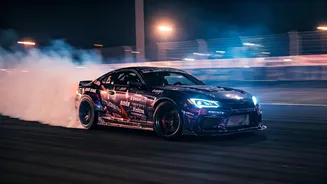
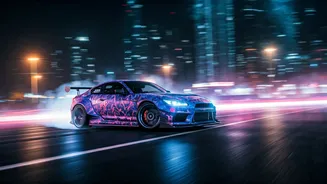
For the winners of the promotional lottery, the experience was a full-sensory assault. Forget the quiet hum of an electric vehicle; this was a world of roaring engines, the high-pitched squeal of rubber tortured to its limit, and the intoxicating smell of burnt tires. Participants were strapped into the passenger seat of a highly modified Toyota GR Supra, a chariot purpose-built for controlled chaos. With world-class drivers like Masato Kawabata at the wheel, the cars danced across the pavement, executing high-speed slides and surgically precise donuts around obstacles—in this case, giant models of food items you could order on Uber Eats. The G-forces press you into the bucket seat as the world outside becomes a blur of motion and smoke. It’s less of a ride and more of a five-minute action movie sequence where you’re the co-star.
The Cultural Cradle of Drifting
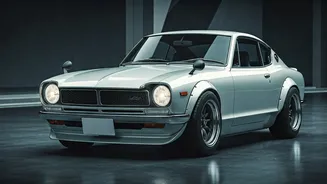
Hosting this event in Tokyo was no accident. Japan is the undisputed birthplace of drifting. The technique, which involves intentionally oversteering to cause a loss of traction while maintaining control, originated in the winding mountain passes (*touge*) of Japan in the 1970s. What began as an illegal, underground pursuit for speed enthusiasts evolved into a global motorsport phenomenon, immortalized in manga like *Initial D* and films like *The Fast and the Furious: Tokyo Drift*. This Uber Eats stunt tapped directly into that deep cultural vein. It offered foreigners and locals alike a sanitized, safe, yet still thrilling taste of an automotive subculture that is quintessentially Japanese. It’s the modern equivalent of a samurai demonstration—a packaged piece of cultural heritage designed for maximum impact and tourist appeal.
Marketing for the Experience Economy
Ultimately, Uber Drift was a masterclass in marketing for the modern “experience economy.” In an age where consumers, especially younger travelers, crave unique, Instagrammable moments over material goods, this campaign delivered in spades. The goal wasn't just to sell burgers and fries; it was to associate the Uber Eats brand with excitement, speed, and cutting-edge Japanese cool. For the cost of a few sets of tires and a day on a closed course, Uber generated global media coverage and a torrent of social media content that traditional advertising could never replicate. It perfectly targeted the “adrenaline tourist”—the traveler actively seeking out heart-pounding activities that will become the centerpiece story of their trip. It was loud, audacious, and incredibly effective.