






What Makes a Community Walkable?
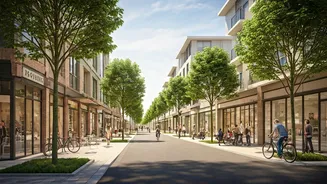
A walkable community is more than just a neighborhood with sidewalks. It’s a place designed for people, not just for cars. The concept, often associated with terms like “New Urbanism” or the “15-minute city,” centers on a few key ingredients. First is density—not
necessarily skyscrapers, but a mix of housing types like single-family homes, townhouses, and low-rise apartments that support a vibrant population. Second is mixed-use zoning, which allows for businesses, cafes, offices, and residential spaces to coexist. This is what puts the “corner store” on the corner, rather than miles away in a strip mall. Finally, a truly walkable area has a connected, accessible street grid. Think a grid of streets with crosswalks and bike lanes, rather than a subdivision of winding cul-de-sacs that lead only to a busy arterial road. When these elements combine, they create an environment where daily errands and social activities can be accomplished easily and pleasantly on foot.
The Driving Forces Behind the Boom
So why the sudden surge in popularity? The trend is being fueled by a powerful convergence of demographic, economic, and cultural shifts. Millennials, now the largest home-buying generation, have shown a distinct preference for urban-style living, even in suburban contexts. Many are delaying having children, prioritizing proximity to work and social life over a large yard. At the same time, retiring Baby Boomers are also seeking to downsize and move to areas where they can stay active and socially connected without being dependent on driving. This cross-generational demand is a potent market force. Furthermore, a growing awareness of health and wellness has people looking for ways to build more physical activity into their daily routines. The environmental benefits of driving less, coupled with the desire to save money on gas and car maintenance, add even more momentum to the movement.
The Real-World Benefits
The appeal of walkability goes far beyond convenience. Research consistently shows that living in such communities has tangible benefits. Economically, homes in walkable neighborhoods command a significant price premium—sometimes as much as 20% or more, according to studies cited by the National Association of Realtors. These areas also foster stronger local economies, as residents are more likely to spend money at nearby independent shops and restaurants. Socially, the design of these neighborhoods encourages spontaneous interactions, helping to build a stronger sense of community. When people walk past each other's porches or meet at the local park, they build connections that are harder to form when moving from a private garage to a private office. Health-wise, the data is clear: residents of walkable neighborhoods tend to have lower rates of obesity, diabetes, and heart disease simply because they walk more in their day-to-day lives.
The Challenge: Affordability and Equity
For all its benefits, the rise of walking communities isn’t without its problems. The biggest challenge is affordability. Because these neighborhoods are in such high demand, they have become some of the most expensive places to live in the country. This creates a significant barrier to entry for lower- and middle-income families, leading to concerns about gentrification and economic segregation. As property values soar, longtime residents can be priced out, and the diversity that often makes urban neighborhoods vibrant can be lost. Planners and city leaders are grappling with this issue, exploring solutions like inclusionary zoning (which requires developers to include affordable units), rent stabilization, and investments in transit and walkability in historically underserved areas. Creating walkable communities that are accessible to everyone, not just the wealthy, is the next major hurdle for this growing movement.