







From Panic to Policy
The initial arrival of powerful, easy-to-use tools like ChatGPT sent a shockwave through higher education. The first reaction was, predictably, panic. Professors envisioned an avalanche of AI-generated essays, making plagiarism detection an unwinnable
arms race. Some departments immediately banned the tools, while universities scrambled to issue guidance. But that defensive crouch didn't last long. It quickly became clear that a blanket ban was not only unenforceable but also counterproductive. The conversation pivoted from 'How do we stop this?' to 'How do we live with this?' Universities are now in the midst of a massive administrative overhaul, rewriting honor codes that were created for a pre-AI world. Instead of simply forbidding AI, new policies often focus on proper citation and transparency, requiring students to disclose how and when they used AI tools, much like citing a book or a scholarly article. It’s a messy, institution-by-institution process, creating a patchwork of rules across the country.
The New AI Course Catalog
Beyond updating rulebooks, universities are racing to integrate AI into the curriculum itself. This isn't just happening in computer science departments. Schools like the University of Pennsylvania and the University of Michigan have launched major initiatives to promote 'AI literacy' across all disciplines. New courses are popping up everywhere: 'AI for Historians,' 'Generative AI in the Arts,' and 'Ethics of Machine Learning' for law students. The goal is twofold. First, it’s about workforce preparation. Administrators recognize that virtually every industry will be transformed by AI, and graduates who can’t use these tools effectively will be at a disadvantage. Second, it's about critical thinking. The new curriculum aims to teach students not just how to prompt an AI, but how to critically evaluate its output, recognize its biases, and understand its limitations. Some universities are even creating 'AI minor' programs, allowing a student majoring in anything from biology to English to gain a formal credential in artificial intelligence.
A Tool, Not Just a Threat
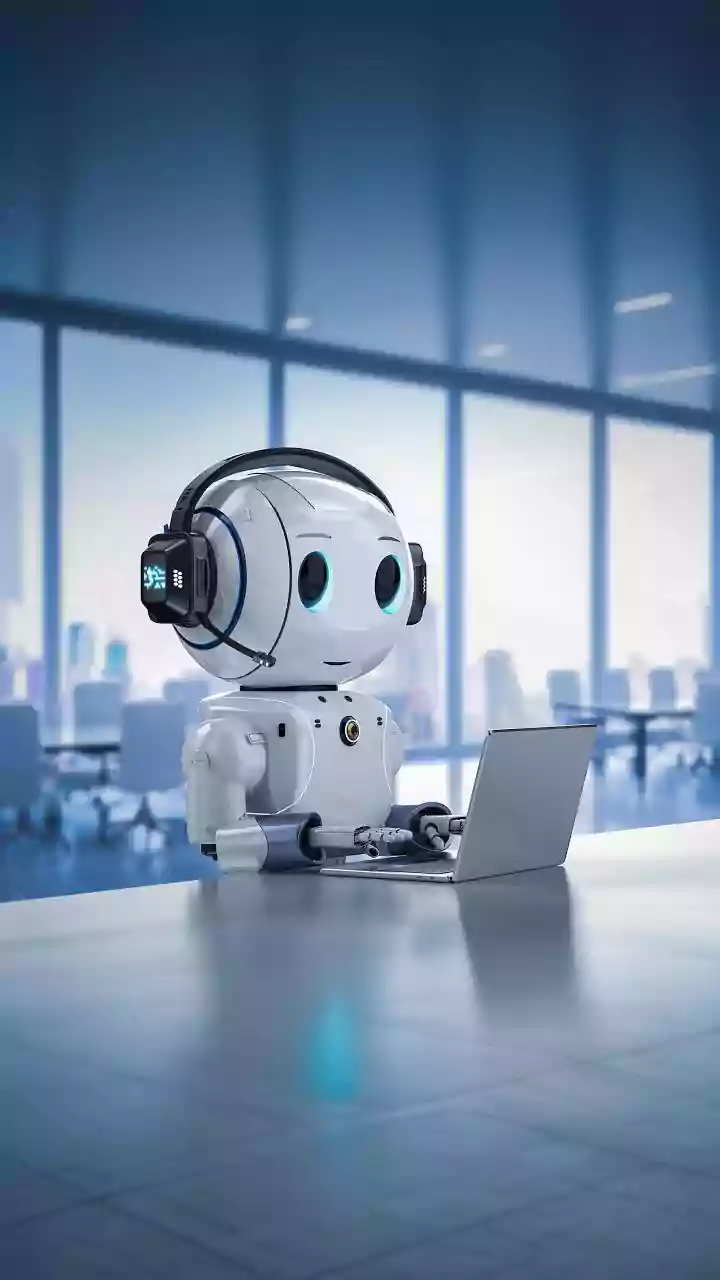
While the debate over cheating continues to grab headlines, many educators are embracing AI as a powerful teaching assistant. In large introductory courses, AI-powered tutoring bots can provide students with instant feedback on homework, answer basic questions 24/7, and create personalized study guides. This frees up professors and teaching assistants to focus on more complex, higher-level instruction during class time. For students, AI can be a 'thought partner'—a tool to brainstorm ideas, simplify complex topics, or even practice a foreign language. A literature student might ask an AI to explain a dense passage of Shakespearean text in simple terms, while a pre-med student could use it to generate practice questions for an organic chemistry exam. The most forward-thinking professors are designing assignments that require AI as a component, asking students not just for a final essay, but for the prompts they used to get there and a critique of the AI’s suggestions.
The Unresolved Questions
For all the rapid adaptation, this AI boom leaves a trail of profound and unanswered questions. The biggest one revolves around equity. Access to the most powerful AI models often requires a paid subscription, creating a potential gap between students who can afford premium tools and those who can't. Universities are grappling with whether to provide campus-wide licenses to level the playing field. There are also deeper pedagogical concerns. If an AI can instantly summarize a book or write flawless code, how does that change the way we assess a student's true understanding? It's forcing a shift away from rote memorization and toward evaluating skills that AI can't easily replicate: creativity, critical analysis, and novel problem-solving. This forces a fundamental rethinking of exams, essays, and the very purpose of a collegiate education in an age where information is no longer the most valuable commodity.