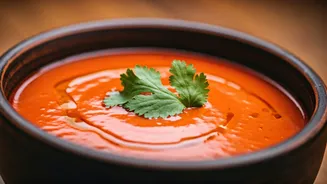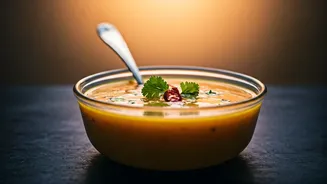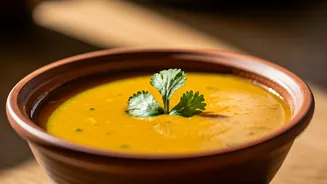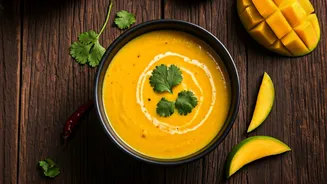




First, What Is Rasam?
For many Americans, Indian food is defined by thick, creamy curries like Tikka Masala or fiery vindaloos. But venture into the cuisine of South India, and you’ll find a lighter, brighter world of flavor. At the heart of this world is rasam.Rasam is a thin,
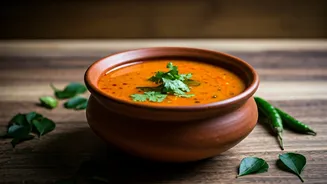
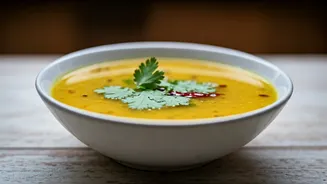
watery soup that’s a staple in homes across states like Tamil Nadu, Kerala, and Andhra Pradesh. Its name translates to “juice” or “essence,” which perfectly describes its role. It’s not a heavy, meal-in-a-bowl dish. Instead, it’s a flavor-packed liquid designed to be sipped as an appetizer, mixed with rice to aid digestion, or served as a palate-cleansing course. The classic version is a tangy and peppery broth made with tamarind, tomatoes, black pepper, and a host of aromatic spices. It's comfort, medicine, and deliciousness all in one bowl.
Enter the Summer Superstar: Mango
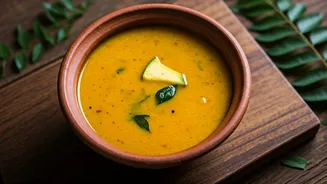
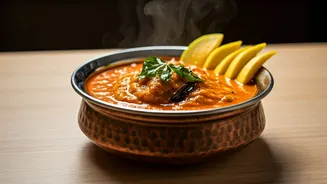
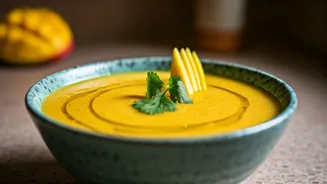
Now, imagine taking that classic savory, spicy, and sour template and introducing a surprise guest: the sweet, luscious, king of summer fruits, the mango. This is Mambazha Rasam, or Mango Rasam. It’s a seasonal specialty, appearing in kitchens when mangoes are at their peak ripeness and the summer heat makes you crave something both refreshing and deeply satisfying.The dish uses the pulp of ripe, sweet mangoes as a base, which completely transforms the rasam experience. Instead of leading with sharp tamarind sourness, Mango Rasam leads with a mellow, fruity sweetness. This isn't the subtle hint of fruit you might find in a glaze; the mango is front and center, creating a foundation that’s both unexpected and utterly logical once you taste it.
A Symphony of Contradictory Flavors
This is where the “adventurous” part comes in. The American palate is generally accustomed to keeping sweet and savory in separate lanes, especially in a soup. Mango Rasam joyfully crashes through those barriers. The sweetness of the mango is immediately challenged and balanced by a chorus of other flavors. A subtle sourness, often from a touch of tamarind or lime juice, keeps the sweetness from becoming cloying. Then comes the heat, a gentle warmth from green or red chilies and a background hum from black pepper.Finally, the savory, earthy notes arrive courtesy of a tempering process called tadka or chaunk. In the final moments of cooking, mustard seeds, cumin seeds, dried red chilies, and fragrant curry leaves are sizzled in hot ghee or oil and poured over the soup. This adds a final layer of aromatic complexity and a satisfying textural crunch. The result is a dish that hits every single note on your tongue: sweet, sour, spicy, and savory, all in perfect, dizzying harmony.
How to Approach Your First Bowl
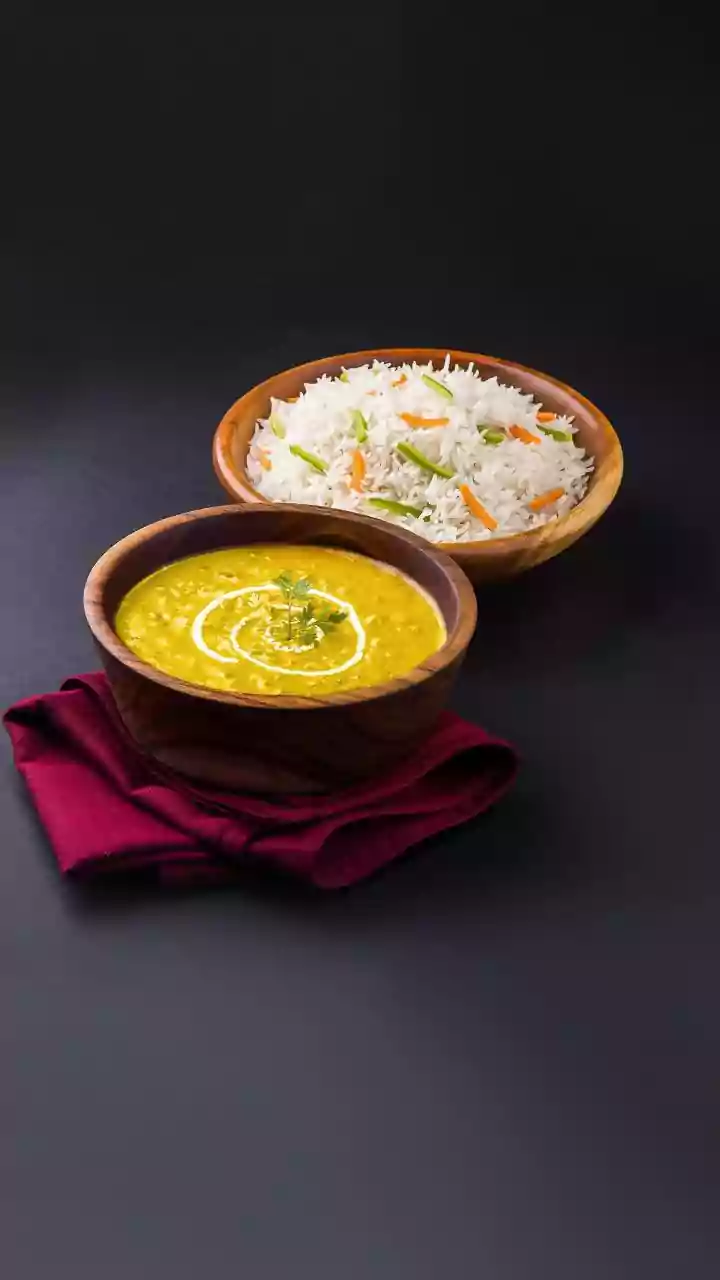
If you see Mango Rasam on a menu at a South Indian restaurant, order it without hesitation. But how do you eat it? You have options. You can sip it warm from a small cup as a starter, letting its complex flavors awaken your appetite. This is the best way to appreciate its unique profile on its own terms.Alternatively, do as it’s done in South India: pour it over a mound of hot, fluffy white rice. Use your spoon (or fingers!) to mix the soupy rasam into the rice until each grain is coated. The neutral rice becomes a vehicle for the vibrant broth, taming its intensity just enough to make it a comforting main course. Often, it’s served alongside a simple vegetable stir-fry (poriyal) or a crispy papadum for textural contrast. Don’t think of it as a side dish; think of it as the main event’s liquid partner.