



The Death of the Single-Purpose Room
For generations, the blueprint for a home was static. You had a bedroom for sleeping, a living room for lounging, and a kitchen for cooking—each defined by immovable walls. This model works perfectly well when space is plentiful, but in the dense, expensive
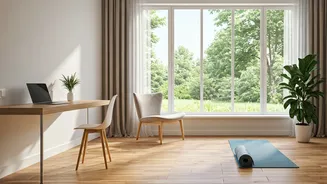
urban cores of America, it’s become a recipe for frustration. A 500-square-foot apartment carved into a designated bedroom, living area, and kitchen often leaves you with three cramped, barely functional zones. Flexible design throws that entire concept out the window. Instead of dedicating precious square footage to a single purpose, it asks a simple but revolutionary question: What if one space could serve multiple purposes throughout the day? The focus shifts from static “rooms” to dynamic “zones” that adapt to your needs, whether you’re working, sleeping, exercising, or hosting a dinner party. It’s a philosophical shift as much as a physical one, prioritizing utility and function over a rigid, preconceived notion of what a home should be.
Walls That Move, Furniture That Thinks
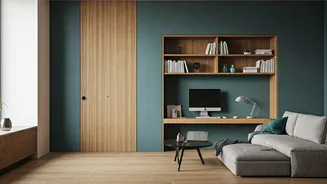
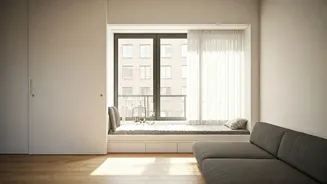
The magic of the flexible home lies in its moving parts. This isn’t just about a well-placed futon. We’re talking about sophisticated architectural interventions that transform a space with minimal effort. Sliding partitions and pocket doors are the simplest examples, allowing an open-plan studio to be sectioned off into a private bedroom at night. But designers are going much further.
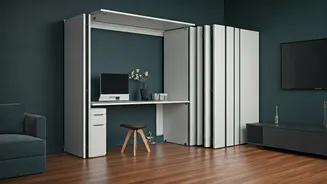
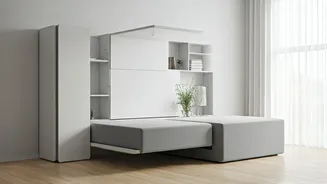
Imagine a wall unit that, with the press of a button, glides across the room to reveal a hidden queen-sized Murphy bed. By day, it’s a seamless media console and bookshelf in your spacious living room. By night, it’s a cozy, enclosed bedroom. Companies like Ori Living have pioneered “robotic furniture” that reconfigures a studio apartment on demand. A home office can retract into the wall, a walk-in closet can emerge from a shelving unit, and a bed can descend from the ceiling. It’s less about interior decoration and more about choreography, turning the act of living into a fluid dance with your environment.
More Than Just a Party Trick
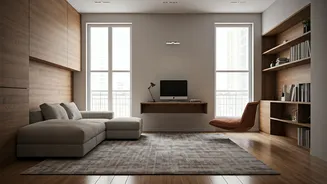
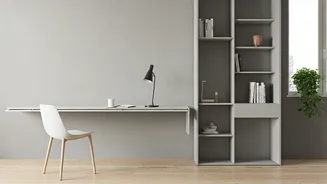
While the technology is impressive, the real power of flexible design is how it enhances daily life. It’s not a gimmick for impressing guests; it’s a practical solution to a growing problem. For the remote worker in a studio apartment, a desk that disappears at 5 p.m. restores a crucial boundary between work and life. For the couple who loves to entertain, a dining table that folds away or lowers from the ceiling means they don't have to sacrifice a living room for a dining room they only use once a week.
This approach fundamentally increases the usable square footage of a home without adding a single inch. A 600-square-foot apartment can feel like it has 900 square feet of functionality. This design ethos also encourages a more minimalist and intentional lifestyle. When your space is designed for maximum utility, you become more conscious of what you own and how you use it. The result is a home that feels bigger, works harder, and ultimately, feels more calming and under control.
Why Now? The Drivers of the Trend
The rise of flexible layouts isn’t an accident. It’s a direct response to several powerful economic and social forces. First and foremost are the soaring costs of urban real estate. As prices in cities like New York, San Francisco, and Boston climb ever higher, smaller apartments are often the only entry point to the market. Flexible design makes these compact spaces not just tolerable, but genuinely desirable.
Furthermore, the pandemic-fueled rise of remote work has made our homes the center of our universe. They now have to be offices, gyms, classrooms, and sanctuaries all at once. A static layout simply can't accommodate all those demands in a small space. Finally, there's a growing cultural appreciation for sustainability and efficiency. People are increasingly seeking to live with a smaller environmental footprint, and that includes the size of their homes. Flexible layouts offer a way to live fully and comfortably without the excess.